


 Pro Benefits
 About
About
 Terms
Terms
 Privacy
 Child Safety & Protection
 Notifications
 Ayrush Global It Services Pvt Ltd
Which LED Lighting System Is Best for Commercial Buildings
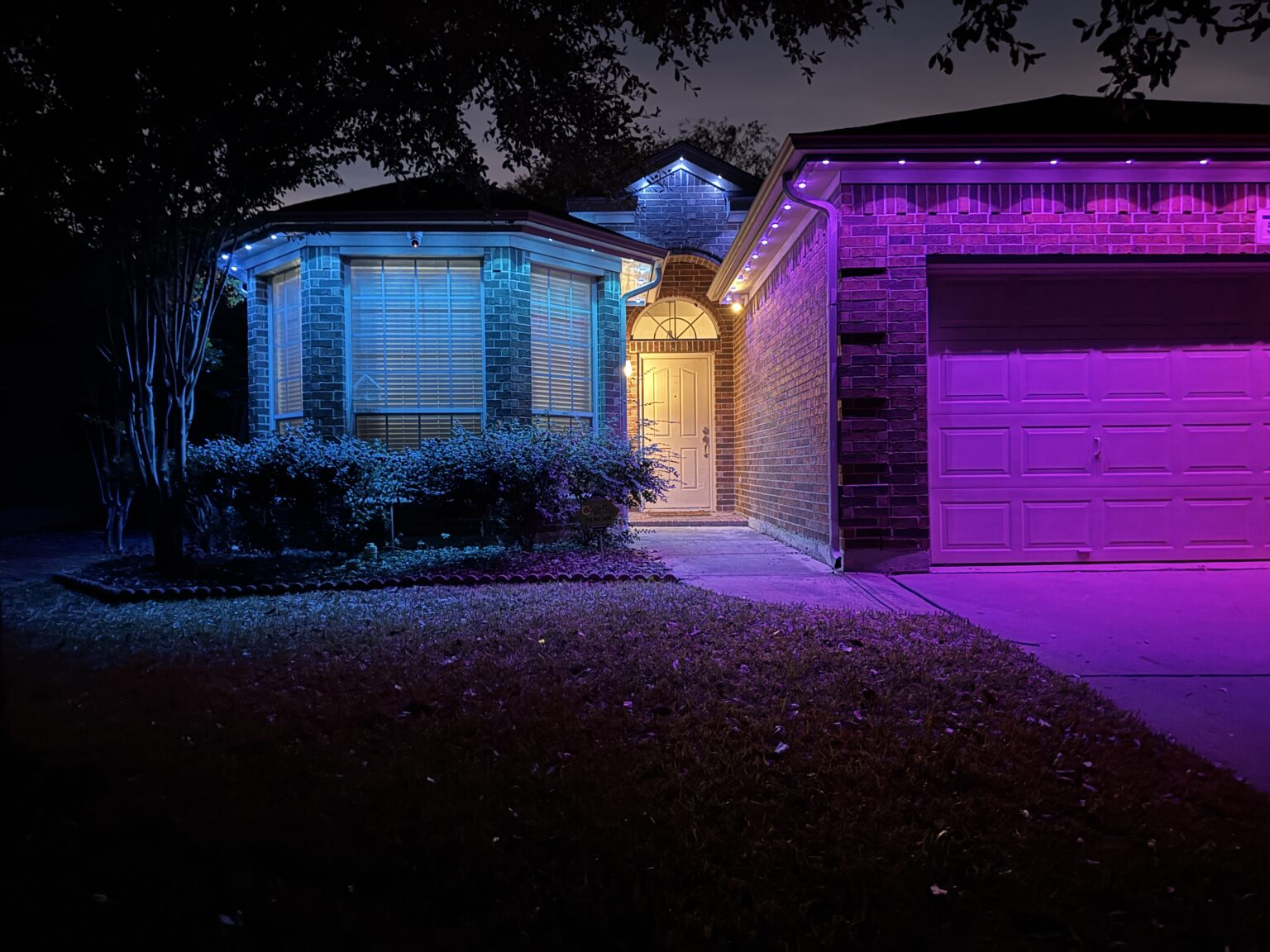
Choosing the best LED lighting system for a commercial building isn’t about picking the brightest bulb — it’s about matching light, control, durability, and cost to the building’s purpose. The right system improves productivity and safety, cuts energy bills, lowers maintenance, and can even enhance branding. Here’s a practical guide to help facility managers, architects, and business owners decide which LED solution fits their building.
Understand the space and its lighting needs
Every commercial space has different requirements:
-
Warehouses & industrial halls: Need high vertical illumination and rugged fixtures. premier LED lighting High-bay LED fixtures are common.
-
Offices: Require glare-free, uniform lighting with good color rendering for visual comfort—LED panels, troffers, or linear systems with high CRI work best.
-
Retail: Needs flexible accent lighting to highlight products plus ambient lighting—track LEDs, adjustable downlights, and high-CRI floodlights are ideal.
-
Hospitality & restaurants: Warm, inviting light (lower CCT) and dimmable fixtures help set mood—LED downlights and decorative pendants are popular.
-
Parking garages & exteriors: Require weatherproof, durable luminaires with high lumen output and good optics—wall packs, canopy lights, and flood LEDs with appropriate IP ratings.
-
Healthcare & labs: Require accurate color rendering and low flicker—choose LEDs with CRI ≥ 90 and tight flicker specifications.
Key technical factors to compare
When comparing systems, focus on these objective measures rather than just wattage:
-
Lumens (light output): Look at lumens per fixture and lumens per watt (lm/W). Higher lm/W means better energy efficiency.
-
Color Rendering Index (CRI): CRI ≥ 80 is acceptable for most commercial spaces; CRI ≥ 90 is recommended for retail, healthcare, and any place where color accuracy matters.
-
Correlated Color Temperature (CCT): Measured in Kelvins. 2700–3000K for warm hospitality, 3500–4000K for offices, 5000K+ for industrial tasks. Consider tunable white for flexible spaces.
-
Lumen maintenance (L70): Indicates how long the LED will produce 70% of its initial lumens. Aim for L70 ≥ 50,000 hours for minimal maintenance.
-
Power factor & driver quality: A high power factor (>0.9) and reliable constant-current drivers improve efficiency and reduce electrical issues.
-
UL/CE/IEC certifications & warranty: Reputable certifications and at least a 5-year warranty reduce risk.
-
IP & IK ratings: For damp or outdoor locations, choose higher IP (e.g., IP65) and impact resistance (IK) ratings.
Controls — the multiplier for savings and comfort
Lighting controls are as important as the fixtures:
-
Dimming & daylight harvesting: Automatically reduces light when natural daylight is sufficient.
-
Occupancy sensors: Turn lights off in unoccupied areas to save energy.
-
Zoning & scheduling: Enables different areas to run different lighting scenes and schedules.
-
Networked smart lighting (PoE, wireless controls): Offers analytics, remote management, and integration with BMS. This is especially valuable in large or multi-tenant buildings where granular control and reporting matter.
Fixture types and when to use them
-
High-bay LED fixtures: Best for warehouses, gymnasiums, and manufacturing floors (replace MH/HPS fixtures).
-
LED troffers & panels: Ideal for drop ceilings in offices and corridors—offer uniform, low-glare light.
-
Linear LED systems: Great for open offices, retail aisles, and design-forward spaces.
-
Downlights & track lighting: Perfect for retail, galleries, and hospitality for focused lighting.
-
Wall packs & floodlights: For exterior security and façade lighting.
-
Retrofit LED tubes (T8/T5 replacements): Cost-effective for older fixtures, but ensure driver compatibility and consider fixture replacement if thermal performance is poor.
Practical decision steps
-
Audit the building: Measure existing lux levels, ceiling heights, usage patterns, and existing controls.
-
Define goals: Energy reduction target, budget, maintenance reduction, visual comfort.
-
Select fixture families: Match fixture type to space function.
-
Specify performance: lm/W, CRI, CCT, L70 hours, IP/IK, warranty, dimming protocol (DALI, 0–10V, PoE).
-
Plan controls: Start with occupancy sensors and daylighting; scale to networked controls for analytics and tenant billing.
-
Calculate ROI: Include rebates, energy savings, and maintenance savings. Many commercial LED upgrades pay back within 2–4 years.
Recommended system combinations (quick guide)
-
Warehouse: High-bay LEDs (≥140 lm/W), motion sensors, 4000–5000K.
-
Office: LED panels/troffers with UGR ≤ 19, CRI ≥ 90, tunable white, networked controls.
-
Retail: Track + accent LEDs, CRI ≥ 90, spotlighting with dimmable drivers.
-
Parking/Exterior: IP65 wall packs or canopies, robust surge protection, 4000K.
Final checklist before buying
-
Verify photometric files (IES/LDT) for lighting layout.
-
Confirm driver and fixture thermal performance.
-
Check for flicker spec and harmonics.
-
Ask for references and field installations.
-
Confirm available rebates and tax incentives.
Conclusion
There’s no single “best” LED lighting system for all commercial buildings — the best choice matches fixture type, photometric performance, and control strategy to the space’s function and operational goals. Prioritize lumens-per-watt, high CRI where needed, reliable drivers, and intelligent controls. A properly specified LED system not only cuts energy and maintenance costs but also improves occupant comfort, safety, and the building’s aesthetic — a smart investment that pays back in performance as well as dollars.

 Arabic
 French
 Spanish
 Portuguese
 Deutsch
 Turkish
 Dutch
Dutch
 Italiano
 Russian
 Romaian
 Portuguese (Brazil)
 Greek
Greek
