


 Pro Benefits
 Σχετικά
 Όρους
Όρους
 Ιδιωτικότητα
 Child Safety & Protection
 Ειδοποιήσεις
 Ayrush Global It Services Pvt Ltd
The Economics of Net Metering: Is It Still Worth It in 2025?
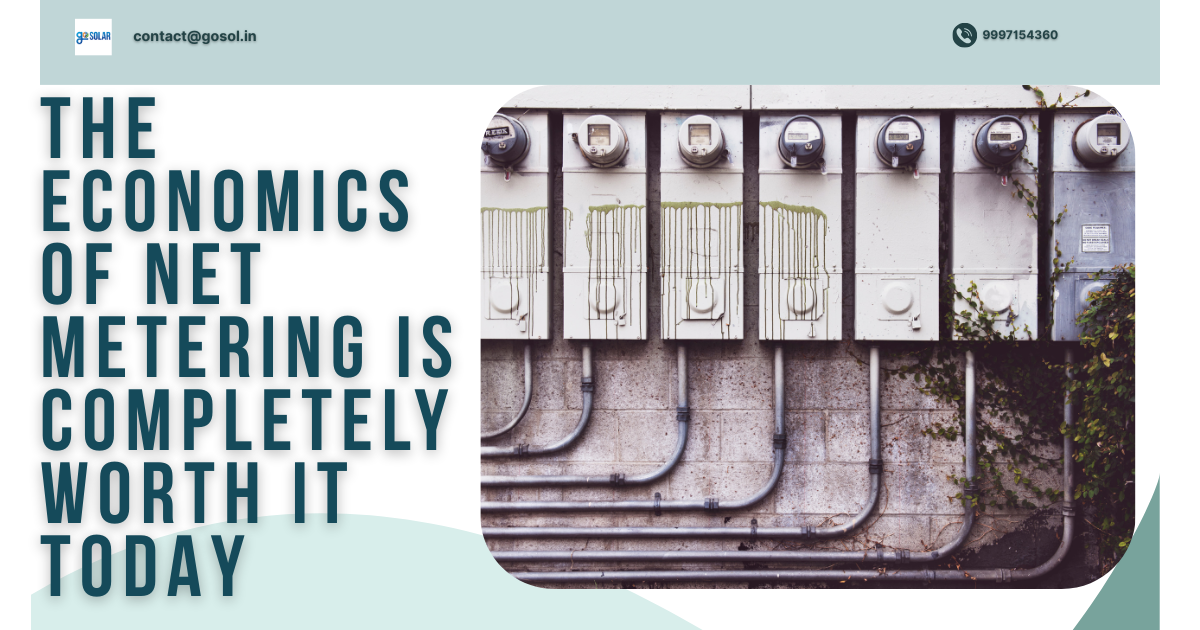
As solar energy continues to reshape the global power landscape, understanding the financial dynamics behind solar billing policies has become essential for homeowners, commercial units, and industrial facilities. Among these policies, Net Metering has historically been one of the most impactful mechanisms driving solar adoption. But with changing regulatory frameworks, evolving electricity tariffs, and shifting energy consumption trends, many consumers are now asking: Is net metering still financially beneficial in 2025? This article breaks down the economic implications, cost savings potential, installation requirements, and environmental impact to help determine whether it remains a worthwhile investment.
What Is Net Metering?
Net metering is a billing arrangement that allows solar users to export surplus electricity generated by their solar power system back to the utility grid. In return, they receive credits that offset the cost of the electricity they consume from the grid during non-sunlight hours. Essentially, the meter runs backward when excess energy is exported, lowering or even eliminating monthly electricity bills.
Why Net Metering Became Popular
Net metering gained strong global popularity due to its ability to enhance solar ROI and shorten payback periods. For many years, this structure made solar financially attractive by ensuring:
-
Higher savings on monthly electricity bills
-
Better utilization of self-generated renewable power
-
A reliable hedge against rising grid energy rates
However, several countries including India, the United States, and parts of Europe have revised net metering policies in response to grid balancing challenges and increasing adoption rates. These changes have directly influenced the economics of solar returns.
Cost Savings Potential: Is Net Metering Still Worth It in 2025?
Despite evolving regulations, net metering continues to provide significant cost advantages for solar users. In 2025, solar plant owners can still realize strong financial savings through:
Lower Electricity Bills
By exporting surplus energy, customers reduce dependency on expensive grid power, potentially achieving up to 60–90% bill reductions depending on policy and consumption behavior.
Shorter Payback Periods
Most commercial and residential systems achieve payback in 3–5 years, compared to 7–10 years in non-net-metering regions.
Higher Return on Investment
Solar installations under net metering typically deliver ROI of 16–25% annually due to lower overhead costs and consistent monthly savings.
Better Value Without Battery Storage
Without net metering, users often require batteries to store excess energy, increasing installation cost by 30–40%. Net metering eliminates this requirement for many users.
Installation Steps to Get Started With a Net Metering Setup
-
Conduct an Energy Audit – Understand consumption patterns and peak load requirements.
-
Choose the Right Solar Capacity – Balance production with actual usage to maximize credit benefits.
-
Select a High-Efficiency Inverter – Ensure smart export-import tracking.
-
Apply for Net Metering Approval From the Utility
-
Install a Bi-Directional Meter
-
Integrate a Monitoring System
-
Activate Grid Connectivity and Begin Credit Tracking
Proper planning ensures maximum economic return and easier compliance with local regulations.
Environmental Impact of Net Metering
-
Reduces dependence on fossil-fuel power plants
-
Decreases carbon emissions and air pollution
-
Strengthens local power infrastructure and grid reliability
-
Encourages widespread renewable energy participation
The environmental advantages extend far beyond individual savings, supporting large-scale sustainability goals and climate commitments.
Conclusion
Net metering remains highly valuable in 2025 for most residential and commercial solar customers. Although policies may differ across regions, the financial and environmental benefits continue to make solar a smart long-term investment. Whether users aim for cost savings, energy independence, or sustainability leadership, net metering is still one of the most effective pathways to maximize solar returns.

 English
 Arabic
 French
 Spanish
 Portuguese
 Deutsch
 Turkish
 Dutch
Dutch
 Italiano
 Russian
 Romaian
 Portuguese (Brazil)
