


 Pro Benefits
 About
About
 Terms
Terms
 Privacy
 Child Safety & Protection
 Notifications
 Ayrush Global It Services Pvt Ltd
Joint and Muscle Pain All Over? Understanding the Root Causes Through Ayurveda
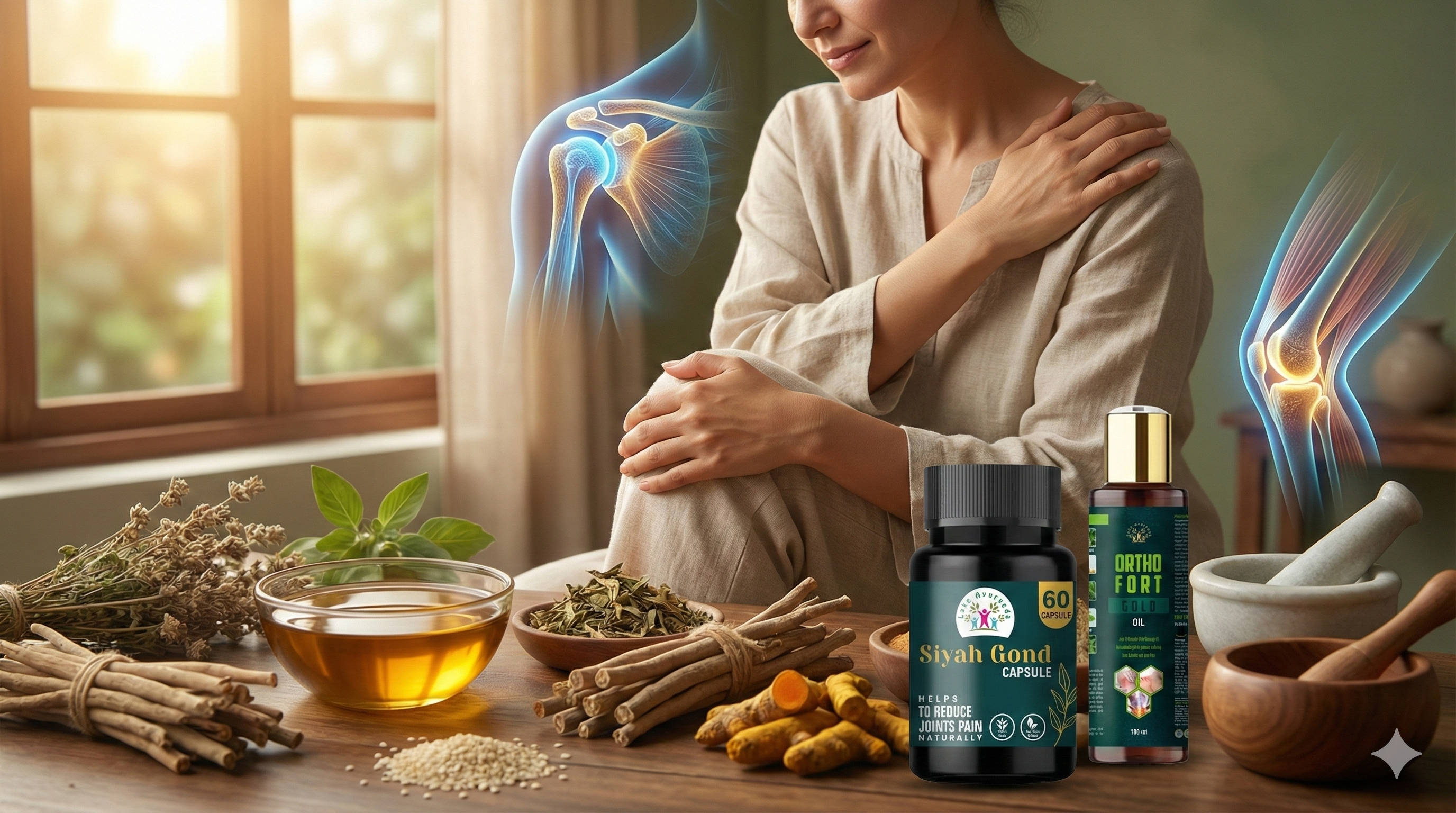
If you’ve been waking up with a stiff back, achy shoulders, or a dull heaviness in the legs—without knowing exactly why—you’re not alone. Many people today experience joint and muscle pain all over, often assuming it’s simply due to age or stress. But Ayurveda teaches us that the body always speaks for a reason.
Below, we explore what these aches truly mean, natural relief approaches, and how to support your joints with ancient Ayurvedic wisdom.
Why You May Be Feeling Joint & Muscle Pain Throughout Your Body
Pain that appears in multiple areas of the body is rarely random. Ayurveda explains that this kind of widespread discomfort is often linked to aggravated Vata dosha, responsible for movement, lubrication, nerve impulses, and flexibility.
But modern-life factors also play a major role:
1. Poor Gut Health & Weak Digestion
When digestion is sluggish, toxins (ama) accumulate in the system. These toxins drift into weak areas of the body—often joints—leading to stiffness, heaviness, and fatigue.
Common signs of this:
-
Morning stiffness
-
Bloating or indigestion
-
White coating on the tongue
2. Stress & Irregular Lifestyle
Erratic sleep, long screen hours, and emotional strain disturb Vata, drying out the joints and leading to diffuse pain.
3. Nutrient Deficiency
Low levels of magnesium, essential fatty acids, or Vitamin D can contribute to muscle joint pain causes such as weakness, cramps, or fatigue-related aches.
4. Overexertion or Sedentary Habits
Both extremes—overworking the body or not moving enough—can create imbalances in muscle fibers and joints.
5. Inflammation & Chronic Wear
Ayurveda considers prolonged inflammation a sign of aggravated Pitta and ama build-up. This leads to hot, painful, swollen joints.
Ayurvedic Interpretation: What Your Pain Is Trying to Tell You
Ayurveda views the joints as the home of Vata. When Vata becomes disturbed due to cold exposure, irregular eating, or emotional burnout, the lubricating fluids dry up, causing:
-
Cracking sounds
-
Sharp pain
-
Moving pain (that shifts from place to place)
-
Muscle tightness
Muscle pain, on the other hand, often reflects Kapha stagnation (heaviness, dullness) or Pitta inflammation (burning, swelling).
Understanding this helps you choose remedies that match your body’s imbalance.
Natural Ways to Ease Muscle & Joint Pain
1. Warm Oil Abhyanga (Self-Massage)
Massaging the body with warm sesame or Ayurvedic medicated oils improves circulation and deeply nourishes stiff tissues.
For targeted relief, many people prefer using herbal oils such as Shop Ortho Fort Gold Oil online, known for its warming, comforting effect on Vata-affected joints.
2. Include Strength-Building Natural Resins
Traditional herbal resins have long been used in Ayurveda to enhance joint lubrication and muscular resilience.
A popular modern option is Siyah Gond Capsules, formulated from black edible gum resin. These may support the body by improving internal strength, especially in individuals who experience body-wide aches due to weakness or overexertion.
You may also hear about kala gond capsule benefits, as these natural resins are known for supporting joint flexibility, stability, and recovery after physical strain.
(If you’re considering herbal supplements, always check the kala gond capsule price and quality to ensure you’re choosing authentic formulations.)
3. Warm, Nourishing Foods
Since Vata aggravation is a major contributor to widespread pain, favor foods that ground and warm the body:
-
Stewed apples
-
Oats with ghee
-
Soups and broths
-
Cooked vegetables
-
Herbal teas (ginger, cinnamon, dashmool)
Avoid cold, raw, or dry foods that worsen Vata.
4. Gentle Movement Rituals
Daily practices such as:
-
Slow yoga stretches
-
Walking 20–30 minutes
-
Warm morning mobility routines
help keep the joints lubricated and muscles oxygenated.
5. Improve Sleep Quality
Poor sleep increases pain sensitivity. Ayurveda recommends:
-
Going to bed before 10 PM
-
Drinking warm turmeric or nutmeg milk
-
Keeping screens off at least 1 hour before bed
Better sleep = better recovery.
Understanding Herbal Support for Muscle & Joint Relief
Herbs and natural resins have long been integrated into pain-relief routines due to their rejuvenating effects on the musculoskeletal system.
Siyah Gond or Kala Gond: Ancient Strength Builders
Both Siyah Gond or Kala Gond are forms of natural edible gum sourced from herbal tree resins.
They are traditionally used to:
-
Support muscular nourishment
-
Enhance bone and joint strength
-
Promote postpartum recovery
-
Improve stamina in individuals with Vata-dominant body types
These are not “quick fixes” but long-term tonics that help rebuild body tissue.
Medicated Oils for Local Relief
Applying herbal oils delivers warmth directly to painful regions.
For many individuals dealing with muscle joint pain relief, oils act as a grounding therapy—reducing discomfort, improving circulation, and restoring mobility.
Lifestyle Shifts That Make a Big Difference
Here are simple yet powerful habits:
Stay Hydrated With Warm Water
Prevents dryness in joints and tissues.
Add a Pinch of Hing or Ajwain to Meals
Improves digestion, preventing toxin accumulation that triggers pain.
Use a Warm Compress at Night
Especially soothing for knee, shoulder, and back pain.
Avoid Cold Exposure
Cold environments quickly aggravate Vata, making pain worse.
Make Time for Rest
Muscles repair only when the body is at rest.
When Should You Pay Extra Attention?
If your pain is accompanied by:
-
Morning stiffness lasting more than an hour
-
Swelling or warmth in joints
-
Sudden unexplained weakness
-
Pain severe enough to impact mobility
It's best to speak with a healthcare professional. Ayurveda works beautifully as a supportive lifestyle system, not a replacement for medical care.
Final Thoughts: Healing Your Joints with Awareness
Joint and muscle pain all over the body is not just a physical issue—it’s often the body’s gentle request for balance, nourishment, and grounding. By understanding the root causes and integrating mindful Ayurvedic habits, you can support long-term mobility and overall vitality.
As highlighted by Ayurvedic experts at Lake Ayurveda, the most effective healing begins with listening to your body—its signals are your guide.
If you’re exploring natural ways to strengthen your joints, improve flexibility, or understand what your pain really means, Ayurveda offers a warm, time-tested path toward relief and balance.
Feel free to explore herbal formulations, lifestyle guidance, and wellness insights that align with your unique dosha and daily routine.

 Arabic
 French
 Spanish
 Portuguese
 Deutsch
 Turkish
 Dutch
Dutch
 Italiano
 Russian
 Romaian
 Portuguese (Brazil)
 Greek
Greek
