


 Pro Benefits
 Environ
 Conditions générale de vente
 Confidentialité
 Child Safety & Protection
 Notifications
 Ayrush Global It Services Pvt Ltd
Laser Cleaner Solutions for Industrial, Automotive, and Metal Surface Applications
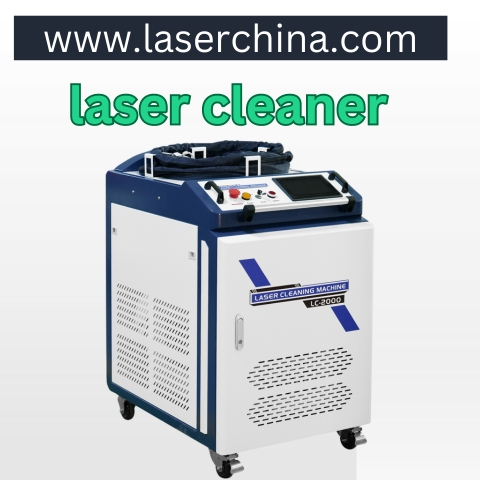
In modern industrial and manufacturing environments, maintaining cleanliness and precision in equipment and materials is essential. One tool that has significantly transformed the approach to cleaning and surface preparation is the laser cleaner. Unlike traditional cleaning methods, which often rely on chemicals, abrasive materials, or manual labor, a laser cleaner provides a precise and controlled method of removing contaminants, rust, paint, or other residues from surfaces. Its applications extend across multiple industries, proving its versatility and effectiveness in both large-scale industrial settings and smaller workshop environments.
The principle behind a laser cleaner involves the use of high-intensity laser beams to interact with unwanted surface layers. These beams are capable of vaporizing, ablating, or dislodging impurities without physically touching the material underneath. This approach minimizes the risk of damaging delicate surfaces while ensuring a thorough cleaning process. A laser cleaner can handle materials ranging from metals to ceramics, composites, and even certain plastics, making it suitable for a wide range of applications.
One of the industries that benefits most from a laser cleaner is the automotive sector. In car manufacturing and repair, precision is critical, and components often need to be free of rust, scale, or paint residues before welding, coating, or assembly. A laser cleaner allows technicians to remove these surface layers without abrasive tools that may scratch or weaken the material. Additionally, it can reach areas that are difficult to access manually, such as corners, joints, and internal cavities, making it invaluable for preparing parts for further processing.
In the metal fabrication and machinery sector, a laser cleaner plays a key role in maintenance and preparation. Metal surfaces, especially steel, aluminum, and copper, are prone to corrosion and oxidation. Traditional cleaning methods such as sandblasting, grinding, or chemical baths can be labor-intensive, environmentally hazardous, and inconsistent in results. Using a laser cleaner, maintenance teams can restore metal surfaces to their original condition without introducing secondary contaminants. This ensures that components meet required tolerances and standards, enhancing overall equipment efficiency and longevity.
Beyond metal and automotive applications, a laser cleaner is increasingly used in delicate restoration and preservation projects. Museums, historical societies, and restoration workshops employ laser cleaning to remove dirt, soot, and corrosion from artifacts, sculptures, and architectural elements. Traditional cleaning methods can be overly harsh or imprecise, risking permanent damage. A laser cleaner’s controlled energy allows restorers to remove unwanted layers carefully, preserving the original material and fine details.
Electronics and semiconductor manufacturing also benefit from laser cleaning technology. In these industries, even microscopic contaminants can disrupt functionality and lead to costly failures. A laser cleaner ensures that surfaces are free of residues such as oxides, adhesives, or dust particles. Its precision and non-contact nature make it ideal for cleaning sensitive components, circuit boards, and wafers without risking damage from mechanical tools or harsh chemicals.
The efficiency and speed of a laser cleaner also contribute to its growing popularity. Cleaning processes that traditionally took hours or required repeated chemical treatments can now be completed in a fraction of the time. This reduces downtime for machinery, shortens production cycles, and allows teams to maintain higher productivity levels. In addition, laser cleaners can often be integrated into automated systems, creating continuous cleaning solutions for assembly lines, pipelines, and industrial robots.
Another notable aspect of laser cleaning is its environmental impact. Unlike chemical cleaning methods, which generate hazardous waste and require careful disposal, a laser cleaner operates without the need for additional solvents or abrasive media. This makes it a more sustainable solution for industries that aim to reduce chemical usage and comply with environmental regulations. The residue from laser cleaning is typically minimal and easy to manage, further contributing to a cleaner and safer workspace.
The adaptability of a laser cleaner also allows it to handle surfaces of various shapes and sizes. Handheld models provide flexibility for smaller or intricate workpieces, while larger stationary or robotic systems are suitable for high-volume industrial applications. This versatility means that businesses across multiple sectors can invest in a solution that fits their specific cleaning needs, whether it involves detailed restoration work or ongoing maintenance of large metal structures.
Training and operation of a laser cleaner are generally straightforward but require understanding of laser safety protocols and material-specific parameters. Operators must adjust power, frequency, and scanning speed to match the type of surface and the level of contamination. Following these guidelines ensures optimal cleaning performance and extends the lifespan of the equipment. Many manufacturers provide training resources, user manuals, and technical support to help teams integrate laser cleaners into their workflow effectively.
Maintenance of a laser cleaner typically focuses on ensuring the laser source, optics, and cooling systems remain in proper condition. Regular inspections and cleaning of the laser path prevent performance degradation and help avoid costly downtime. Because the laser cleaner works without contact, it experiences minimal mechanical wear, which contributes to its long-term reliability. This low-maintenance operation is particularly valuable in industrial environments where equipment uptime is critical.
Safety considerations are an important aspect of operating a laser cleaner. Laser beams can pose risks to eyes and skin, so appropriate protective gear such as goggles and gloves is essential. Additionally, proper ventilation is necessary to manage any fumes or particles released during the cleaning process. Following these safety protocols ensures that operators can leverage the full benefits of a laser cleaner without exposing themselves or others to hazards.
The growing adoption of laser cleaning technology across industries reflects its capability to meet modern cleaning requirements. From restoring historical artifacts to maintaining high-performance machinery, a laser cleaner offers precision, efficiency, and environmental advantages. Its ability to handle a wide range of materials and contaminants makes it a versatile and valuable tool for businesses looking to improve quality, reduce costs, and enhance operational efficiency.
In research and development, laser cleaners continue to evolve, offering more compact designs, higher efficiency lasers, and automated solutions. Emerging innovations focus on improving energy efficiency, increasing the speed of cleaning processes, and expanding the range of materials that can be treated. As industries continue to prioritize precision, sustainability, and productivity, the role of laser cleaners is expected to expand, solidifying their place as essential tools in modern manufacturing and maintenance operations.
Industries including aerospace, shipbuilding, electronics, automotive, and cultural preservation increasingly rely on laser cleaning as part of their standard workflow. Its versatility, non-contact cleaning method, and ability to handle intricate geometries make it indispensable where precision is paramount. By investing in laser cleaning technology, companies can ensure consistent surface quality, protect valuable assets, and optimize operational efficiency across their processes.
Final Thoughts, a laser cleaner is more than just a cleaning tool—it is a technology that integrates precision, efficiency, and sustainability into modern industrial and restoration practices. Its wide-ranging applications, from automotive and metal fabrication to electronics and historical preservation, demonstrate its adaptability and value. By leveraging the capabilities of a laser cleaner, businesses and professionals can maintain high-quality standards, improve workflow efficiency, and minimize environmental impact, all while achieving results that traditional cleaning methods cannot consistently deliver. The future of surface cleaning is clearly illuminated by the versatility and precision of laser cleaning technology.
 French
 English
 Arabic
 Spanish
 Portuguese
 Deutsch
 Turkish
 Dutch
Dutch
 Italiano
 Russian
 Romaian
 Portuguese (Brazil)
 Greek
Greek
