


 Pro Benefits
 About
About
 Termeni
 Confidențialitate
 Child Safety & Protection
 Notificări
 Ayrush Global It Services Pvt Ltd
Future of Computer Vision Development: How Machines Are Learning to See
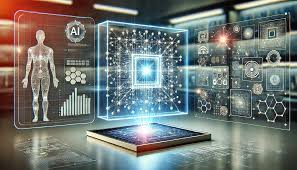
Computer Vision has rapidly evolved from a research concept into one of the most transformative technologies shaping modern industries. From autonomous vehicles and smart surveillance to advanced healthcare imaging and retail automation, computer vision development services is redefining how businesses operate and how machines interpret the world. As algorithms grow more powerful and datasets become richer, the ability for machines to “see” is no longer futuristic—it’s happening now, at scale.
Beyond Image Recognition: The New Era of Machine Understanding
Early computer vision systems were primarily built for image classification: identifying whether an image contained a cat, a road sign, or a crack in a machine part. Today, computer vision goes far beyond simple labeling. With breakthroughs in deep learning, convolutional neural networks (CNNs), and transformer-based architectures, modern systems understand patterns, track motion, evaluate context, and make predictions—all in real time.
Technologies like instance segmentation, object tracking, scene understanding, and 3D image reconstruction allow machines to interpret their environment with human-like accuracy. This shift from recognition to understanding is what drives the next generation of applications.
Key Trends Driving Computer Vision Development
1. Edge-Based Computer Vision
Instead of sending visual data to the cloud for processing, edge-based solutions run AI models directly on devices such as cameras, sensors, drones, and wearables.
This enables:
-
Faster decision-making
-
Lower latency
-
Enhanced privacy
-
Reduced bandwidth requirements
It’s especially valuable for manufacturing floors, retail stores, and security systems that require instant responses.
2. Vision Transformers (ViTs)
The rise of Vision Transformers has brought new accuracy benchmarks to image-related tasks. ViTs analyze images similarly to how large language models analyze text, making them highly efficient for:
-
Complex image classification
-
Medical imaging analysis
-
Autonomous driving context interpretation
Their ability to understand global image context makes them ideal for high-precision environments.
3. Synthetic Data for Training
One of the biggest challenges in computer vision is the need for massive amounts of labeled data. Synthetic datasets—AI-generated images—now help companies replace or supplement real-world data.
Synthetic data improves:
-
Model diversity
-
Training speed
-
Safety for high-risk environments (robotics, autonomous driving)
Industries are adopting synthetic data because it dramatically reduces the cost and time required to build robust models.
4. Computer Vision + IoT Fusion
Integrating computer vision with IoT systems enables intelligent automation across industrial operations. For example:
-
Smart warehouses use cameras + IoT sensors to track inventory.
-
Healthcare uses vision-powered IoT devices for patient monitoring.
-
Agriculture leverages drones with IoT data for crop health prediction.
This fusion leads to more connected, efficient, and proactive ecosystems.
Applications Transforming Industries Today
Healthcare
-
Tumor and anomaly detection
-
Dental imaging enhancement
-
Surgical assistance systems
-
Patient monitoring without physical sensors
Manufacturing
-
Defect inspection
-
Worker safety monitoring
-
Predictive maintenance using visual cues
Retail
-
Smart checkout systems
-
Shelf inventory tracking
-
Customer behavior analytics
Security & Surveillance
-
Real-time activity detection
-
Facial recognition
-
Video anomaly detection
Automotive
-
Advanced driver-assistance systems (ADAS)
-
Road object detection
-
Lane tracking and traffic sign recognition
Why Businesses Are Investing Heavily in Computer Vision Development?
Companies across every sector now view computer vision as a catalyst for:
-
Operational efficiency through automation
-
Cost reduction by minimizing human error
-
Better decision-making through real-time insights
-
Safety improvements via continuous monitoring
As the global market for computer vision continues to grow, businesses adopting the technology early gain a competitive advantage.
The Road Ahead
Computer vision development is quickly merging with next-generation technologies like Generative AI, 3D modeling, and multimodal AI systems. The future will feature machines capable of understanding environments with context, reasoning, and predictive intelligence—pushing automation and digital transformation to new heights.
Companies that embrace this innovation today will shape the industries of tomorrow.
 Romaian
 English
 Arabic
 French
 Spanish
 Portuguese
 Deutsch
 Turkish
 Dutch
Dutch
 Italiano
 Russian
 Portuguese (Brazil)
 Greek
Greek
