


 Pro Benefits
 Environ
 Conditions générale de vente
 Confidentialité
 Child Safety & Protection
 Notifications
 Ayrush Global It Services Pvt Ltd
DOES A NETWORK SWITCH ADD LATENCY? UNDERSTANDING SWITCHING DELAYS AND PERFORMANCE
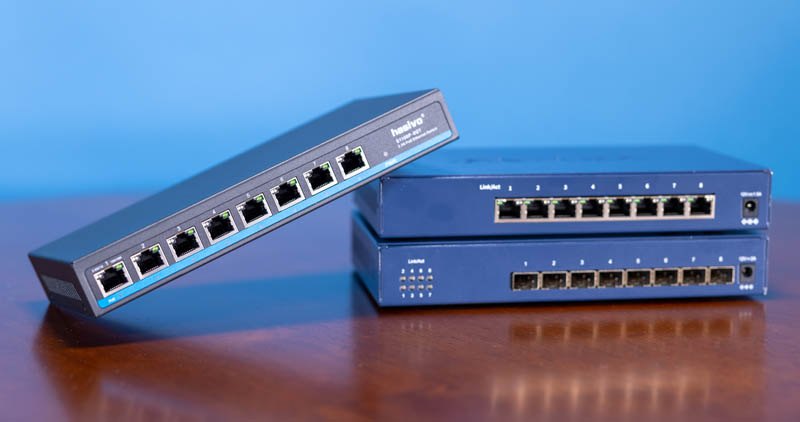
Why Switch Latency Matters in Today’s Networks
In modern business networks, milliseconds can make a difference. As companies deploy cloud applications, VoIP, IP surveillance, and real-time analytics, the performance of the underlying infrastructure becomes critical. One of the key components affecting responsiveness is the network switch, which handles packet forwarding, segmentation, and traffic management. But a common question arises: does a network switch add latency, and if so, how much?
At Jazz Cyber Shield, we understand the importance of deploying high-quality, low-latency switching gear. Our catalogue features top-tier products from Cisco and HP Aruba, designed to deliver fast, efficient, and scalable connectivity for enterprises of all sizes.
What Is Latency in a Network, and Why Does It Matter
Latency refers to the time delay experienced when data travels from the source to the destination. In networking, this delay includes:
- Propagation delay: How long the signal takes to travel through cables.
- Serialisation delay: The time to place bits on the wire.
- Processing delay: Time taken by networking devices to examine and forward packets.
High latency can degrade the performance of real-time applications. For example:
- VoIP or video calls suffer noticeable lag and jitter.
- Cloud-based applications become sluggish, impacting productivity.
- Gaming or financial applications may miss critical data if packets are delayed too much.
Therefore, minimising switching delay and processing time is essential for network architects who demand both performance and reliability.
Do Switches Really Introduce Latency?
Yes, but not as much as you might think. A quality-managed switch typically adds only microseconds of delay. Here’s how switching latency plays out in practice:
- Frame Reception: When an Ethernet frame arrives, the switch reads the header.
- MAC Address Lookup: It checks its MAC address table (also called CAM table) to see where the frame should be forwarded.
- Packet Forwarding: Depending on its architecture (store-and-forward or cut-through), the switch then forwards the frame to the correct port.
Because modern devices are highly optimised, packet switching time is very low, and any added delay is negligible for most business use cases.
How Exactly Does a Switch Process Data?
To demystify switching internals, let’s break down the data path and mechanisms:
- Frame Reception
- The switch receives the Ethernet frame and inspects the header.
- It extracts source and destination MAC addresses.
- Learning the MAC Table
- When a new device sends a frame, the switch learns its MAC address and records which port it's on.
- Over time, this builds a MAC address table, enabling precise forwarding.
- Forwarding Modes
- Store-and-Forward: The switch receives the entire frame, checks for errors with CRC, and then forwards. This introduces more buffering but ensures integrity.
- Cut-Through: The switch reads the destination MAC as soon as the frame starts coming in, then forwards immediately — reducing switching delay.
- Fragment-Free: A hybrid where only the first 64 bytes are buffered to detect collisions.
- Filtering and Flooding
- If the destination MAC is known, the switch sends the frame only to that port (unicast).
- If unknown, it floods the frame to all ports temporarily, until the MAC table learns the correct mapping.
These intelligent forwarding mechanisms help minimise switching delay while maintaining efficiency and security.
Factors That Influence Switch Latency
Several technical and architectural factors can impact how much delay a switch introduces into data flows:
- Hardware quality: High-end switches with faster ASICs will process frames faster.
- Port speed: Gigabit, 10G, 25G, or higher uplinks influence serialisation delay.
- Buffer size: Larger buffers help absorb traffic bursts but can add queuing delay.
- Number of hops: Multiple switches in a path can stack latency.
- VLAN processing: Segmentation adds overhead in managed equipment.
- QoS and ACLs: Prioritisation and access rules require deeper packet inspection.
- Switch architecture: Layer 2 vs Layer 3 forwarding, or multi-layer switching, affects processing times.
Understanding these variables helps network designers minimise latency and fine-tune performance for critical use cases.
Types of Switches and Their Latency Characteristics
Not all switches are created equal. Their design influences how much delay they add. Here are common types:
- Unmanaged Switches
- Plug-and-play devices with no configuration.
- Minimal processing overhead, but fewer features for traffic control.
- Managed Switches
- Provide VLANs, QoS, Spanning Tree, and port security.
- Slightly more delay due to packet inspection and rule enforcement.
- Layer 2 Switches
- Operate at the MAC (data link) layer.
- Excellent for fast switching within the same broadcast domain.
- Layer 3 Switches
- Offer routing capabilities using IP addresses.
- More processing overhead, but flexible for multi-segment networks.
- PoE (Power over Ethernet) Switches
- Supply power and data on the same cables.
- Power negotiation introduces minimal delay but supports devices like IP cameras and Wi-Fi access points.
Each type addresses different deployment needs, and the right choice helps optimise traffic latency and network performance.
When Latency Really Matters: Performance-Critical Use Cases
In certain environments, even microseconds of delay are significant:
- Data Centres: Real-time workloads, database replication, and virtualisation demand ultra-low latency.
- Financial Trading: Millisecond delays could mean lost opportunities or inaccurate market data.
- High-Performance Computing (HPC): Parallel computing systems exchange large volumes of data frequently.
- Real-Time Automation: Industrial control, robotics, or IoT require rapid response.
- Voice / Video over IP: Delays or jitter directly degrade user experience in voice calls or live video.
For such applications, structured design, proper buffer tuning, and low-latency switch architectures are essential.
How to Minimise Latency in Your Switching Infrastructure
Here are practical measures to optimise your network and reduce added delays:
- Use cut-through switches in performance-sensitive segments.
- Design with fewer hops between critical devices.
- Choose switches with large and efficient buffers to minimise queues.
- Enable QoS to prioritise important traffic (VoIP, video, data).
- Use high-speed uplink ports (10G, 25G) to lower serialisation delay.
- Implement redundancy (link aggregation, stacking) to avoid congestion.
- Keep firmware up-to-date to benefit from performance improvements and security patches.
These optimisations help ensure that your infrastructure delivers low latency without compromising flexibility or security.
Troubleshooting Latency Issues in Your Network
Even with a robust setup, latency problems may arise. Here’s how to diagnose and resolve them:
- Run ping/traceroute tests to check the delay between nodes.
- Inspect switch buffer usage via SNMP or CLI to detect congested queues.
- Verify duplex and speed settings on each port to avoid mismatches.
- Review VLAN and QoS configuration to ensure no misapplied rules.
- Check for network loops and verify that Spanning Tree Protocol is configured properly.
- Use packet-capture tools to analyse frame processing delays.
- Perform hardware health checks for overheating or failing switches, and add latency.
Addressing these common issues helps maintain a responsive, reliable network.
Why Choose Low-Latency Switches from Jazz Cyber Shield
When low latency and high performance truly matter, Jazz Cyber Shield is your partner for enterprise-grade switching solutions. Here’s how we support your infrastructure goals:
- Wide Range of Products: Our “Network Switch” catalogue includes Cisco and HP Aruba models supporting everything from compact PoE devices to high-throughput modular chassis.
- Trusted Brands: Cisco remains a top choice for data centres, campuses, and mission-critical environments. HP Aruba combines simplicity and smart automation for flexibility and manageability.
- Performance-Driven Hardware: We offer switches optimised for low-latency, high-throughput environments using advanced ASICs.
- Scalable Architectures: Whether you’re building out a branch office or scaling in a multi-site enterprise, our switching gear can grow with you.
- Expert Consultation: We help you choose the right switch type, configure VLANs, set up QoS, and plan for redundancy, optimising for both performance and cost.
- Support & Warranty: All products are backed by warranty and technical support, ensuring long-term reliability.
By combining cutting-edge hardware with deep expertise, Jazz Cyber Shield enables you to deploy an efficient, low-latency network that supports modern applications and business continuity.
Future Trends: What’s Next for Switching Technology
Switching technology continues evolving toward smarter, more automated, and faster infrastructures. Key trends include:
- Software-Defined Networking (SDN): Separates control plane from data plane, enabling dynamic path decisions and optimised traffic flow.
- AI-Driven Traffic Optimisation: Predictive analytics to manage buffer allocation, flow prioritisation, and congestion proactively.
- Cloud-Managed Switches: Remote deployment and zero-touch provisioning simplify large-scale rollouts.
- High-Bandwidth Switching: 100G, 200G, and even 400G uplinks are becoming mainstream in data centres.
- Edge Switching for IoT: Low-latency switches at the network edge enabling real-time processing on smart devices.
These developments will further reduce delay, enhance network intelligence, and support bandwidth-hungry, real-time applications.
Understanding and Managing Latency for Smarter Networks
In summary, while there is a small delay when using a switch, it is minimal and often measured in microseconds. With properly designed switching architectures, modern devices are more than capable of handling demanding workloads without compromising responsiveness. The real challenge lies in deploying the right hardware, configuring it intelligently, and maintaining the infrastructure proactively.
For businesses that require top-tier performance, Jazz Cyber Shield offers best-in-class network switch solutions from Cisco and HP Aruba. These products empower your network with low-latency switching, scalable design, and robust management features, forming a solid foundation for today’s high-speed, data-centric operations.
Invest wisely in your infrastructure, and you’ll enjoy a network that supports your business goals while delivering the responsiveness and reliability your users demand.
FAQs Section:
Q1: Do more hops (multiple switches) increase network latency?
Yes, each switch introduces a small forwarding delay. While a single switch adds only microseconds, multiple hops can stack up, which is why keeping critical paths short is key for latency-sensitive systems.
Q2: Do managed switches add more delay than unmanaged ones?
They can, because they inspect packets for features like VLAN, QoS, and security. However, the trade-off is better traffic control and segmentation. High-performance managed models are optimised for minimal processing delay.
Q3: Which is faster: store-and-forward or cut-through switching?
Cut-through switching is faster since frames are forwarded as soon as the destination MAC address is read. Store-and-forward provides error checking but introduces slightly more latency due to buffering.
Q4: Can enabling QoS increase switch latency?
Possibly. QoS requires the switch to analyse packet headers and assign priority, which adds a small amount of processing time, but the benefit of traffic prioritisation usually outweighs the minimal delay.
Q5: How can I minimise latency if I need to support real-time applications?
Use low-latency switch hardware (cut-through or high-performance ASICs), design your network to reduce hop count, enable QoS, choose high-speed uplinks (10G+), and monitor buffer usage to ensure traffic flows optimally.
 French
 English
 Arabic
 Spanish
 Portuguese
 Deutsch
 Turkish
 Dutch
Dutch
 Italiano
 Russian
 Romaian
 Portuguese (Brazil)
 Greek
Greek
