


 About
About
 Termini e Condizioni
 Privacy
Retractable vs. Shock-Absorbing Lanyards: Which One Should Your Team Use?
Work at height demands systems that protect workers during unexpected falls. The choice between a retractable fall arrester and a shock-absorbing lanyard affects safety, mobility, and compliance across your worksite.
Both devices are widely used in industrial and EPC environments, but each serves a different purpose based on fall distance, anchor layout, and task movement.
Choosing the wrong device can lead to injury, equipment strain, or regulatory issues.
Choosing the correct one ensures controlled fall arrest, reduced impact force, and uninterrupted productivity.
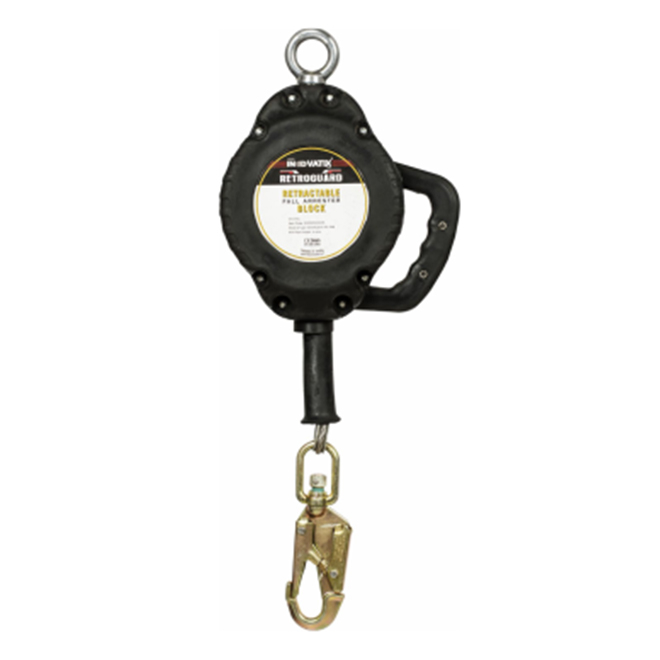
Indian Inovatix, a trusted manufacturer and supplier, designs certified fall protection systems, including the Retro-Guard retractable fall arrest block and high-strength shock-absorbing lanyards.
This guide explains the difference and helps safety officers select the correct option for their teams.
What Is a Retractable Lanyard (Self-Retracting Fall Arrester)?
A retractable fall arrester, often called an SRL or retractable fall arrest block, is a device that locks instantly during a fall.
It contains:
-
A retractable lifeline (steel cable or webbing)
-
An automatic braking mechanism
-
A casing that reels the line in and out as the user moves
How It Works
When the worker moves slowly, the lifeline extends and retracts smoothly.
If a fall occurs, the internal brake activates and stops the descent within a short distance.
Where Retractable Units Perform Well
-
Tasks requiring frequent movement
-
Vertical access on towers or platforms
-
Areas with limited fall clearance
-
Roof work with anchor points above the user
-
Industrial plants, EPC projects, telecom towers, refineries
Key Advantages
-
Short stopping distance
-
Reduced swing hazard
-
Smooth movement without slack
-
Automatic adjustment to worker position
The Retro-Guard Retractable Fall Arrest Block by Indian Inovatix is designed for these conditions.
What Is a Shock-Absorbing Lanyard?
A shock-absorbing lanyard uses a built-in energy absorber that deploys during a fall.
It connects a full body harness to an anchor point and reduces arrest force by gradually tearing or expanding the absorber.
Where Shock-Absorbing Lanyards Perform Well
-
Areas with adequate fall clearance
-
Fixed-point work where mobility is limited
-
Construction decks, platforms, and general industrial access
-
Tasks with predictable anchor positions
Key Advantages
-
Lightweight and simple
-
Cost-effective for routine tasks
-
Reliable for controlled zone work
Shock-absorbing lanyards are ideal for stable anchor layouts where the user does not need continuous retraction or long-range movement.
Retractable vs. Shock-Absorbing Lanyards: Side-by-Side Comparison
| Feature | Retractable Fall Arrester | Shock-Absorbing Lanyard |
|---|---|---|
| Mobility | High – smooth movement | Moderate – fixed length |
| Fall Clearance Needed | Low | Higher |
| Stopping Distance | Very short | Longer (due to absorber deployment) |
| Weight | Heavier | Lighter |
| Best Use Case | Frequent movement at height | Fixed anchor tasks |
| Maintenance | Requires periodic service | Simple inspection |
| Cost | Higher | Lower |
How to Decide Which One Your Team Should Use
Choosing between the two depends on your worksite conditions.
1. Choose a Retractable Fall Arrester If:
-
Fall clearance is limited
-
Workers need free movement
-
Anchors are above the user
-
Work involves ladders, towers, or platforms
-
You want automatic lifeline tension
-
A short stopping distance is required
Ideal for refineries, telecom towers, power plants, and EPC structural work.
2. Choose a Shock-Absorbing Lanyard If:
-
The anchor point is fixed
-
Fall clearance is available
-
Work is repetitive or localized
-
You need a lightweight, simple device
Common in construction decks, warehouse platforms, and industrial access points.
Why Indian Inovatix Recommends System-Based Selection
No device is universally “better.”
The safest option depends on:
-
Anchor height
-
Movement required
-
Available fall clearance
-
Work positioning needs
-
Hazard zone layout
Indian Inovatix guides safety teams through equipment planning for EPC, industrial plants, and infrastructure projects to ensure workers receive the correct system.
Industry Applications for Each Lanyard Type
Different worksites require specific fall protection behaviour. Selecting the correct device reduces risk and improves operational stability.
Where Retractable Fall Arresters Excel
Retractable units are preferred in environments where workers move often and need constant tension on the lifeline.
Common Applications
-
Telecom towers
-
Power generation structures
-
Refinery and petrochemical platforms
-
Elevated conveyor systems
-
Rail yards and maintenance decks
-
Industrial rooftops with long access paths
Teams benefit from:
-
Smooth extension and retraction
-
Short arrest distance
-
Reduced swing danger
The Retro-Guard retractable fall arrester by Indian Inovatix is built for these conditions.
Where Shock-Absorbing Lanyards Are Ideal
Shock-absorbing lanyards perform well when anchor locations are fixed and fall clearance is available.
Common Applications
-
Manufacturing floors
-
Construction decks
-
Warehouse platforms
-
Scaffolding access zones
-
General industrial maintenance
Teams benefit from:
-
Lightweight equipment
-
Predictable movement
-
Simple inspection steps
These lanyards are dependable where travel distance is limited.
Mini Case Example: Choosing the Right System for a Power Maintenance Project
A power distribution company needed fall protection for technicians climbing elevated transformers and moving across platforms.
The safety team previously used only shock-absorbing lanyards, which created slack and increased fall distance.
Assessment by Indian Inovatix:
-
Low fall clearance
-
High worker mobility
-
Frequent up-down movement
-
Need for controlled arrest
Recommended Solution:
Retractable fall arresters (Retro-Guard units) installed at anchor points above the technicians.
Outcome:
-
Reduced stopping distance
-
Improved worker confidence
-
Zero fall incidents in the next audit cycle
This example shows how correct selection improves both safety and task continuity.
Best Practices for Choosing Between Retractable and Shock-Absorbing Lanyards
1. Measure Fall Clearance
If clearance is low → choose retractable
If clearance is high → choose shock-absorbing
2. Evaluate Worker Movement
Frequent travel → retractable
Fixed zone → shock-absorbing
3. Review Anchor Position
Anchor above the user → retractable
Anchor at mid-level or side → shock-absorbing
4. Check Task Duration
Long-duration tasks may benefit from retractable units due to reduced slack and smoother movement.
5. Consider Environmental Conditions
Corrosive or outdoor areas may require sealed retractable blocks.
Common Mistakes to Avoid
-
Using shock-absorbing lanyards where clearance is low.
-
Allowing excessive slack on fixed-length lanyards.
-
Miscalculating swing hazard zones.
-
Ignoring manufacturer inspection schedules.
-
Mixing incompatible connectors or harness types.
Correct equipment planning prevents downtime and improves worker protection.
FAQs (Snippet-Ready)
1. What is the main difference between a retractable lanyard and a shock-absorbing lanyard?
A retractable adjusts tension automatically, while a shock-absorbing lanyard relies on a fixed length with an energy absorber.
2. When should I use a retractable fall arrester?
When fall clearance is limited or when workers need free movement.
3. When should I use a shock-absorbing lanyard?
When anchor points are fixed and enough fall clearance is available.
4. Are retractable units heavier than shock-absorbing lanyards?
Yes, retractable devices weigh more due to the internal braking system.
5. Do both devices reduce fall force?
Yes, both are designed to limit impact on the worker.
6. Can retractable units replace all lanyards?
No, each has a specific purpose depending on task and anchor conditions.
7. How often should retractable fall arresters be inspected?
Before each use and through scheduled reviews as per manufacturer guidance.
8. Can shock-absorbing lanyards be used on ladders?
They can, but retractable units often perform better due to reduced slack.
9. Are Indian Inovatix retractable units certified?
Yes, Retro-Guard units comply with required safety standards.
10. Who decides which device workers should use?
Safety officers, EPC consultants, or plant supervisors following site assessments.
Conclusion
Both retractable fall arresters and shock-absorbing lanyards play critical roles in fall protection systems. The safest choice depends on clearance, anchor points, and movement required for each task.
Retractable units provide controlled arrest and smoother mobility for workers who travel across large or elevated structures.
Shock-absorbing lanyards deliver reliable, lightweight protection where movement is limited and clearance is available.
Indian Inovatix, a trusted manufacturer, supplier, and specialist, offers certified fall protection solutions, including the Retro-Guard retractable fall arrester and high-grade shock-absorbing lanyards.
Every worker deserves safety. Equip your team with the correct fall protection gear from Indian Inovatix.
Enquire now for bulk pricing, technical guidance, or custom fall protection planning.

 English
 Arabic
 French
 Spanish
 Portuguese
 Deutsch
 Turkish
 Dutch
Dutch
 Russian
 Romaian
 Portuguese (Brazil)
 Greek
Greek
