


 Pro Benefits
 Sobre
Sobre
 Termos
 Privacidade
 Child Safety & Protection
 Notificações
 Ayrush Global It Services Pvt Ltd
The Future of Digital Freight Marketplaces & Trends
The Rise of Digital Freight Marketplaces: Trends and Future Outlook
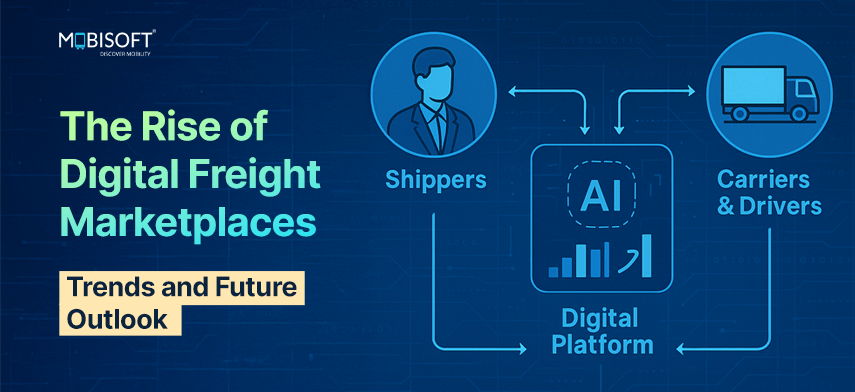
Conventional freight management is based on manual communication, phone calls, and traditional broker networks. And for years, it was the standard. Although such a system worked, it was inherently bound to be problematic, being complex and lacking transparency.
With slow updates, uncertain pricing, and difficulty securing capacity, the market has reached a critical turning point. The present prospect is not about discarding old methods but upgrading the infrastructure itself.
Digital Freight Marketplaces represent this much-needed upgrade. They take the core functions of conventional logistics and optimize them by implementing real-time data and AI-driven intelligence while being fully transparent. The key is recognizing that technology now offers the control and agility required to become a leader in modern supply chain management.
Explore our freight marketplace software designed to streamline digital freight operations.
How Digital Freight Marketplaces Are Replacing Traditional Brokers?
The way logistics operates has changed a lot over the decades. Brokers who manage shipments themselves, charge fees, and negotiate prices are slowly becoming obsolete. Logistics management firms now employ algorithms to pair loads with suitable carriers through digital freight matching platforms. Businesses can now track shipments, check how carriers are doing, and study cost patterns easily.
It also helps lower idle time and empty miles, making operations run more smoothly. The objective is to enhance the whole process rather than just moving commodities. Businesses enjoy flexibility, better visibility, and smart insights, and it will be easier to respond to sudden market fluctuations with a view to maintaining costs and assuring reliable service.
See how our digital freight matching platform helps automate freight matchmaking for logistics providers.
Top Factors Driving Growth of Digital Freight Marketplaces
E-commerce Growth Demands Speed
E-commerce has transformed how companies transport products. Businesses must now rapidly fulfill more orders. Freight online marketplaces assist shippers with boosting capacity on a demand-driven basis, accommodating fluctuations. This rapidness aids in satisfying demand as it occurs, as well as reducing costs for being slow.
5G and IoT Enable Real-Time Visibility
5G high-speed connectivity and advanced GPS tracking allow firms to pinpoint the exact location of the freight. Moreover, you get the expected time of arrival, possible congestions, and even resource monitoring. This level of insight results in early diagnosis in case of issues and highlights the growing digital freight marketplace trends transforming logistics visibility.
Automated Contract Management and Payments
Neither freight agreements nor invoices need any physical handling anymore. Platforms feature automated contract management, electronic signatures, and real-time payments. This minimizes errors, saves time, as well as promotes compliance across geographies, showcasing key digital freight platform benefits that improve transparency and efficiency.
Operational Resilience and Nearshoring
More attention is being given to resilient supply chains. Localizing production and having various routes are gaining prominence. Online freight exchanges assist such strategies by offering access to flexible carriers and various routes as required.
Together, they do more than contribute to expansion. They create the groundwork for fully digital, data-driven freight operations that offer flexibility, efficiency, and control to businesses, demonstrating the value of digital marketplaces for freight forwarders and shippers alike.
The Intelligence Core: AI, Blockchain, and Predictive Analytics
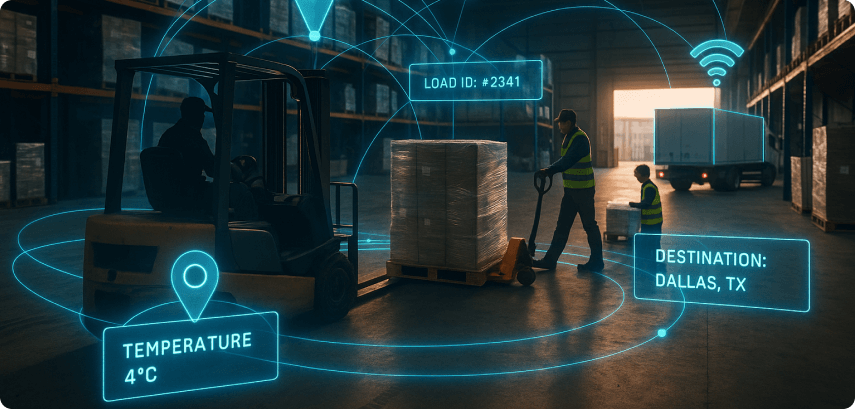
Artificial Intelligence Optimizes Operations
- Digital logistics solutions now examine history and real-time data in order to pair loads, forecast prices, and schedule shipments efficiently.
- This minimizes deadheading as well as ensures efficient utilization of capacities.
- With anticipation of increases in demand, AI ensures that carriers as well as shippers are better prepared to avoid delays.
Blockchain Secures Transactions
- Increasing freight transactions are being registered on blockchain platforms.
- This unchangeable, clear documentation results in fewer cases of misunderstandings.
- Contracts are now embedded with AI, which manages and supervises agreement procedures. This further removes manual labor and lesser mistakes.
Predictive Analytics Guides Decisions
- Data analysis allows stakeholders to predict probable bottlenecks, manage finances, and monitor shipments for each trip.
- Through predictive analytics, logistics teams can make modifications to their plans beforehand.
- This not only saves time and money, but also the extra effort of fixing issues on the spot.
Through data analysis, businesses can estimate demand, identify potential delays, and track shipments along their journey. Predictive insights allow logistics teams to adjust plans ahead of time instead of scrambling to fix problems after they occur. Learn how our freight management solutions help businesses enhance visibility and control through smart automation.
Integration Creates a Self-Learning Marketplace
When tools like AI, blockchain, and predictive analytics work as one, marketplaces grow intelligent. They can predict capacity gaps, map out routes, and tweak pricing strategies as needed. This mix of technology shifts freight management from reacting to solving issues to making better decisions, giving companies a clear advantage in how they operate.
The digital freight marketplace future lies in these self-learning systems, where every transaction enhances platform intelligence and operational insight.
Freight Marketplaces as Integrated Ecosystems for Smarter Logistics
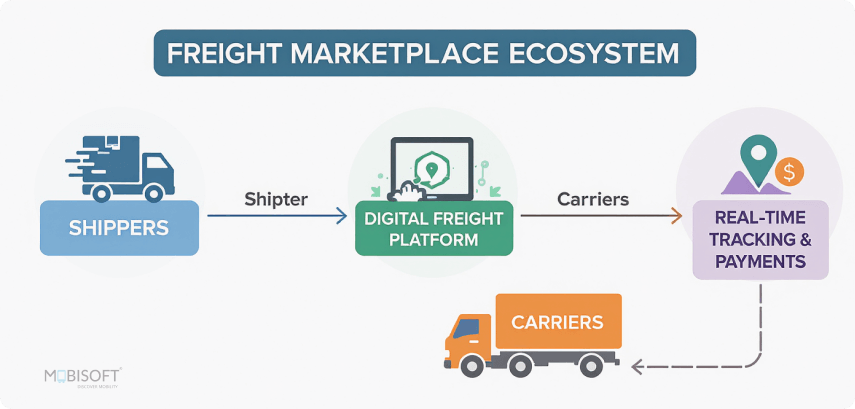
Freight management software is more than virtual brokers. They became integrated systems in which shippers, carriers, insurers, and financiers collaborate via shared APIs and intelligent data links. This approach generates a phenomenon called platform liquidity, which means that as more participants come aboard, the smarter and more efficient the network becomes.
Transport management, compliance verification, and flexible rate analysis now come together via cloud-based solutions in a single, user-friendly interface, providing a business with a comprehensive view of its operations. Firms can rapidly discover pockets of capacity, optimize routes, and manage risk with a single, separate system or more.
By transitioning from networks to ecosystems, digital freight marketplaces for small businesses provide not just coordination but a competitive advantage. Firms realize speed as well as insight, making freight management more than just a collection of simple tasks, but a linked operating plan built on digital freight marketplace innovation.
Explore how on-demand trucking apps are reshaping connected logistics and real-time freight delivery.
Learn More:
https://mobisoftinfotech.com/resources/blog/transportation-logistics/digital-freight-marketplaces-trends-future

 English
 Arabic
 French
 Spanish
 Deutsch
 Turkish
 Dutch
Dutch
 Italiano
 Russian
 Romaian
 Portuguese (Brazil)
 Greek
Greek
