


 Pro Benefits
 About
About
 Termeni
 Confidențialitate
 Child Safety & Protection
 Notificări
 Ayrush Global It Services Pvt Ltd
The Rise of Privacy-First AI: Zero-Knowledge Proofs Reshaping the Digital Future
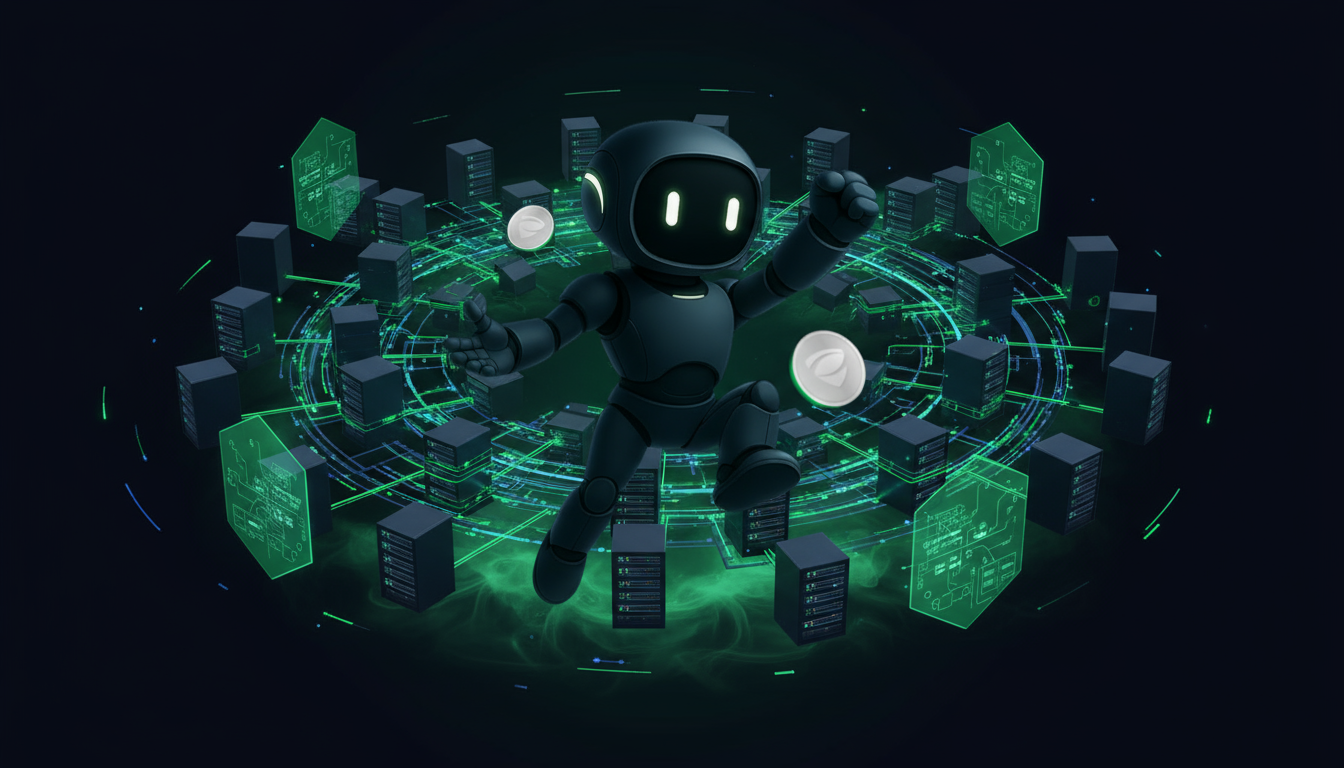
Artificial intelligence is accelerating at a pace that reshapes how businesses operate, how institutions manage information, and how individuals interact with the digital world. AI’s power lies in data—massive, interconnected, deeply personal data. Yet the need for privacy has never been more urgent. Medical records, financial histories, identity credentials, private conversations, research archives, intellectual property—these are sources of intelligence, but also deeply sensitive.
In the past, unlocking AI's capabilities meant sacrificing privacy. Data needed to be exposed, transferred, stored, and sometimes permanently retained. But today, a breakthrough in cryptographic verification allows AI to compute and learn without ever accessing the raw data itself. This breakthrough is the foundation of Zero-Knowledge Proofs.
Zero-Knowledge Proof technology enables one party to prove something is true to another party without revealing the actual data that makes it true. Instead of trust based on visibility, trust is established mathematically. This shift signals the beginning of a new trustless digital age.
Decentralizing AI: Compute Without Surrendering Control
For decades, AI has been centralized. Data goes into corporate servers, processed under opaque rules, with trust required but rarely justified. In this system, the user becomes a data source rather than a data owner. Privacy has always been the cost of intelligence.
A decentralized AI compute network changes that paradigm. Instead of sending data to centralized servers, computation is distributed across independent contributors. These contributors remain in control of their hardware and their privacy. Instead of being tracked by the system, they support and shape it.
This move replaces dependency with participation. The value of intelligence is no longer captured by corporations alone—it is shared with the network that makes it possible.
Proof Pods: The Hardware Backbone of Decentralized Intelligence
To enable decentralized private compute, specialized hardware devices known as Proof Pods serve as the operational heart of the network. These devices are designed not for surveillance or data harvesting, but for secure computation where privacy is protected at the hardware and protocol level.
Participants who operate Proof Pods help power AI workloads while keeping their environment sovereign and secure. The network rewards those who contribute compute power, creating a new form of digital participation that resembles mining—but with real utility powering real computation.
Because Proof Pods are limited in availability, early participants hold a foundational role in shaping and supporting the emerging decentralized AI infrastructure. Ownership is not symbolic—it directly connects the participant to the growth and performance of the network.
A Blockchain Designed for Privacy-First AI
Traditional blockchains are transparent ledgers. Their transparency is useful for verifying transactions, but incompatible with confidential computing. A privacy-first AI ecosystem requires a blockchain capable of validating computations without exposing the underlying data.
This blockchain is modular, scalable, and purpose-built for AI. It does not store data or model weights. It stores verified proofs that computation was completed correctly and privately. This ensures the network remains secure, decentralized, and trustless.
The key to this architecture lies in advanced cryptographic batching and verification systems, specifically:
zero knowledge rollups
zk rollups
These systems allow thousands of computations to be verified at once without revealing any of the information within them. Computation happens privately. Verification happens publicly. Privacy is structurally guaranteed.
The Privacy-Preserving AI Revolution
Industries that once saw privacy and intelligence as mutually exclusive now gain both simultaneously.
Healthcare can use AI-driven diagnostics without exposing patient records.
Financial institutions can assess risk without reading transaction histories.
Digital identity systems can authenticate users without storing identity information.
Corporations can run collaborative model training without leaking trade secrets.
For the first time, AI can analyze data it never sees.
This is the difference between surveillance-powered technology and sovereignty-powered technology.
The Economic Layer: A Digital Token With Real Purpose
At the center of the ecosystem is the native network token, the fuel that coordinates computation, secures consensus, and rewards contributors. Unlike speculative tokens that exist without function, this token serves as a working asset inside an operational compute economy.
Proof Pod operators earn tokens for providing computational power.
Validators earn tokens for verifying private computation proofs.
Developers use tokens to deploy privacy-preserving applications.
Users transact privately without exposing identifying information.
As demand for privacy-first AI computation grows, the role and value of the token naturally expand.
This is not an artificial economic model—it is a resource-based one. The token tracks the value of computation in a privacy-protected digital world.
The Dawn of a New Data Economy
The current digital economy was built on extraction. Platforms harvested data. Algorithms exploited identity and behavior. Users became products. Privacy was a luxury only available to the technically skilled or the highly vigilant.
Zero-Knowledge Proof technology replaces extraction with empowerment.
In this new digital structure:
-
Data does not leave the user’s ownership.
-
Computation happens without exposure.
-
Identity remains private by default.
-
Contributors become stakeholders.
-
Value circulates through participation rather than surveillance.
AI does not need to see everything to understand.
Computers do not need to reveal everything to compute.
Networks do not need to centralize to coordinate trust.
The emergence of decentralized, privacy-first AI marks the beginning of a major cultural transition—one where humanity finally reclaims its digital autonomy.
Looking Ahead
The future of technology will be built not on how much data can be collected, but on how much intelligence can be generated while protecting what is personal, valuable, and private. Zero-Knowledge Proofs are the key foundation of that future. Decentralized AI compute networks are the architecture. Proof Pods are the operational entry point. And privacy-preserving tokens are the economic layer.
 Romaian
 English
 Arabic
 French
 Spanish
 Portuguese
 Deutsch
 Turkish
 Dutch
Dutch
 Italiano
 Russian
 Portuguese (Brazil)
 Greek
Greek
