


 Pro Benefits
 About
About
 Termini e Condizioni
 Privacy
 Child Safety & Protection
 Notifiche
 Ayrush Global It Services Pvt Ltd
The Long-Term Effects of Computer Vision Syndrome on Eye Health and Daily Life
We all do it. We wake up and check our phones. We spend our workdays staring at a computer screen. We wind down in the evening by scrolling through social media or streaming our favorite shows. In this digital-first world, our eyes are putting in more overtime than ever before. We often brush off the resulting discomfort the tired, gritty feeling or the dull headache as just a normal part of life. But what if these daily annoyances are early warnings of a more persistent problem?
This collection of issues is known as Computer Vision Syndrome (CVS), and its impact can ripple far beyond temporary discomfort. Over time, the cumulative strain of staring at digital screens can have significant, long-term effects on both your eye health and your overall quality of life. Let's look beyond the daily fatigue and explore the lasting consequences of our screen habits.
From Annoyance to Chronic Condition: The Lasting Impact
Ignoring the initial signs of digital eye strain is like ignoring the "check engine" light on your car. At first, it's just a light, but if you keep driving, it can lead to bigger problems. Here’s how CVS can evolve from a temporary issue into a chronic one.
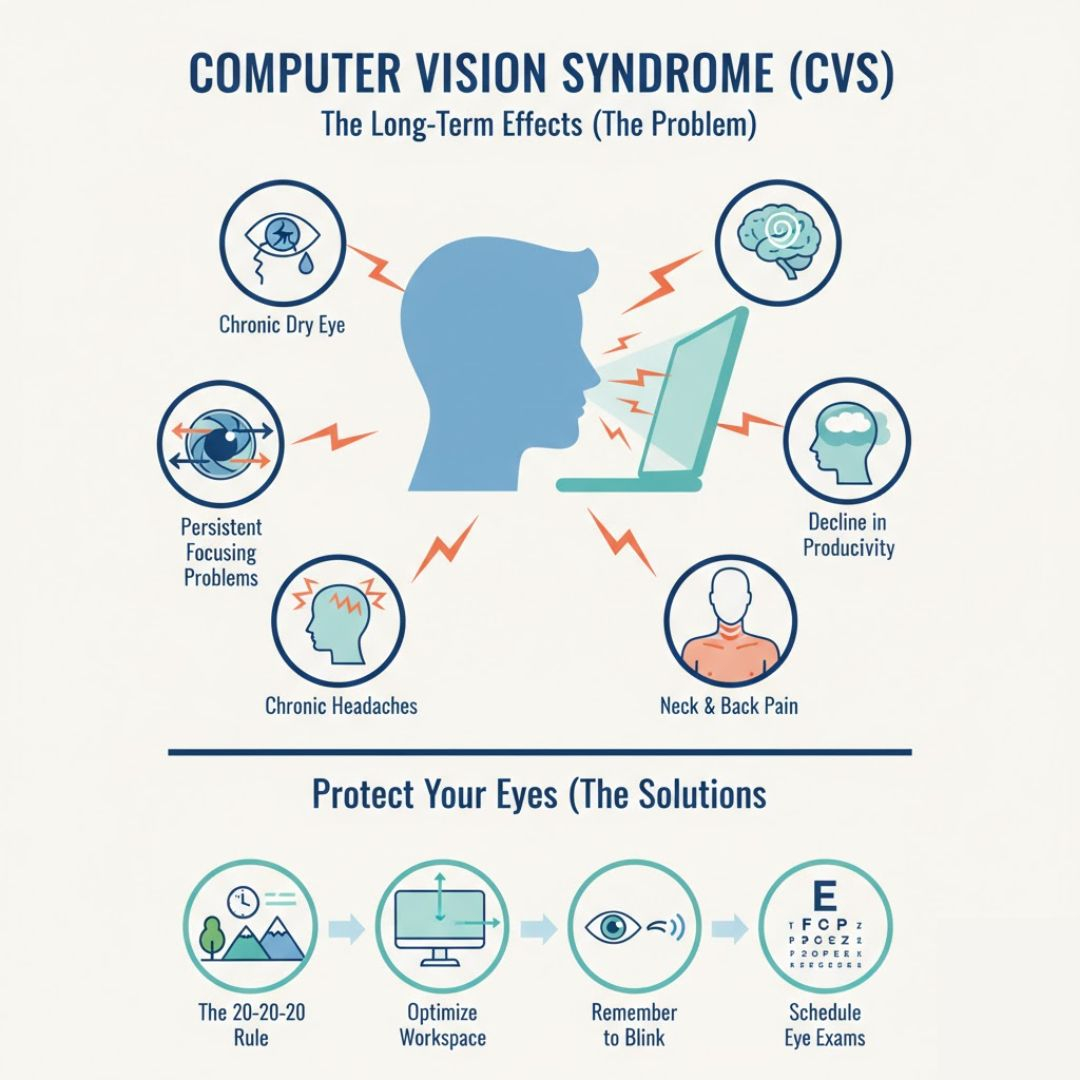
1. The Development of Chronic Dry Eye
When you stare intently at a screen, your blink rate can plummet by more than half. Blinking is your eye's natural way of cleaning and re-lubricating its surface. When you do it less, your tear film evaporates faster than it can be replenished. Over months and years, this can disrupt your eyes' ability to produce healthy tears, leading to chronic dry eye disease. This isn't just occasional dryness; it's a persistent condition causing constant irritation, a gritty sensation, and even bouts of blurry vision.
2. Persistent Focusing Problems
Your eyes have tiny muscles that contract and relax to shift your focus between near and far objects. Spending hours focused on a screen just inches from your face can cause these muscles to become fatigued and even "stuck" in a state of contraction. In the long term, this can lead to a condition called accommodative spasm, making it difficult to relax your focus and see clearly in the distance after you look away from your screen.
3. Unmasking Underlying Vision Issues
For some, the strain of CVS can unmask or worsen underlying binocular vision problems—conditions where the eyes struggle to work together as a team. The brain has to work much harder to fuse the images from each eye into a single, clear picture. This added demand can lead to chronic headaches, double vision, and profound eye fatigue that doesn't go away, even after a screen break. In children, an unaddressed binocular vision issue can contribute to problems that may require amblyopia treatment to ensure their visual system develops correctly.
4. Chronic Neck, Shoulder, and Back Pain
The connection between your eyes and your posture is powerful. When you're struggling with blurry vision or screen glare, you instinctively crane your neck forward or tilt your head into an unnatural position to compensate. Holding this poor posture for eight hours a day, five days a week, leads to chronic muscle strain, resulting in persistent pain in your neck, shoulders, and upper back.
5. A Decline in Productivity and Cognitive Function
When your eyes are constantly uncomfortable and your head is aching, it's nearly impossible to perform at your best. The long-term effects of Computer Vision Syndrome can create a cycle of inefficiency. You might struggle to concentrate on tasks, make more errors, and have to re-read information multiple times. This constant battle against physical discomfort can lead to "brain fog" and a significant decrease in your overall productivity and job satisfaction.
Is the Damage Reversible?
This is the big question, and the good news is, for the most part, yes. While the symptoms can become chronic and deeply impact your daily life, CVS does not typically cause permanent damage to the eye's physical structures or lead to blindness. The key is to break the cycle of strain and adopt healthier habits to give your eyes the support they need.
Taking Control of Your Visual Well-being
You don't have to quit your job or give up technology to protect your eyes. Small, consistent changes can make a huge difference:
-
Embrace the 20-20-20 Rule: Every 20 minutes, take a 20-second break to look at something at least 20 feet away.
-
Optimize Your Workspace: Position your monitor about an arm's length away and ensure the top of the screen is at or slightly below eye level. Adjust lighting to minimize glare.
-
Remember to Blink: Make a conscious effort to blink fully and frequently to keep your eyes lubricated.
-
Schedule Comprehensive Eye Exams: An eye doctor can identify underlying issues and provide personalized recommendations, from corrective lenses to specialized vision therapy, which can be an effective path to a lazy eye cure if a binocular vision issue is the root cause.
Conclusion: Your Eyes Deserve a Better Future
Our digital devices are here to stay, but the chronic discomfort of eye strain doesn't have to be. By understanding the long-term effects of our screen habits, we can shift from a reactive to a proactive mindset. Listening to the early warning signs and taking simple, preventative steps can protect your vision, improve your comfort, and enhance your quality of life for years to come.
FAQs
1. Can Computer Vision Syndrome lead to permanent blindness?
No. While it can cause significant discomfort and chronic symptoms, there is no evidence that CVS leads to permanent blindness or serious eye diseases like glaucoma or macular degeneration.
2. How is Computer Vision Syndrome officially diagnosed?
It is diagnosed through a comprehensive eye examination. An eye care professional will take a detailed patient history (focusing on screen time and symptoms), test visual acuity, assess how the eyes focus and work together, and rule out any other underlying eye health issues.
3. Are children more at risk for long-term effects?
Children can be particularly vulnerable because their visual systems are still developing. Furthermore, they may not recognize or be able to articulate their digital eye strain symptoms. It's crucial for parents to manage screen time and ensure children have regular eye exams to catch and address any potential issues early, such as those that might require lazy eye amblyopia treatment.

 English
 Arabic
 French
 Spanish
 Portuguese
 Deutsch
 Turkish
 Dutch
Dutch
 Russian
 Romaian
 Portuguese (Brazil)
 Greek
Greek
