


 Pro Benefits
 About
About
 Termini e Condizioni
 Privacy
 Child Safety & Protection
 Notifiche
 Ayrush Global It Services Pvt Ltd
Facial Hair Transplant: Solutions for Patchy Beards
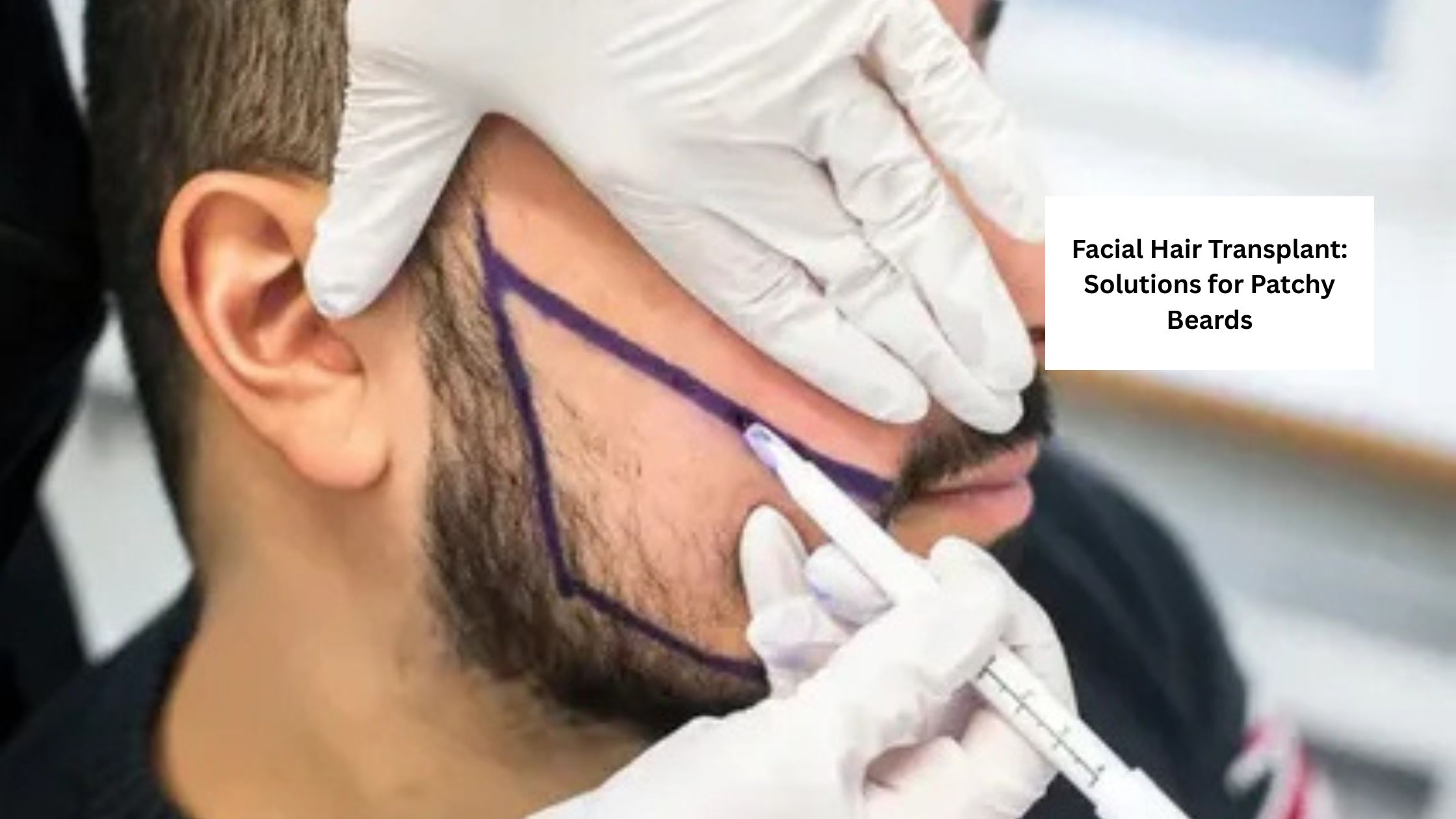
Many men struggle with uneven growth, patchy areas or thin spots in their facial hair. Whether it’s a sparse cheek line, an incomplete mustache, or gaps along the jaw, a fuller beard can boost both style and confidence. For men seeking an effective solution, a facial hair transplant offers a surgical approach to permanently enhance beard density and appearance. In this article, we’ll explore how this procedure works, who can benefit, what to expect, and how to care for your results. Ultimately, a facial hair transplant can turn those patchy patches into a well‑defined beard.
Understanding Patchy Beards
Patchy beards result from a variety of factors: genetics (some hair simply won’t grow in certain regions), hormonal imbalances, prior trauma or scarring, or even underlying skin conditions. When hair follicles in the beard zone are absent or inactive, you may see thin spots, uneven distribution or complete bald patches. The psychological impact can be surprisingly strong: men may feel self‑conscious about their facial hair, avoid growing a beard or feel their appearance is incomplete.
What Is a Facial Hair Transplant?
A facial hair transplant is the process of surgically relocating hair follicles—typically from the back or sides of the scalp—to desired regions on the face (cheeks, chin, jawline, mustache). While hair transplants are typically performed on the scalp, the procedure for facial hair is uniquely tailored to match the beard’s natural angle, curl pattern, density, and growth direction. This treatment is ideal for those with patchy or sparse beard growth, scars that prevent hair growth, or simply for those who wish to increase the thickness and shape of their facial hair. With the beard restoration, the transplanted hair grows just like natural facial hair, allowing regular grooming and a lasting result.
The Facial Hair Transplant Procedure
The beard restoration journey typically unfolds in several key steps:
- 1. Consultation and evaluation. A qualified surgeon assesses your facial hair, donor hair supply (scalp area) and discusses your goals. This initial meeting is critical for setting realistic expectations, mapping out the transplant zones, and determining suitability for the procedure.
- 2. Donor area selection. Hair is commonly harvested from the back or sides of your scalp, where follicles are more permanent and less prone to falling out. The better the donor hair quality, the better the beard restoration outcome.
- 3. Extraction of hair follicles. Two main techniques are used:
- Follicular Unit Extraction (FUE): individual hair follicles are removed one by one with minimal scarring.
- Follicular Unit Transplantation (FUT): a strip of scalp is removed, then dissected into individual grafts. FUT allows the transplantation of a large number of grafts in one session, though it may result in a thin linear scar.
- 4. Graft implantation in patchy areas. The harvested follicles are carefully placed in the beard region at the correct angle, direction and depth to mimic natural growth. This level of precision is crucial for the beard restoration to look authentic.
- 5. Post‑procedure care and recovery. You may experience some redness, swelling or a little shedding in the first week. Most of these effects subside quickly, and full beard growth begins in the months ahead.
Benefits of beard restoration
Choosing a beard restoration offers several distinct advantages:
- You achieve a fuller, more natural‑looking beard tailored to your face and style.
- The results are long‑lasting and permanent, unlike temporary fillers or topical treatments.
- Because the transplanted hair is your own, it integrates seamlessly and allows normal grooming (trimming, shaving) just like natural facial hair.
- With minimally invasive techniques (especially FUE), scarring is minimal and discreet.
- The procedure can be highly customised: you decide the shape, density and coverage.
- For men with patchy beards, beard restoration can improve aesthetics and confidence.
Who Is a Good Candidate?
A good candidate for a beard restoration is typically:
- A man with stable health, no active skin infections or serious medical issues.
- Someone who has patchy or uneven beard growth due to genetics, scars or underlying conditions.
- A person with sufficient donor hair (scalp area) to harvest from.
- Someone with realistic expectations — the goal is improvement and natural results, not perfection.
- If you tick those boxes, a beard restoration may well be an excellent solution.
Risks and Considerations
As with any surgical procedure, a beard restoration has some risks and things to keep in mind:
- Temporary swelling, redness or minor discomfort during recovery.
- Some of the transplanted hairs may shed initially before new growth begins (a normal phase).
- The cost can vary depending on the number of grafts required, the technique used, and the targeted area.
- It’s important to choose a skilled surgeon experienced in facial hair work, because the angle and placement matter more than with a standard scalp transplant.
- By discussing these points during your consultation, you can make an informed decision about a beard restoration.
Aftercare and Maintenance
Post‑procedure care is essential for optimal results from your beard restoration. You’ll be given detailed instructions, but the core routines typically include:
- Gentle cleaning of the area and avoiding touching or scratching the newly implanted follicles in the first few days.
- Avoiding strenuous exercise, direct sun exposure or activities that might irritate the face for a week or so.
- Expect the transplanted hairs to begin visible growth after about 3‑4 months, with fuller results around 9‑12 months.
- With proper care and time, your beard restoration will gradually reveal the fuller beard you envisioned.
Alternatives to beard restoration
While a beard restoration is a highly effective method, some men may explore other options:
- Topical treatments (like minoxidil) or beard growth serums, though these can have variable success and don’t always fill large gaps.
- Cosmetic tattooing or microblading to simulate beard appearance — more of a cosmetic illusion rather than actual hair growth.
- Non‑surgical beard implants (less common) or hair‑piece solutions.
- While these alternatives may suit some men, none offer the permanence or authenticity of a properly performed beard restoration.
Conclusion
For men seeking to solve patchy beards and achieve a fuller, natural‑looking beard, a facial hair transplant presents a compelling solution. With the right candidate, expert technique, and proper aftercare, the results can boost facial aesthetics and personal confidence in a lasting way. If you’re considering this step and want to consult experienced specialists, consider Beverly Hills Hair Restoration's services.

 English
 Arabic
 French
 Spanish
 Portuguese
 Deutsch
 Turkish
 Dutch
Dutch
 Russian
 Romaian
 Portuguese (Brazil)
 Greek
Greek
