


 Pro Benefits
 Environ
 Conditions générale de vente
 Confidentialité
 Child Safety & Protection
 Notifications
 Ayrush Global It Services Pvt Ltd
Restoring Chemically Degraded Oil with a Transformer Oil Regeneration Plant
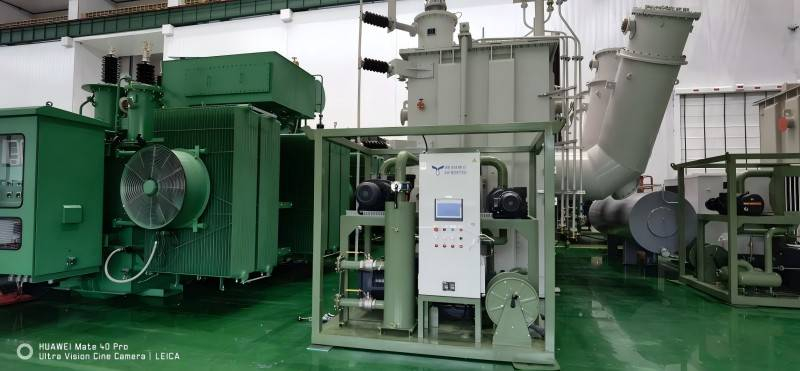
While conventional purification excels at removing physical contaminants — water, gases, and particles — it cannot reverse the chemical aging of transformer oil. Oxidation, acid formation, sludge deposition, and interfacial tension loss continue to progress even after the oil has been physically cleaned. To truly restore aged insulating oil to near-new condition, a transformer oil regeneration plant is required.
Chemical degradation begins the moment oil is exposed to heat, oxygen, and electrical stress. Oxidation produces harmful by-products that lower the oil's cooling and insulating properties. Over time, the acid value (neutralization number) rises, attacking cellulose insulation and corroding metal components. Oxidation by-products eventually polymerize into sludge and varnish that clog cooling ducts and accelerate insulation deterioration. Dark oil color, reduced interfacial tension, and elevated dielectric dissipation factor (tan δ) are all telltale signs that filtration alone will not suffice.
A transformer oil regeneration plant addresses these issues through a multi-stage process that goes beyond physical purification. The journey begins with oil heating to 45–65 °C, lowering viscosity and preparing the oil for treatment. Coarse filtration then removes larger debris, protecting downstream components. Vacuum degassing extracts dissolved gases including hydrogen, methane, acetylene, and carbon monoxide. Vacuum dehydration drives moisture down to very low levels. Fine filtration captures microscopic particles down to 1–5 microns.
The defining stage, however, is adsorption regeneration. The purified oil flows through adsorption columns filled with Fuller's Earth or other high-performance adsorbent media. These materials selectively capture acidic compounds, sludge, varnish, oxidation products, and other polar contaminants that ordinary filtration cannot eliminate. The result is a dramatic restoration of the oil's chemical profile: acid value drops to ≤0.1 mgKOH/g, interfacial tension recovers, color lightens, and oxidation stability returns.
The quantifiable outcomes of regeneration are impressive. A YUNENG regeneration machine can take oil from a pre-treatment state of ≤50 ppm water, ≤10% gas content, and ≥30 kV breakdown voltage to a post-treatment state of ≤5 ppm water, ≤0.1% gas content, 0 acetylene, and ≥75 kV breakdown voltage (spherical electrodes). Dielectric loss (tan δ) is reduced to ≤0.3% at 90 °C. These figures meet or exceed IEC 60422, IEC 60296, ASTM D877, and ASTM D1816 standards.
The economic argument for regeneration is equally compelling. Replacing transformer oil entirely involves purchasing new oil, disposing of the old oil, and managing the logistics of large-volume fluid transfer. Regeneration, by contrast, restores the existing oil in place at a fraction of the cost, often eliminating the need for replacement altogether. For a large power transformer containing 50,000 liters of oil, the savings can be substantial. Moreover, regeneration can be performed multiple times during the oil's service life, provided the base oil has not suffered irreversible thermal degradation.
Another advantage of the transformer oil regeneration plant is its mobility. Modern units are available as mobile systems that can operate directly at substations, power plants, wind farms, and industrial facilities. This on-site capability minimizes transformer downtime, eliminates oil transportation, and reduces operational costs. When combined with a double stage transformer oil filtration machine for routine maintenance, the regeneration plant forms a comprehensive oil management strategy that covers both physical and chemical restoration.
In an era where grid reliability and asset longevity are paramount, the transformer oil regeneration plant stands as a testament to the principle that the most sustainable oil is the oil already inside the transformer. By restoring rather than replacing, utilities not only save money but also contribute to a circular economy in power equipment maintenance.

 French
 English
 Arabic
 Spanish
 Portuguese
 Deutsch
 Turkish
 Dutch
Dutch
 Italiano
 Russian
 Romaian
 Portuguese (Brazil)
 Greek
Greek
