


 Pro Benefits

 الشروط
 الخصوصية
 Child Safety & Protection
 الإشعارات
 Ayrush Global It Services Pvt Ltd
How to Talk to Your Barber When You Have No Idea What You Want
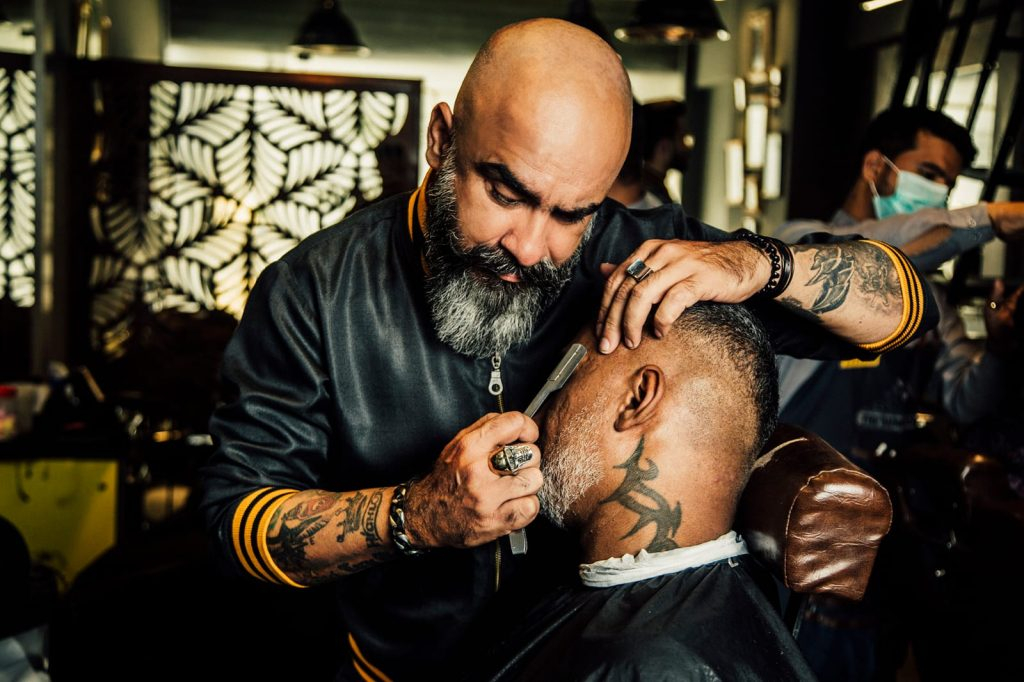
Walking into a barbershop without a clear vision for your haircut can feel like stepping onto a stage without a script. That moment when your barber asks, "So, what are we doing today?" and your mind goes blank is a universal experience for many men. However, this uncertainty doesn't have to lead to a disappointing haircut. In fact, it can be an opportunity for discovery when you know how to guide the conversation. This collaborative approach is exactly what you'd experience at the best salon in Karachi, where stylists are trained to translate vague ideas into sharp, personalized results.
The secret isn't about knowing the name of every haircut; it's about providing your barber with the right contextual clues about your life, your habits, and your comfort zone.
The Foundation: Shift from "What" to "How"
Instead of focusing on what you want the haircut to look like, start by explaining how you need it to function in your daily life. This gives your barber a practical framework to work within.
-
Describe Your Lifestyle: Are you a corporate professional who needs a sharp, office-appropriate style? A creative who can experiment with more texture and length? An athlete who needs something that stays put during workouts and dries quickly? This context is more valuable than any photo.
-
Be Honest About Your Routine: How much time do you really spend on your hair each morning? If your answer is "30 seconds," a high-maintenance style requiring blow-drying and multiple products will lead to daily frustration. Telling your barber "I need something I can just run my fingers through and go" provides clear, actionable direction.
-
Discuss Your Grooming Preferences: Do you enjoy using pomades and pastes, or do you prefer a completely product-free look? Mentioning your stance on beard creams and styling products helps your barber choose a cut that works with your grooming habits, not against them.
The Power of Visual Aids (Even When You're Clueless)
You don't need to have a specific style in mind to use visuals effectively. The goal is to communicate a feeling or vibe.
-
Create a "Yes and No" Mood Board: Instead of looking for one perfect picture, gather 3-4 images. Point to elements you like: "I like the shortness on the sides here," or "I like how this has texture but still looks neat." Equally important, show what you don't want: "I definitely don't want it to look this spiky," or "I don't want my neckline this high."
-
Use Your Own History: Refer to your own past haircuts. You can say, "The last cut was good, but I'd like the top a little shorter this time," or "I liked how this looked a month after my last cut—can we aim for that shape from the start?" This gives your barber a baseline they already understand.
The Consultation: Your Barber is Your Guide
A skilled barber is a detective for your best look. During the consultation, empower them to do their job by being an open book.
-
Answer These Key Questions: A good barber will ask you questions. Your honest answers are the blueprint.
-
"How often do you get a haircut?" (This determines how a style will grow out.)
-
"What did you like or dislike about your last haircut?"
-
"Do you have a natural part or any cowlicks?" (This is technical gold for them.)
-
-
Trust Their Expertise: Use phrases that invite collaboration, such as:
-
"Based on my hair type and face shape, what would you recommend?"
-
"I'm open to your professional opinion—what do you think would work well for me?"
-
"I need a change, but I'm not sure what. Can you suggest a few options?"
-
The Language of Face Shape and Hair Type
You don't need to be an expert, but a little self-awareness goes a long way.
-
Simple Face Shape Cues: You can describe your face in simple terms without knowing its technical shape. Say, "I think I have a pretty round face—can we add some angles?" or "My face is quite long—can we avoid adding more height on top?"
-
Describe Your Hair's Behavior: Tell your barber what your hair does naturally. "My hair is very thick and poofy," or "My hair is fine and gets flat easily," or "My hair is really curly and I want to embrace that." This tells them how your hair will respond to different cutting techniques.
Conclusion: Your Barber is Your Partner, Not a Mind Reader
The anxiety of not knowing what you want melts away when you realize a haircut is a collaboration, not a test. Your barber is a trained professional who wants you to leave happy. By shifting the conversation from specific style names to your lifestyle, maintenance preferences, and being open to guided suggestions, you unlock their ability to craft a look that is both stylish and perfectly suited to you. The goal isn't to have all the answers before you sit in the chair—it's to know the right questions to ask and the right information to provide. This turns a potentially stressful situation into the first step toward your best look yet.
Frequently Asked Questions
What if I don't like technical terms like "texturizing" or "taper"?
No problem at all. Use descriptive language instead. Instead of "texturize," say "I want it to look piecey and not so blunt." Instead of "taper," say "I want it to gradually get shorter down the sides." Barbers are experts at translating everyday language into technical execution.
Is it okay to show a picture of a celebrity with different hair than mine?
Yes, but with context. You can show the picture and say, "I love the style of this, but I know my hair is thinner/curlier/straighter. Can we adapt the idea to work for my hair type?" This shows you're being realistic and helps the barber manage expectations.
What's the best thing to say if I'm truly completely lost?
The most effective phrase is: "I need a change but I'm not sure what. Based on my face shape, hair type, and the fact that I [mention your job/lifestyle], what are 2-3 options you'd recommend?" This gives the barber a clear mandate to lead while keeping you involved in the final choice.
How can I give feedback during the haircut if I'm unsure?
It's perfectly okay to speak up. You can say, "Could we pause for a second? I'm noticing the length on top is getting shorter than I imagined," or "As you're cutting, I'm realizing I might want to keep a little more length around my ears." A good barber will welcome this mid-process feedback.
What should I do if I'm still not happy with the cut after the consultation?
Politely and specifically state your concern. Instead of "I don't like it," say "I think the sides are a bit too short for my liking," or "The top is a little too flat." A professional barber will want to fix it for you. This is also why building a relationship with one barber is valuable—they learn your preferences over time.

 English
 French
 Spanish
 Portuguese
 Deutsch
 Turkish
 Dutch
Dutch
 Italiano
 Russian
 Romaian
 Portuguese (Brazil)
 Greek
Greek
