


 Pro Benefits

 الشروط
 الخصوصية
 Child Safety & Protection
 الإشعارات
 Ayrush Global It Services Pvt Ltd
Accounting Outsourcing Services in India: How U.S. Companies Can Build a More Efficient Finance Function
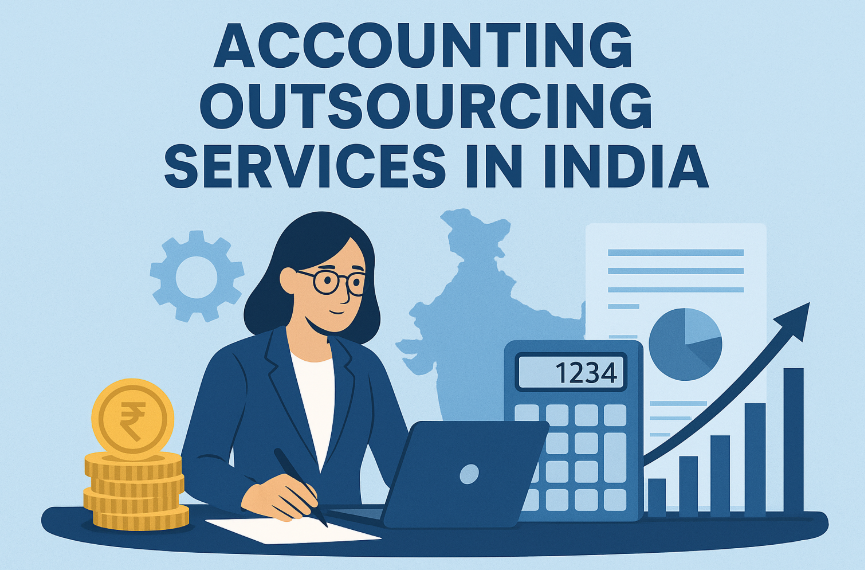
Managing financial records accurately is essential for every business, but the accounting workload can become difficult to handle as a company expands. Accounting Outsourcing Services in India give U.S. companies an option to delegate bookkeeping, reconciliations, accounts payable, accounts receivable, and other finance tasks to an external team. When the right processes and controls are established, outsourcing can help reduce administrative pressure, improve accounting consistency, and give internal employees more time to focus on financial analysis, customer needs, and business growth.
Understanding the Accounting Outsourcing Model
Accounting outsourcing means assigning selected accounting responsibilities to an outside provider.
The provider works as an extension of the company's finance team and performs tasks according to agreed procedures and deadlines.
Businesses can outsource a single function or several accounting processes.
For example, a company might outsource only bookkeeping while keeping financial planning and reporting internally. Another organization may outsource bookkeeping, accounts payable, accounts receivable, and month-end close support.
The model is flexible and can be adapted to the company's size and requirements.
Why Finance Teams Become Overloaded
Accounting workloads often increase alongside business growth.
A company that once processed a few dozen invoices each month may eventually handle hundreds or thousands.
At the same time, the finance team may be responsible for payroll, reconciliations, tax support, reporting, budgeting, and vendor management.
This can create a situation where employees spend most of their time completing routine tasks rather than analyzing financial information.
Some common signs of an overloaded accounting function include:
- Backlogs in bookkeeping
- Delayed bank reconciliations
- Slow invoice processing
- Late financial reports
- Increasing accounts receivable balances
- Difficulty completing month-end close
- Limited time for financial analysis
Outsourcing can provide additional capacity without requiring immediate expansion of the internal department.
Services Commonly Outsourced
Bookkeeping
Bookkeeping involves recording and organizing financial transactions.
Outsourced bookkeeping services may include transaction entry, expense categorization, bank reconciliation, general ledger maintenance, and routine financial reporting.
Accurate bookkeeping provides the foundation for nearly every other accounting activity.
Accounts Payable
Accounts payable outsourcing can help businesses manage supplier invoices and payment records.
Services may include:
- Invoice processing
- Vendor verification
- Payment preparation
- Statement reconciliation
- Duplicate invoice checks
- Accounts payable reporting
A consistent process can help reduce errors and keep supplier accounts organized.
Accounts Receivable
Accounts receivable management focuses on money owed by customers.
An outsourced team may handle invoice generation, payment posting, customer account reconciliation, aging reports, and payment follow-ups.
This can improve visibility into outstanding customer balances.
Bank Reconciliation
Bank reconciliation helps ensure that accounting records match actual bank activity.
Regular reconciliation can identify discrepancies and missing transactions before they affect financial reporting.
Month-End Close
Month-end close involves reviewing and finalizing accounting records for a reporting period.
Outsourced professionals can assist with reconciliations, journal entries, account reviews, and supporting schedules.
A more organized closing process can help management receive financial information sooner.
Benefits for U.S. Businesses
Lower Administrative Pressure
Routine accounting tasks can consume a large portion of an employee's working day.
Outsourcing allows internal employees to focus on responsibilities that require greater business knowledge and judgment.
Flexible Staffing
Businesses do not always need the same amount of accounting support throughout the year.
Outsourcing can provide additional capacity during busy periods without requiring permanent staffing increases.
Access to Specialized Skills
An outsourcing provider may have professionals with experience in bookkeeping, financial reporting, reconciliations, accounts payable, and other accounting disciplines.
This can provide access to skills that may be difficult or expensive to maintain internally.
Potential Cost Savings
Outsourcing may reduce certain costs associated with recruitment, employee benefits, training, office space, and maintaining additional accounting staff.
However, companies should evaluate total value rather than choosing a provider solely because of a low price.
Why India Is Considered for Accounting Outsourcing
India has a large professional services industry and a substantial workforce supporting international businesses.
Many providers offer accounting services to companies in North America and other global markets.
For U.S. businesses, this can provide access to teams experienced with common accounting platforms and international workflows.
Time-zone differences can also be useful in certain situations. Routine accounting work completed outside U.S. business hours may be ready for review the following morning.
However, successful outsourcing depends on process quality, communication, and appropriate controls—not geography alone.
Technology Makes Remote Accounting Easier
Cloud accounting has significantly changed how finance teams collaborate.
Instead of exchanging spreadsheets by email, authorized employees and outsourced professionals can work within shared accounting systems.
Depending on the platform, businesses can use:
- Automated bank feeds
- Digital invoices
- Online payment systems
- Cloud document storage
- Real-time reporting
- Workflow approvals
- Automated reconciliation tools
These technologies can improve efficiency while giving management greater visibility into accounting activities.
Protecting Financial Information
Outsourcing accounting requires businesses to share sensitive information with an external organization.
Security should therefore be part of the provider-selection process.
Companies should ask about:
- User permissions
- Data encryption
- Secure file sharing
- Password policies
- Employee access
- Backup procedures
- Data retention
- Security monitoring
Access should be limited according to job responsibilities.
A bookkeeping employee, for example, should not automatically have access to every financial system or sensitive company document.
Understanding U.S. Accounting Requirements
A provider supporting a U.S. company should understand the accounting environment in which that business operates.
This includes familiarity with relevant U.S. accounting practices and commonly used financial systems.
For businesses that outsource tax-related work, responsibilities should be clearly defined, especially when a U.S.-licensed professional needs to review or approve specific filings.
The outsourcing provider should complement the company's existing compliance structure rather than replace necessary professional oversight.
Managing Communication Across Time Zones
Distance does not have to prevent effective collaboration.
Companies can establish clear communication procedures using video conferencing, email, messaging platforms, and project-management tools.
A simple communication framework might include:
- Daily updates for urgent processes
- Weekly operational reviews
- Monthly financial meetings
- Defined escalation procedures
- Shared task lists
Clear expectations prevent misunderstandings and help both teams work toward the same deadlines.
Selecting the Right Provider
Choosing an outsourcing partner should involve careful evaluation.
Experience
Ask about the provider's experience with U.S. businesses and companies in your industry.
Qualifications
Understand the experience and qualifications of the professionals who will work on your accounts.
Software Expertise
Confirm that the provider can work with your accounting software.
Quality Control
Ask how completed work is reviewed and approved.
Security
Review procedures for protecting financial information.
Reporting
Understand what reports you will receive and how often.
Scalability
The provider should be able to increase support as your business grows.
Common Outsourcing Mistakes
Outsourcing works best when expectations are clearly established.
One common mistake is transferring work without documenting the existing process.
Another is failing to define deadlines.
Businesses should specify when reconciliations, reports, invoices, and other tasks must be completed.
Companies should also avoid giving unrestricted system access. Access should be limited to the information necessary for the provider to perform its responsibilities.
Finally, management should continue reviewing financial results even when routine accounting work is outsourced.
Creating a Smooth Transition
A successful transition usually starts with a review of current processes.
The business should identify:
- Which accounting tasks are currently performed internally.
- Which tasks are candidates for outsourcing.
- Which systems are used.
- Who approves financial transactions.
- Which reports management needs.
- What deadlines must be met.
The provider can then create a transition plan.
Starting with a limited group of services can also make the process easier to manage.
Once the business is comfortable with the provider's quality and communication, additional functions can be added.
How to Measure Success
Outsourcing should have measurable objectives.
Companies can track:
- Bookkeeping accuracy
- Reconciliation completion rates
- Month-end close time
- Invoice processing time
- Reporting turnaround
- Number of accounting errors
- Accounts receivable aging
- Accounts payable processing time
These measurements can reveal whether the outsourcing arrangement is improving the finance function.
Outsourcing as a Long-Term Strategy
Accounting outsourcing does not have to be a short-term solution.
For some businesses, an external accounting team becomes a long-term extension of the internal finance department.
As trust develops, the provider may take on additional responsibilities.
A company might initially outsource bookkeeping and later add accounts payable, accounts receivable, financial reporting, or month-end close support.
This creates a flexible finance model that can adapt as the business changes.
Final Thoughts
Accounting Outsourcing Services in India can offer U.S. businesses a flexible way to manage accounting workloads while accessing professional support for routine and specialized financial processes. From bookkeeping and reconciliations to accounts payable, accounts receivable, and month-end close, outsourcing can help companies maintain organized records without placing every responsibility on a small internal team.
The most successful arrangements are built around clear responsibilities, reliable communication, appropriate technology, strong security, and consistent quality control.
For U.S. businesses facing increasing accounting workloads, outsourcing can provide additional capacity while allowing internal teams to focus on analysis, planning, customer service, and long-term growth. With the right provider and a well-defined process, accounting outsourcing can become a practical part of a company's broader financial strategy.
 Arabic
 English
 French
 Spanish
 Portuguese
 Deutsch
 Turkish
 Dutch
Dutch
 Italiano
 Russian
 Romaian
 Portuguese (Brazil)
 Greek
Greek
