


 Pro Benefits

 الشروط
 الخصوصية
 Child Safety & Protection
 الإشعارات
 Ayrush Global It Services Pvt Ltd
Vacuum Packaging Machine: A Complete Guide for Modern Food Packaging
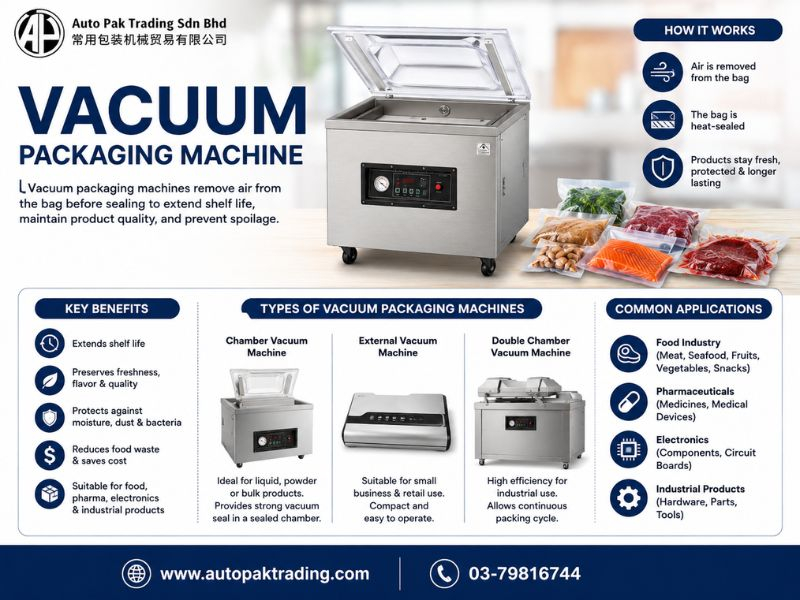
Food packaging has become an essential part of modern food production, retail, catering, and hospitality businesses. Companies need packaging solutions that can help protect products, maintain quality, improve storage efficiency, and create a professional presentation. One technology that has become increasingly useful for these requirements is vacuum packaging.
A vacuum packaging machine removes air from a specially designed package before sealing it securely. By reducing the amount of air surrounding the product, vacuum packaging can help protect food from oxidation and moisture exposure during appropriate storage. It is widely used for meat, seafood, vegetables, cheese, prepared meals, and many other products.
For businesses looking to improve their packaging operations, understanding how vacuum packaging works and what factors to consider when selecting equipment can help them make a more informed investment.
What Is a Vacuum Packaging Machine?
A vacuum packaging machine is packaging equipment that removes air from a pouch or bag and then seals the package. The machine creates a controlled vacuum before applying heat to seal the opening.
The process creates a compact package with significantly less air inside. This can help protect the product from external exposure and make packaged goods easier to organize during storage and transportation.
Vacuum packaging equipment is available in different sizes and configurations. Small machines may be suitable for low-volume operations, while chamber and industrial systems are designed for businesses with higher packaging requirements.
How Does Vacuum Packaging Work?
The vacuum packaging process generally involves several steps.
First, the product is placed inside a suitable vacuum pouch. The open end of the pouch is then positioned in the machine's sealing area.
The machine removes air from the package using a vacuum pump. Once the desired vacuum level is reached, the machine applies heat to seal the pouch.
After sealing, the package is removed and inspected to ensure that the seal is secure. The finished package is then ready for appropriate storage, transportation, or further processing.
The exact cycle time and vacuum settings can vary depending on the machine, packaging material, product characteristics, and desired results.
Why Is Vacuum Packaging Important?
Vacuum packaging offers several potential advantages for businesses handling food and other suitable products.
Helps Protect Product Quality
Air exposure can contribute to oxidation, which may affect the colour, flavour, texture, and overall quality of certain foods. Removing much of the air from a package can help reduce exposure during storage.
This makes vacuum packaging particularly useful for products that need additional protection from air.
Helps Reduce Food Waste
Food businesses may experience losses when products deteriorate before they are sold or used. Proper vacuum packaging, combined with suitable storage conditions, can help businesses manage products more effectively.
By packaging food into appropriate portions, companies can also prepare only the quantity required for a particular production or sales period.
Reduces Freezer Burn
Freezer burn can occur when frozen food is exposed to air over time. It can cause changes in the texture and appearance of food.
Vacuum-sealed packaging can help reduce air exposure and therefore provide additional protection against freezer burn when food is stored correctly.
Improves Storage Efficiency
Vacuum-packed products are generally more compact because excess air has been removed. This can help businesses make better use of available refrigerator, freezer, and storage space.
For commercial kitchens and food processing facilities, efficient storage can make inventory management easier.
Common Applications of Vacuum Packaging
A vacuum packaging machine can be used for many different food products and packaging applications.
Meat and Poultry
Meat processors, butcher shops, restaurants, and retailers can use vacuum packaging to package portions of meat and poultry. The compact packaging can simplify storage and transportation.
Seafood
Fish and seafood products are commonly packaged using vacuum technology. Proper packaging can help protect products during refrigerated or frozen storage when combined with appropriate food-handling procedures.
Cheese and Dairy Products
Certain cheese products can also be vacuum packed to help reduce exposure to air and moisture.
Prepared Meals
Meal-preparation companies, restaurants, and catering businesses may use vacuum packaging to package prepared food and ingredients in convenient portions.
Vegetables and Other Food Products
Depending on the product and applicable food safety requirements, vegetables and other food items may also be suitable for vacuum packaging.
Types of Vacuum Packaging Machines
Different machines are available for different production environments.
External Vacuum Sealer
External vacuum sealers remove air from bags positioned outside the machine's chamber. These systems can be suitable for smaller businesses and lower-volume applications.
Chamber Vacuum Packaging Machine
In a chamber machine, the entire package is placed inside a vacuum chamber. Air is removed from the chamber and package before the bag is sealed.
Chamber systems are commonly used in commercial food packaging because they can provide controlled and repeatable vacuum cycles.
Industrial Vacuum Packaging Systems
Large-scale food manufacturers may require industrial equipment capable of handling high production volumes. These machines can be integrated into broader packaging lines and designed for continuous or high-frequency operation.
How to Choose the Right Machine
Choosing suitable equipment requires an understanding of your business's specific packaging requirements.
Consider Production Volume
Determine how many packages need to be processed per hour or per day. A small restaurant may require a compact machine, while a food processing facility may need a high-capacity industrial system.
Check Bag Size Requirements
The machine's sealing bar and chamber dimensions should accommodate the sizes of bags your business uses.
If your products come in different sizes, consider equipment that provides flexibility for multiple pouch dimensions.
Evaluate Product Type
Different products may require different vacuum settings and packaging approaches. Consider whether you are packaging dry products, moist foods, liquids, or products with irregular shapes.
Consider Sealing Performance
A secure seal is essential for maintaining package integrity. Look for equipment that provides consistent sealing temperature and pressure.
Look at Construction Quality
Commercial packaging machines are used frequently, so durability is important. Stainless-steel construction can be particularly useful in food processing environments because it is durable and relatively easy to clean.
Consider Maintenance and Support
Before purchasing equipment, evaluate maintenance requirements, availability of replacement parts, technical support, and warranty terms. These factors can influence the long-term value of the machine.
Vacuum Packaging and Food Safety
Vacuum packaging should always be combined with appropriate food safety practices. Removing air from a package does not make food automatically safe or eliminate the need for proper temperature control.
Perishable foods should be handled, refrigerated, or frozen according to appropriate food safety procedures. Businesses should also use suitable food-grade packaging materials and maintain hygienic preparation and packaging areas.
Staff training is another important consideration. Operators should understand how to use the equipment correctly and follow established food-handling procedures.
Maintenance Tips
Regular maintenance can help maintain consistent machine performance and reduce unexpected downtime.
Businesses should:
-
Clean the sealing area regularly.
-
Remove food residue from machine surfaces.
-
Inspect sealing strips and components.
-
Check the vacuum pump periodically.
-
Replace worn parts when necessary.
-
Keep the machine clean and dry.
-
Inspect electrical and mechanical components.
-
Follow the manufacturer's recommended maintenance schedule.
Preventive maintenance is often more effective than waiting for equipment failure to disrupt production.
Common Vacuum Packaging Mistakes
Incorrect machine settings can affect packaging quality. For example, excessive vacuum pressure may damage delicate products, while insufficient vacuum can leave too much air inside the package.
Using unsuitable bags can also result in poor sealing performance. Businesses should always select packaging materials designed for their specific machine and product requirements.
Overfilling bags is another common problem. Leaving adequate space around the opening can help the machine create a cleaner and more reliable seal.
Operators should also inspect sealed packages regularly for wrinkles, incomplete seals, punctures, or other signs of packaging failure.
Why Choose a Reliable Packaging Machinery Supplier?
Investing in packaging equipment is a long-term decision. Businesses should consider more than the initial purchase price when comparing machines.
Factors such as machine durability, production capacity, sealing performance, ease of operation, maintenance, spare parts, and technical assistance can all influence the overall value of the equipment.
Auto Pak Trading provides packaging machinery solutions for businesses looking to improve their packaging operations. By assessing production volume, product type, packaging dimensions, and workflow requirements, businesses can identify equipment that is better suited to their specific needs.
Conclusion
A vacuum packaging machine can help businesses create secure, compact packages while reducing exposure to air. It can support food quality, storage organization, portion control, and packaging efficiency when used together with appropriate storage and food safety practices.
From restaurants and butcher shops to seafood processors, catering companies, retailers, and food manufacturers, vacuum packaging can be adapted to a wide range of applications.
Before purchasing equipment, businesses should evaluate product characteristics, package dimensions, production volume, vacuum requirements, sealing performance, maintenance needs, and future expansion plans. Choosing suitable equipment from an experienced supplier such as Auto Pak Trading can help businesses develop a more efficient and consistent packaging process.
 Arabic
 English
 French
 Spanish
 Portuguese
 Deutsch
 Turkish
 Dutch
Dutch
 Italiano
 Russian
 Romaian
 Portuguese (Brazil)
 Greek
Greek
