


 Pro Benefits
 About
About
 Termeni
 Confidențialitate
 Child Safety & Protection
 Notificări
 Ayrush Global It Services Pvt Ltd
What Businesses Should Know Before Starting Marketplace App Development in Saudi Arabia
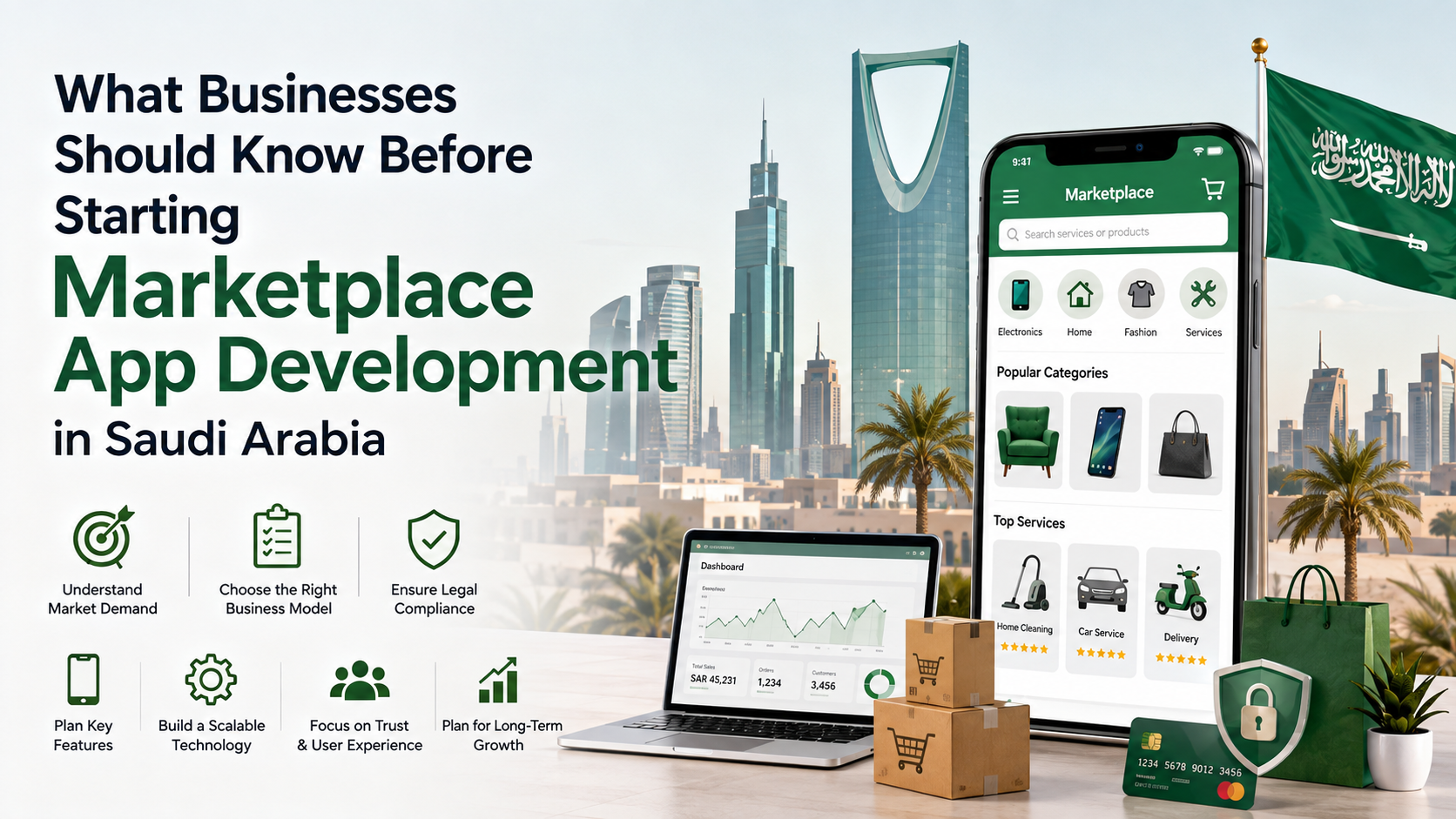
The rapid expansion of digital commerce has transformed how consumers and businesses interact across industries. Online marketplaces have become one of the most effective business models because they connect buyers and sellers through a single digital platform while creating value for both parties. As Saudi Arabia continues to invest in technology-driven economic growth, marketplace platforms are gaining significant attention among entrepreneurs and established organizations.
Before beginning marketplace app development in Saudi Arabia, businesses should understand that building a successful marketplace involves much more than creating a mobile application. It requires careful planning, market validation, legal awareness, technical expertise, and long-term operational strategies. A well-prepared approach reduces development risks and increases the likelihood of sustainable growth.
Evaluating Market Demand and Selecting the Right Business Model
The first step is identifying whether the market truly needs your platform. A marketplace should solve an existing problem rather than introduce unnecessary complexity. Thorough market research helps businesses identify customer expectations, competitor strengths, and service gaps.
Common marketplace business models include:
-
Business-to-Consumer platforms
-
Business-to-Business marketplaces
-
Consumer-to-Consumer marketplaces
-
Service marketplaces
-
Rental and booking marketplaces
-
Multi-vendor eCommerce platforms
Businesses should also determine how they will generate revenue. Popular monetization methods include:
-
Commission on every transaction
-
Subscription-based membership
-
Vendor listing fees
-
Featured product promotions
-
Advertising opportunities
Selecting the appropriate model early simplifies future product decisions.
Identifying Essential Features That Support Long-Term Scalability Goals
Many marketplace projects become overly complex because businesses attempt to launch with too many features. Instead, focus on building a Minimum Viable Product that delivers core functionality while allowing future expansion.
Essential marketplace features include:
-
User registration and authentication
-
Buyer and seller dashboards
-
Product or service listings
-
Advanced search and filters
-
Secure payment integration
-
Order tracking
-
Ratings and reviews
-
Push notifications
-
Customer support options
-
Admin management dashboard
During marketplace app development in Saudi Arabia, scalability should remain a priority. The platform should support increasing users, transactions, and vendors without requiring complete redevelopment.
Meeting Regulatory Requirements and Protecting User Data Effectively
Legal compliance is a critical aspect that should never be overlooked. Businesses operating digital platforms must understand local regulations related to electronic transactions, privacy, taxation, and commercial activities.
Important compliance considerations include:
-
User data protection policies
-
Secure payment processing
-
Vendor verification procedures
-
Consumer rights regulations
-
Tax reporting obligations
-
Digital contract management
Cybersecurity is equally important. Marketplace applications process sensitive customer information, making strong encryption, secure authentication, and continuous monitoring essential components of the platform.
Failure to prioritize compliance may result in financial penalties, operational disruptions, and loss of customer trust.
Building a Reliable Technology Foundation for Future Platform Growth
Technology decisions made during the planning stage directly influence long-term maintenance costs and application performance.
Businesses should evaluate several technical factors:
-
Native versus cross-platform development
-
Cloud infrastructure selection
-
Database scalability
-
API architecture
-
Third-party integrations
-
Performance optimization
-
Backup and disaster recovery strategies
An efficient architecture allows developers to introduce new features with minimal disruption while maintaining consistent application performance.
Organizations planning marketplace app development in Saudi Arabia should also consider future technologies such as artificial intelligence, predictive analytics, and automation that may enhance user experiences over time.
Creating Trust Between Buyers Sellers and Marketplace Administrators
Trust is the foundation of every successful marketplace. Without confidence in transactions, even technically advanced platforms struggle to retain users.
Businesses can strengthen marketplace credibility through:
-
Verified user profiles
-
Transparent pricing
-
Seller verification
-
Secure payment gateways
-
Detailed product information
-
Customer reviews
-
Fair dispute resolution processes
-
Clear return and refund policies
A trustworthy ecosystem encourages repeat purchases while reducing fraudulent activities across the platform.
User experience also plays a significant role. Simple navigation, intuitive interfaces, and fast loading speeds improve customer satisfaction and increase engagement.
Planning Operational Processes Beyond the Initial Product Launch Phase
Launching the application marks the beginning rather than the completion of the marketplace journey. Businesses should prepare operational processes that support continuous improvement.
Post-launch priorities include:
-
Customer support management
-
Vendor onboarding
-
Content moderation
-
Performance monitoring
-
Regular software updates
-
Security patch implementation
-
Analytics reporting
-
Customer feedback collection
Monitoring key performance indicators helps organizations understand user behavior and identify areas requiring optimization.
Important metrics include:
-
User acquisition rate
-
Active users
-
Vendor growth
-
Transaction volume
-
Customer retention
-
Average order value
-
Conversion rate
Continuous improvements ensure the marketplace remains competitive as customer expectations evolve.
Understanding Budget Timelines and Risks Before Project Execution Starts
One of the most common misconceptions is that marketplace development ends once the application is launched. In reality, businesses should plan budgets that include ongoing operational costs.
Typical project expenses may include:
-
Product design
-
Software development
-
Infrastructure costs
-
Security implementation
-
Quality assurance testing
-
Maintenance
-
Marketing support
-
Customer service operations
Project timelines vary depending on complexity, integrations, and feature requirements. Rushing development often introduces technical debt that becomes expensive to resolve later.
Risk management should also be incorporated into project planning. Potential risks include changing customer expectations, vendor acquisition challenges, evolving regulations, and cybersecurity threats. Identifying these factors early enables businesses to develop appropriate mitigation strategies before they become significant issues.
Developing Sustainable Marketplace Strategies for Long-Term Business Success
A marketplace should be viewed as an evolving digital ecosystem rather than a one-time technology project. Success depends on balancing customer satisfaction, vendor engagement, operational efficiency, and continuous innovation.
Businesses investing in marketplace app development in Saudi Arabia should prioritize strategic planning before writing a single line of code. Strong research, scalable architecture, legal compliance, reliable security, and efficient operational planning collectively establish the foundation for sustainable marketplace growth. Organizations that focus on long-term value creation instead of short-term feature expansion are better positioned to adapt to changing market demands and maintain a competitive advantage.
Conclusion
Launching a marketplace platform requires thoughtful planning, informed decision-making, and a clear understanding of business objectives. From selecting the right business model and ensuring regulatory compliance to designing scalable technology and building user trust, every stage contributes to the platform's future performance. Businesses that invest time in preparation, continuously evaluate market needs, and improve their operations after launch are more likely to achieve lasting success in an increasingly competitive digital economy.
 Romaian
 English
 Arabic
 French
 Spanish
 Portuguese
 Deutsch
 Turkish
 Dutch
Dutch
 Italiano
 Russian
 Portuguese (Brazil)
 Greek
Greek
