


 Pro Benefits
 About
About
 Terms
Terms
 Privacy
 Child Safety & Protection
 Notifications
 Ayrush Global It Services Pvt Ltd
The Role of Geofencing and Service Zones in Managing On-Demand Bike Taxi Operations
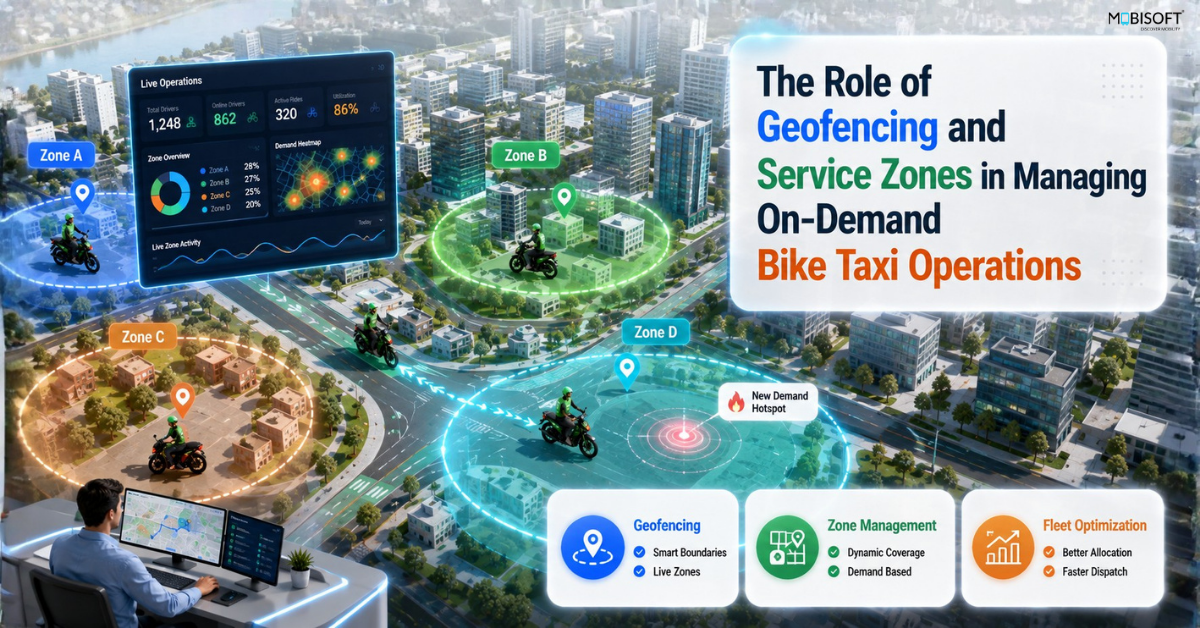
Launching a bike taxi service sounds simple until drivers start scattering across the city. Riders have to wait longer. Trip fares become inconsistent. And dispatch turns into chaos. This is where geofencing and service zones step in to bring order. Reliable bike taxi management software uses these tools to define where drivers operate. It also controls how rides get matched within each area.
Operators get precise control over every zone on the map. This approach has become essential as on-demand mobility scales across busy cities. Many businesses now realize that custom bike taxi app development must include this location intelligence early. Skipping it often leads to confusion once ride volumes climb. This guide walks through how geofencing and service zones work. It also covers why they matter for smarter, more scalable bike taxi operations today.
What is Geofencing For Bike Taxi Operations
Geofencing creates a virtual boundary around a specific geographic area. The app triggers an action once a driver or rider crosses that boundary. Geofencing helps bike taxi businesses control where the rides can start or end. It also helps flag when a vehicle leaves its assigned operating area.
How Geofencing Works In Practice
The system uses GPS coordinates to draw digital boundaries on a map. These boundaries trigger alerts, restrictions, or automated actions in real time. A well-built bike taxi app development company integrates this directly into the platform.
What Service Zones Are And Why They Matter
Service zones divide a city or region into smaller, manageable operating areas. Each zone can have its own driver pool, pricing rules, and demand patterns. This structure makes large-scale operations far easier to monitor and control.
Breaking Down Complex Cities Into Simple Areas
Large cities rarely behave the same way across every neighborhood. Traffic, demand, and rider behavior can shift drastically between zones. Dividing operations this way keeps management simple and highly focused.
Why On-Demand Bike Taxi Businesses Need Zone-Based Control
Without zones, driver allocation becomes unpredictable and hard to manage. Some areas end up flooded with bikers while others see none. Fares can also vary unfairly without clear zone-based pricing rules. Regulatory compliance becomes harder to maintain across unregulated pickup points.
The Cost Of Operating Without Structure
Poor zone management often leads to longer wait times for riders. Drivers waste fuel and time searching for rides outside proper coverage. This inefficiency directly hurts both revenue and customer satisfaction over time.
How Geofencing Supports Smarter Dispatch And Fleet Management
Geofencing feeds real-time location data directly into the dispatch engine. This allows the system to match riders with the nearest available biker. Smart matching algorithms rely heavily on accurate, zone-based location data.
Real-Time Fleet Visibility For Better Decisions
Admins can view every active biker within a defined zone instantly. This visibility supports quick decisions during high-demand periods or emergencies. Strong bike taxi management software makes this level of tracking effortless.
Core Platform Capabilities That Enable Zone-Based Operations
Certain features make zone-based operations genuinely possible and effective. These capabilities span across the passenger, driver, and admin experience.
Passenger App Capabilities
Riders benefit directly from features built around zone intelligence.
-
Smart pickup suggestions based on nearby, high-demand points
-
Real-time vehicle and route tracking during active trips
-
Upfront fare estimates calculated using zone-specific pricing rules
Driver App Capabilities
Drivers also need tools that respect zone boundaries and rules.
-
Built-in GPS navigation with optimized, zone-aware routing
-
Real-time trip requests limited to their assigned service area
-
Easy online and offline toggling based on active zones
Admin Panel Capabilities
Administrators require full oversight across every operating zone.
-
Real-time fleet tracking across all active service areas
-
Zone-specific fare management, including base rates and charges
-
Reporting and analytics broken down by individual zones
Business Benefits Of Geofencing And Service Zones
These tools bring measurable advantages to any growing bike taxi platform. Operators gain better control without adding unnecessary operational complexity.
-
Improved Driver Allocation And Utilization
Zones help distribute drivers evenly across high and low demand areas. This balance reduces idle time and increases completed trips per biker.
-
Stronger Regulatory And Fare Compliance
Defined zones make it easier to follow local transportation regulations. Fare consistency within each zone also builds greater rider trust.
-
Easier Expansion Into New Markets
Adding a new city becomes simpler with a proven zone-based model. Teams behind on demand bike taxi app development can replicate successful zone structures quickly.
Best Practices For Setting Up Service Zones
Getting started requires a practical, data-driven approach from day one.
-
Start With High-Demand Areas First
Focus initial zones around areas with proven rider demand. This reduces early risk while building a strong driver base.
-
Adjust Zones Based On Real Data
Use trip data and heatmaps to refine zone boundaries over time. Zones should evolve as rider behavior and demand patterns shift.
-
Plan For Multi-Region Growth Early
Multi-language and multi-currency support helps zones scale into new regions. Reliable bike taxi booking app development should account for this from the start.
Conclusion
Geofencing and service zones have become essential tools for bike taxi businesses. They solve real problems around driver allocation and fare consistency. They also help operators stay compliant as cities grow larger. Any serious custom bike taxi app development effort should treat zones as a core requirement. This should start from the very beginning of planning. Operators who invest early see fewer operational headaches over time. Rider satisfaction also improves once zones are clearly defined.
Demand for app-based bike taxis keeps growing across new markets. Businesses that set up zones early avoid costly restructuring later. Choosing the right technology partner makes this process smoother. Dependable bike taxi management software paired with smart zone planning helps operators grow steadily. This combination supports simple, sustainable growth across every city served.
 English
 Arabic
 French
 Spanish
 Portuguese
 Deutsch
 Turkish
 Dutch
Dutch
 Italiano
 Russian
 Romaian
 Portuguese (Brazil)
 Greek
Greek
