


 Pro Benefits
 About
About
 Términos
 Privacidad
 Child Safety & Protection
 Notificaciones
 Ayrush Global It Services Pvt Ltd
What Should a Modern Taxi App Ecosystem Include Beyond Passenger Booking?
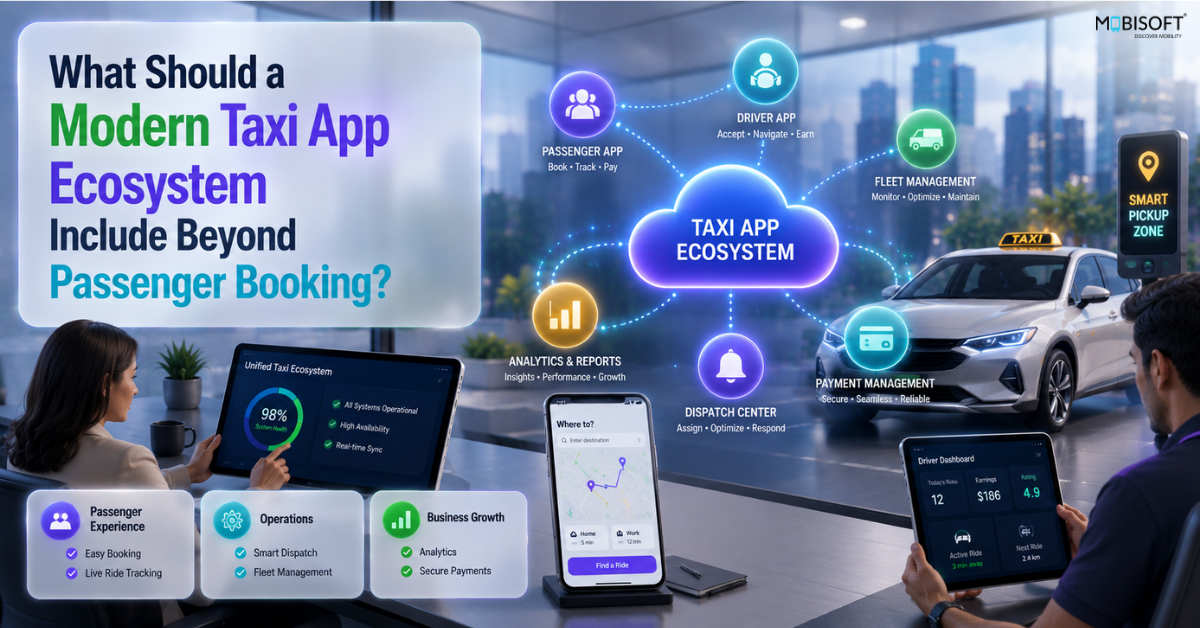
Most taxi businesses start with one goal. They want a simple app for booking rides. But the market has changed fast. Riders and drivers expect more. Investors have different expectations. Competition has grown across every city and region. New taxi businesses keep raising the bar for service quality. Standing still is no longer a safe option for operators.
This is why taxi app development today means much more than a booking screen. A modern platform needs dispatch, billing, driver tools, and data working together. Each piece must support the next one smoothly. Without this structure, growth stalls and daily operations become harder to manage. This blog breaks down what a complete taxi app ecosystem actually needs, and why taxi app development services now go far beyond passenger booking.
Why Passenger Booking Alone Is Not Enough Anymore
A booking button used to be impressive. Now it is the bare minimum. Riders compare every taxi app to global players like Uber. They expect live tracking and upfront fares. They expect fast driver assignment every time.
Operators who only offer booking often struggle behind the scenes. Dispatch happens over phone calls. Billing gets handled manually. Support has no visibility into ongoing rides. These gaps slow down growth and frustrate both drivers and riders.
Aggregator platforms have raised the bar even further. To compete, taxi businesses need more than a single app. They need a connected system built through proper taxi app development services.
The Core Pillars Of A Complete Taxi App Ecosystem
A strong taxi platform is not one app. It is a set of connected tools working as one system. Each part plays a specific role in daily operations.
-
Passenger App
The passenger app is an essential part of the ecosystem. It handles bookings and live tracking. Passengers can see fare estimates before booking. A good app also includes safety features like ride sharing and emergency alerts. Riders should see clear pickup times and driver details before confirming a trip.
-
Driver App
Drivers need their own dedicated tool. A driver app should offer easy navigation and trip management. It should also show clear earnings and payout history. This keeps drivers informed and reduces support queries related to payments.
-
Admin And Dispatcher Panel
A strong backend system ensures a smooth ride. The admin panel gives operators full visibility into their fleet. Dispatchers can view active rides and step in when needed. This central control layer is often the most overlooked part of taxi app development.
-
Automated Dispatch And Matching
Manual dispatch cannot scale beyond a small fleet. An automated matching system assigns rides in seconds. It considers driver location, vehicle type, and current demand. This reduces idle time and increases trips per driver.
-
Billing And Payments Automation
Manual billing creates delays and errors. Automated systems calculate fares instantly using distance and time. They also apply taxes, discounts, and surge pricing where needed. Faster driver payouts improve driver retention over time.
-
Data And Analytics Layer
Every ride generates useful data. Analytics tools turn this data into decisions. Operators can track driver performance and identify busy zones. They can also forecast demand during peak hours. This insight layer is a key part of modern taxi app development services.
The Operational Layer Most Businesses Overlook
Many taxi businesses focus only on rider features. They forget the operational layer running behind the scenes. This layer matters just as much as the passenger experience.
Real time visibility across the fleet is essential. Operators need to see every active trip on one dashboard. Exception handling matters here too. Idle drivers, delayed trips, and cancellations all need automatic alerts.
Larger operators often manage multiple cities or branches. Role-based admin access becomes necessary at this stage. Different teams need different levels of control. Without this structure, operations get chaotic as the fleet grows.
Why Architecture Matters
Growth exposes weak systems fast. A platform built for one hundred rides may fail at ten thousand. This is where the right taxi app development company makes a real difference.
Scalable architecture handles sudden spikes in ride volume. It should also support multiple regions from day one. This means different currencies, languages, and local rules. Businesses planning international growth need this flexibility early on.
Service expansion is another factor to plan for. Many operators eventually add premium rides or rental services. A well-built platform allows new service tiers easily. This flexibility saves time and money later.
Branding And Ownership: The Often Missed Ingredient
Many new operators launch on generic third-party platforms. This choice feels easier at first. But it quietly limits long-term growth and brand identity.
A white-label approach solves this problem directly. It gives businesses full control over their brand experience. Riders see your name, your colors, and your service, not a shared marketplace brand. This consistency builds trust over time.
Ownership also extends to data. Operators using generic platforms often lack access to their own ride and customer data. A dedicated taxi mobile app development approach ensures this data stays within the business. This ownership becomes valuable as the company grows and seeks funding or partnerships.
Quick Checklist: Is Your Taxi App Ecosystem Complete?
Use this checklist to evaluate your current setup.
-
A branded passenger app with live tracking and upfront fares
-
A dedicated driver app with navigation and earnings visibility
-
A centralized admin and dispatcher panel
-
Automated ride matching based on location and demand
-
Automated billing with multiple payment options
-
Analytics tools for demand and performance tracking
-
Real-time fleet visibility across all active rides
-
Scalable architecture ready for multiple regions
-
Full white-label branding and data ownership
If any of these are missing, your platform still has room to grow.
Conclusion
A taxi business today needs more than a booking app. It needs a full ecosystem working together behind the scenes. Passenger apps, driver tools, dispatch systems, and analytics all play a role. Together, they create a smooth experience for riders and drivers alike. This kind of setup does not happen by accident.
Businesses planning to launch or upgrade their platform should think beyond booking. Partnering with the right taxi app development company ensures every piece works as one system. Each module should support the others without gaps or delays. This structure keeps operations steady as the fleet grows.
Long-term success depends on choosing the right foundation early. A thoughtful approach to taxi booking app development prevents costly rebuilds later. The right taxi app solutions turn a simple app into a complete mobility business.
 Spanish
 English
 Arabic
 French
 Portuguese
 Deutsch
 Turkish
 Dutch
Dutch
 Italiano
 Russian
 Romaian
 Portuguese (Brazil)
 Greek
Greek
