


 Pro Benefits
 Σχετικά
 Όρους
Όρους
 Ιδιωτικότητα
 Child Safety & Protection
 Ειδοποιήσεις
 Ayrush Global It Services Pvt Ltd
Bike Sharing Software Powered by IoT and Smart Locks
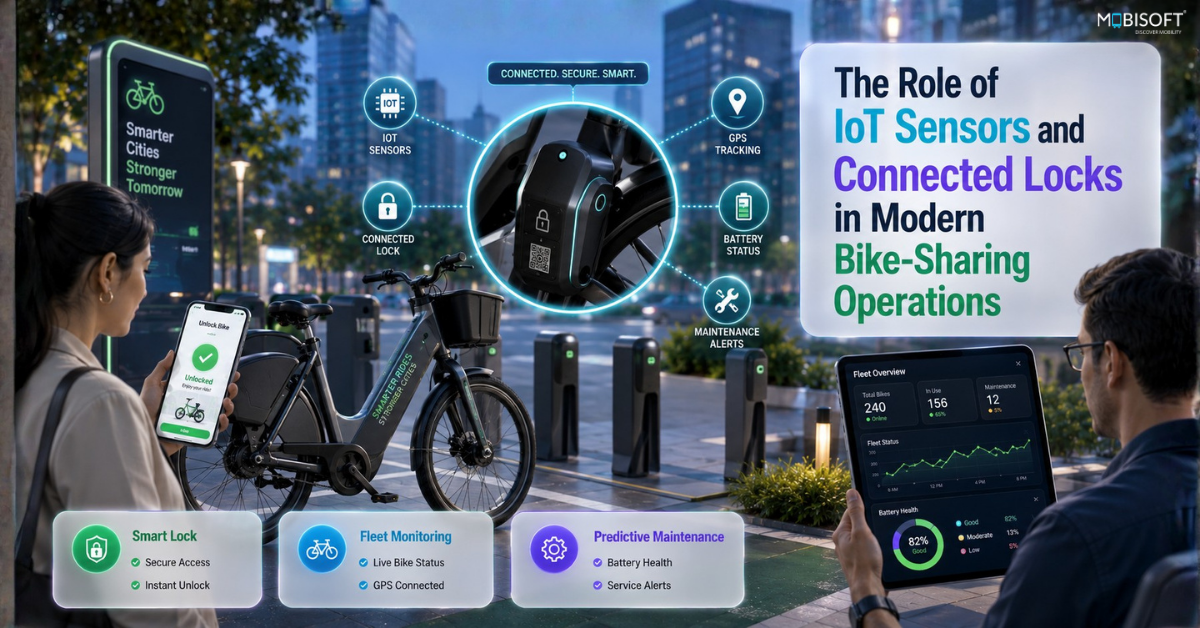
The Role of IoT Sensors and Connected Locks in Modern Bike-Sharing Operations
Millions of commuters face the same problem every day. Public transport is not always reliable. And cabs often cost too much. Dockless bikes are the practical answer to this issue. A quick scan unlocks the ride and solves the trip. What seems so simple has a deeper layer of technology underneath. Sensors and locks communicate with riders through bike sharing software in real time. The application makes the riding experience smoother.
This blog explores how IoT sensors and connected locks power modern bike sharing operations. It also unpacks why this technology matters to operators, municipalities, and investors alike. You will also learn what to expect from a trusted bike sharing app development company if you're building your own platform.
Why IoT Has Become Core Infrastructure For Bike Sharing
IoT has now become a backbone of shared mobility operations. Modern bike sharing software relies on sensors to function at scale. Every unlock, ride, and parked bike generates useful data. The data can be used to improve the overall efficiency.
Hardware costs have also dropped in recent years. Bluetooth Low Energy and NB-IoT standards now consume far less power. This has made connected locks cheaper to manufacture and deploy. As a result, bike sharing system development has become more accessible. Startups and municipalities alike can now launch their own platform. Even smaller cities can now launch fleets without heavy upfront investment.
How Connected Locks Work In A Bike Sharing Ecosystem
Connected locks form the first point of contact between a rider and the fleet. Understanding how they work helps explain their value. Most systems follow a similar flow across cities and providers.
The Rider Journey
-
The rider opens the app and locates a nearby bike
-
They scan a QR code to unlock the bike instantly
-
The ride begins, and location data streams to the backend
-
The rider manually locks the bike once finished
-
They tap "end ride" to close out the trip
This flow keeps things simple for the rider. It also keeps every step logged for the operator. Good bike sharing software ties each action to a verified transaction. This reduces disputes and improves trust between riders and providers.
Authentication Is Evolving Fast
Bluetooth and app-based unlocking remain the most common methods today. However, biometric authentication is gaining ground quickly. Fingerprint recognition is becoming a preferred method for secure and convenient access. This shift matters for shared fleets used by many different riders daily.
Geofencing adds another layer of control. It helps enforce approved parking zones automatically. Riders get notified if they try to park outside these zones. This keeps sidewalks clear and city officials satisfied.
IoT Sensors: The Data Layer Behind Fleet Intelligence
Locks handle access, but sensors handle intelligence. Together, they turn a simple bike into a connected asset. This data layer is what separates modern fleets from older rental models.
-
Real Time Location And Availability
GPS modules track every bike across the city continuously. Riders see live availability directly inside the app. Operators use the same data to plan bike distribution. This reduces empty zones and improves rider satisfaction.
-
Predictive Maintenance Reduces Downtime
Sensors monitor tire pressure, brake wear, and battery health continuously. This data flags worn parts before problems escalate. Maintenance teams can then act before a breakdown happens. Fewer breakdowns mean more bikes stay in active rotation.
Predictive maintenance also lowers long term operating costs. Teams can plan repairs instead of reacting to complaints. This approach protects both rider safety and fleet uptime.
-
Theft Prevention And Tamper Alerts
Connected locks send instant alerts when tampering is detected. Sensors can flag unusual movement outside an active ride. This discourages theft and helps recover bikes quickly. Strong bike sharing mobile app development always builds this layer in from the start.
Operational Benefits For Bike Sharing Businesses
Reliable technology translates directly into business performance. Operators who invest in strong IoT infrastructure see measurable gains. These benefits extend across daily operations and long-term growth.
-
Higher asset utilization through better distribution
-
Lower manual audit and inspection costs
-
Fewer service disruptions from sudden breakdowns
-
Improved rider trust through consistent performance
-
Centralized visibility through a single admin dashboard
A centralized dashboard gives operators full control over the fleet. Admins can track every bike, lock, and rider action in one place. This visibility is essential once a fleet grows beyond a few hundred bikes. Scalable bike sharing software should support this kind of centralized oversight from day one.
Why This Matters For Cities And Smart City Planning
Bike sharing is not just a private business concern. Municipalities view it as part of broader transportation planning. Connected fleets generate data that supports smarter city decisions.
-
Supporting Multimodal Transit
Cities increasingly link bike sharing with buses and trains. Riders can move between transit modes more smoothly. This reduces reliance on private vehicles for short trips. It also supports emissions reduction goals set by many cities.
-
Data Sharing With Municipal Partners
Operators often share anonymized usage data with city planners. This data reveals congestion patterns and popular routes. Planners use these insights to improve infrastructure over time. Well built bike sharing system development should include reporting features for this purpose.
-
Safety And Equitable Access
Connected locks and geofencing support safer riding behavior citywide. They also help ensure fair bike distribution across neighborhoods. This is especially important in areas with limited transit access.
What Operators And Investors Should Look For
Choosing the right technology partner encourages long term success. Not every platform offers the same depth of features. A few factors matter most during evaluation.
-
White label branding with room for custom features
-
Secure deployment options, including on-premise hosting
-
Support for multiple payment gateways and currencies
-
Strong analytics tools for fleet and rider insights
-
End-to-end support from launch through daily maintenance
An experienced bike sharing app development company makes this process much easier. The right partner understands both the technical and business sides. This includes payment integration, notification systems, and security compliance. Reliable bike sharing mobile app development should feel effortless for the rider.
Conclusion
IoT sensors and connected locks now sit at the center of shared mobility. They power everything from unlocking a bike to predicting maintenance needs. Strong bike sharing software turns this data into a smoother experience for everyone involved. Cities benefit through cleaner data and better planning. Riders benefit through safer, more reliable trips. Operators benefit through lower costs and higher fleet uptime.
Startups and investors evaluating this space should prioritize connected infrastructure early. It is no longer a future upgrade. It is the foundation modern bike sharing runs on today.
 Greek
Greek
 English
 Arabic
 French
 Spanish
 Portuguese
 Deutsch
 Turkish
 Dutch
Dutch
 Italiano
 Russian
 Romaian
 Portuguese (Brazil)
