


 Pro Benefits
 About
About
 Voorwaarden
 Privacy
 Child Safety & Protection
 Meldingen
 Ayrush Global It Services Pvt Ltd
Choosing a Setting That Suits a Life, Not Just a Hand
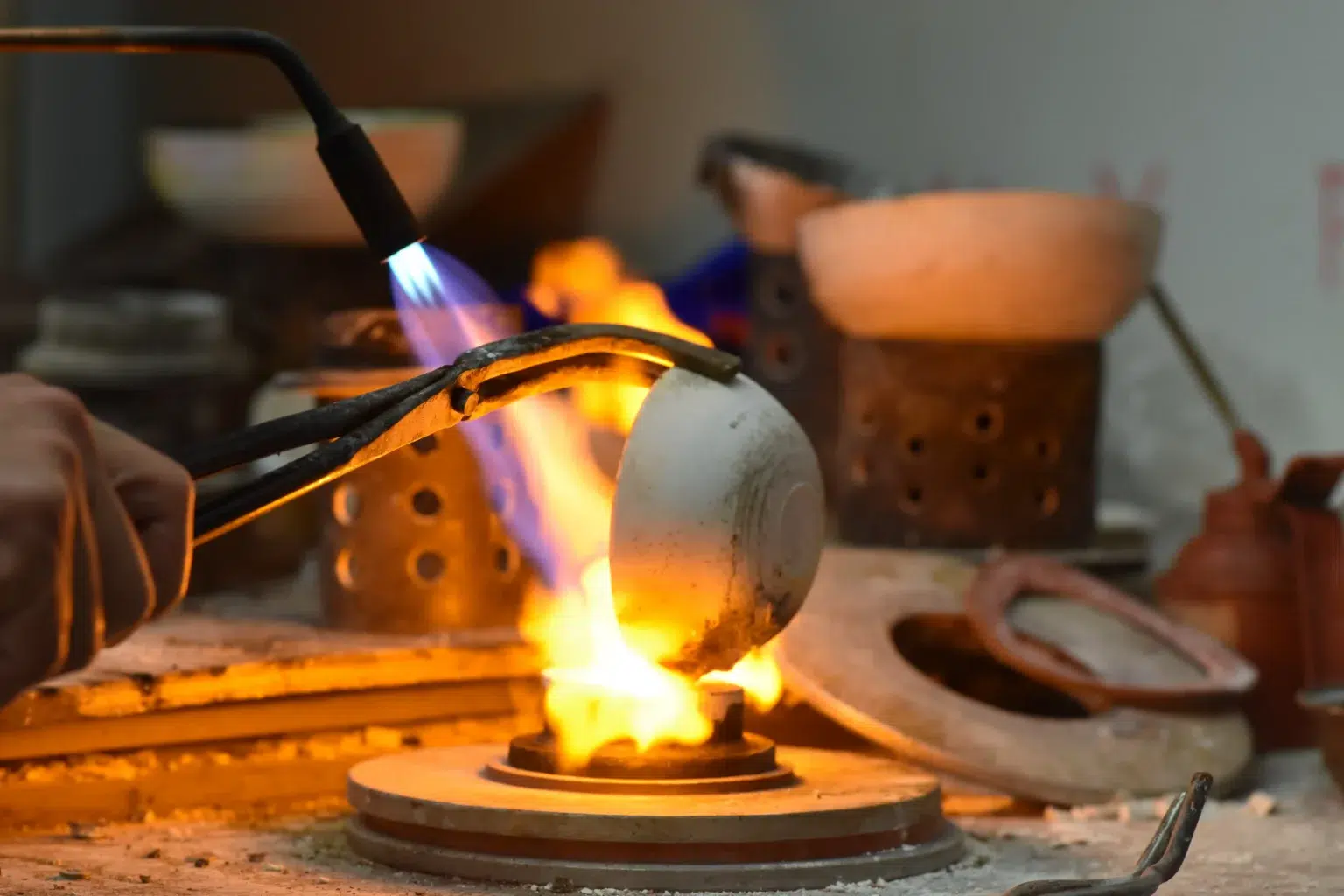
Settings are usually discussed as a style question. Solitaire or halo, pavé or plain, cathedral or low profile. The more useful question is mechanical: what will this ring endure, and how often? A ring worn daily for forty years lives through dishwater, gym equipment, gardening, hand sanitizer, coat pockets and thousands of small collisions. The setting decides how gracefully it survives all of that.
Watch the Hands Before Discussing Design
Ask a client to talk for a few minutes and watch what their hands do. Some gesture constantly. Some keep their hands still. Some have long, tapered fingers; others have broad palms and shorter fingers where a raised setting reads very differently.
Practical observations follow from this. People who work with their hands need low profiles. People who wear gloves need smooth outlines. People who lift weights need something they can remove easily, or a design that tolerates being knocked.
Settings Ranked by Everyday Resilience
Bezel
A rim of metal surrounds the stone entirely or partially. It is the most protective setting available: nothing snags, the girdle is shielded, and the stone cannot shift. Modern bezels are far more refined than their reputation suggests, and a fine bezel in platinum reads as architectural rather than heavy.
The trade-off is light. Less enters from the sides, so cut quality matters even more.
Low-profile solitaire
A classic four- or six-prong head set close to the finger. Simple, repairable by any competent bench, and easy to pair with bands. Prong count affects both security and light: six prongs hold more securely, four show more stone.
Halo and pavé
Small stones surrounding a centre or lining a shank add brilliance and apparent size. They also add points of failure. Micro-pavé set with fine beads requires periodic inspection, and a lost melee stone is a small but recurring expense.
Choose these knowingly rather than avoiding them. Well-executed pavé with adequate metal around each stone performs for decades; thin, over-cut pavé does not.
Cathedral and raised settings
Arches sweep up to support an elevated stone, which looks impressive and catches more. Raised heads snag on knitwear and take the force of impacts. They suit occasion wear and careful wearers.
Tension and floating designs
Visually striking, mechanically demanding. Tension settings rely on the spring of hardened metal, and resizing them is difficult or impossible. Beautiful, but not a design to choose without understanding the constraints.
Occupations and Pastimes That Change the Recommendation
Healthcare workers, who sanitize constantly and wear gloves, do best with bezels or smooth low settings — repeated alcohol exposure dulls finishes and degrades some treatments.
Teachers, chefs and anyone whose hands are in and out of water benefit from low, easily cleaned designs without deep galleries that trap residue.
Climbers, weightlifters and cyclists should expect to remove a ring regularly, which makes a secure storage habit more important than the setting itself.
Those who spend most of the day at a keyboard have the widest latitude, though a tall setting still catches on sleeves and bags.
This is the conversation that shapes a design far more than trend cycles do. A jeweller planning an Engagement Ring Toronto commission around a surgeon's routine will arrive somewhere entirely different than one designing for a wearer who works at a desk, even when both clients admire the same photograph.
Small Details With Long Consequences
Prong shape matters. Rounded prongs snag less than pointed ones. V-prongs protect the vulnerable corners of pears, marquises and princess cuts.
Gallery openness determines how easily a ring can be cleaned. Enclosed galleries trap lotion and soap, which dulls a stone from beneath — a common reason people believe their diamond has lost life.
Metal choice interacts with the setting. Platinum's density makes prongs that bend rather than snap and hold a stone securely. Eighteen-karat gold is harder but more brittle at fine dimensions.
Shank width affects fit. Wide bands sit more snugly, so sizing must account for it.
The Case for a Second Ring
Many wearers eventually arrive at a two-ring solution: the commissioned piece for most days, and a simpler band for travel, sport, gardening and situations where loss or damage is plausible.
A well-made plain band in matching metal costs a fraction of the main ring and removes any temptation to leave jewellery in a hotel room or a gym locker. Workshops that handle Custom Jewellery Toronto commissions can produce one that echoes the original design, so it reads as part of a set rather than a substitute.
Designing for the Decades
The most beautiful setting is the one still holding its stone in thirty years. That points toward lower profiles, adequate metal, sensible prong geometry and open galleries far more often than it points toward whatever silhouette is currently everywhere. Choose for the life the ring will lead, and the style resolves itself — because a design that suits its wearer looks correct in a way no trend can imitate.
 Dutch
Dutch
 English
 Arabic
 French
 Spanish
 Portuguese
 Deutsch
 Turkish
 Italiano
 Russian
 Romaian
 Portuguese (Brazil)
 Greek
Greek
