


 Pro Benefits
 About
About
 Terms
Terms
 Privacy
 Child Safety & Protection
 Notifications
 Ayrush Global It Services Pvt Ltd
How Automated Taxi Dispatching Helps Fleet Operators Reduce Idle Time and Improve Driver Utilization
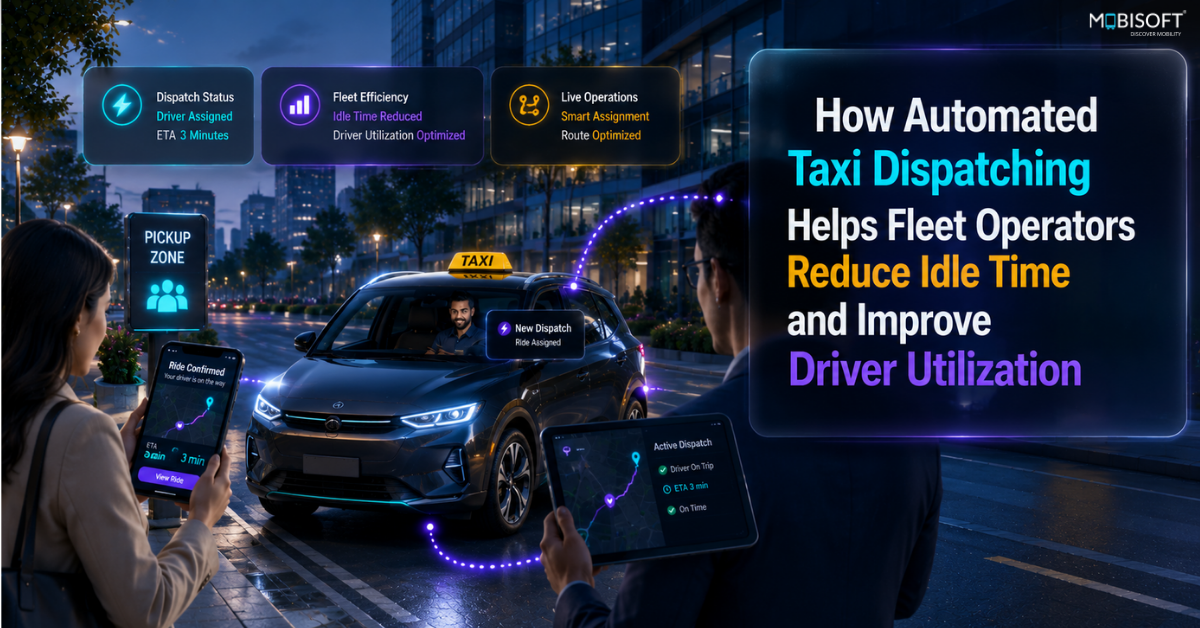
A parked taxi doesn't earn a single rupee. Every idle minute costs the fleet money it should be making. Fleet operators focus on adding bookings and drivers. Yet they often skip the simplest fix already in front of them: dispatch. A good taxi dispatch software doesn't just assign rides faster. It decides how much of a driver's day actually turns into income. This piece looks at why idle time keeps creeping in. And it shows how automation closes that gap for good.
The Real Cost of Idle Time for Fleet Operators
Idle time sounds harmless enough on paper. A driver waits for a fare, checks a message, maybe grabs a coffee. Add up those minutes across a full workday. Then multiply across an entire fleet, and the picture looks very different.
Idle time is any stretch when a vehicle sits available but unassigned. It isn't downtime for maintenance or a scheduled break. It's paid-for capacity going completely unused. That often drags down profitability more than fuel costs do.
Here's what idle time really costs an operator:
-
Lower revenue per vehicle: A parked cab earns nothing, no matter how well it runs.
-
Frustrated drivers: Long unpaid stretches push good drivers toward other platforms.
-
Wasted payroll hours: Eight hours on the clock, but only five spent earning, adds up fast.
-
Slower pickups for riders: Customers notice when the nearest cab isn't actually available.
None of this shows up on a single dashboard number. It builds up slowly, in margins that shrink for reasons operators can't quite explain. That's why driver utilization deserves as much attention as idle time. A reliable taxi dispatch solution connects the two.
How Automated Dispatch Cuts Idle Time
Cutting idle time depends less on guessing and more on speed. A modern taxi dispatch system brings two capabilities that make this possible. Both work in real time.
Real-Time Driver-Trip Matching
Traditional dispatch relied on radio calls and gut instinct. Dispatchers often guessed wrong about which driver was closest. A modern taxi dispatch system removes that guesswork almost entirely.
Real-time matching engines track every vehicle's location continuously. The moment a booking arrives, the system finds the nearest driver. It assigns the trip within seconds, with no radio chatter and no back-and-forth.
This single change usually cuts idle time more than any other upgrade. Dead mileage drops, and waiting time between trips shrinks noticeably. Drivers end up spending more of the day actually moving toward paying passengers.
Predictive Demand Positioning
Matching drivers to existing bookings solves only half the puzzle. The other half is knowing where demand will show up before it happens.
Predictive positioning uses historical trip data and live booking patterns. It also factors in local events to forecast where riders will need cabs next. Airport arrivals, stadium exits, even sudden rain: each one creates a demand spike. Most are fairly predictable, once you're watching for them.
Instead of waiting for requests, the system acts first. It moves idle drivers toward these zones ahead of time. More cabs are already close by when a booking lands. An online taxi management system built this way turns guesswork into a real advantage.
What Driver Utilization Really Measures
Utilization sounds like a complicated metric, but it really isn't. It's simply the percentage of a driver's paid day actually spent on a trip. Everything else counts as waiting or repositioning.
Why does this matter more than trip count? Two drivers can complete the same number of rides and still perform very differently. One driver moves efficiently between bookings. The other spends half the day parked, waiting for the next fare. Utilization captures that difference clearly, something trip count never does.
A few things typically drag utilization down:
-
Inefficient routing that sends drivers further than necessary between pickups.
-
Workday mismatches, where too many drivers are online during quiet hours.
-
Manual reassignment lag, when a dispatcher takes minutes instead of seconds to respond.
A solid taxi cab dispatch software platform addresses all three at once. It removes the manual guesswork sitting at the center of each problem.
Real-Time Features That Boost Utilization
Utilization improves when a handful of features work together. They work best as one connected system, not as isolated upgrades. A taxi dispatch software platform brings all of them under one roof.
GPS-Based Live Tracking Tools
Live location tracking sounds basic. But it's actually the backbone of everything else in a dispatch system. Without accurate, continuous GPS data, matching and forecasting simply don't work well.
When a trip ends, the system already knows the next likely pickup. That means there's rarely a gap where a driver sits wondering what comes next. Small as it seems, that gap adds up fast across the day.
Automated Duty and Break Alerts
Manually tracking who's due for a break is easy to get wrong. So is spotting who's nearing the end of a long duty stretch. Automated alerts take care of this instead.
The system flags drivers nearing overwork and suggests better duty patterns. It also prevents idle stretches caused by manual scheduling. Drivers stay fresher, fleets stay compliant, and utilization holds steady instead of dipping unpredictably.
Measuring ROI From Dispatch Automation
None of this matters unless operators can actually measure it. Calculating the return on taxi dispatch software doesn't require complicated formulas.
Start with a simple before-and-after comparison. Track utilization for a month before automation, then track it again a month later. The gap between those two numbers tells most of the story.
A few metrics are worth tracking with a taxi booking and dispatch software system:
-
Idle-to-active ratio, showing how much of the day is spent waiting versus earning.
-
Revenue per vehicle hour, a cleaner measure of profitability than total trips.
-
Trip acceptance time, which shows how quickly drivers respond once assigned.
The global online taxi booking software market topped four billion dollars in 2025. That kind of growth isn't random. It reflects real, measurable returns once dispatch stops relying on manual judgment.
Turn Idle Fleet Hours Into a Competitive Advantage
Fleets that treat dispatch data as a daily habit tend to pull ahead. They catch idle patterns early and adjust routing before it costs them. They also keep drivers earning instead of waiting around. A well-run taxi dispatch system turns available capacity into steady, dependable revenue. The operators who win aren't necessarily the ones with the most vehicles. They're the ones whose vehicles are actually working.
 English
 Arabic
 French
 Spanish
 Portuguese
 Deutsch
 Turkish
 Dutch
Dutch
 Italiano
 Russian
 Romaian
 Portuguese (Brazil)
 Greek
Greek
