The way people buy products, book services, and connect with businesses has changed a lot over the past few years. Today, customers expect quick service, easy payments, and instant updates. This shift has encouraged businesses across different industries to invest in on demand app development to meet changing customer expectations.
From ordering food and booking a taxi to consulting a doctor online, on-demand apps have become a part of everyday life. They help businesses reach customers faster while offering convenience that traditional methods often cannot match.
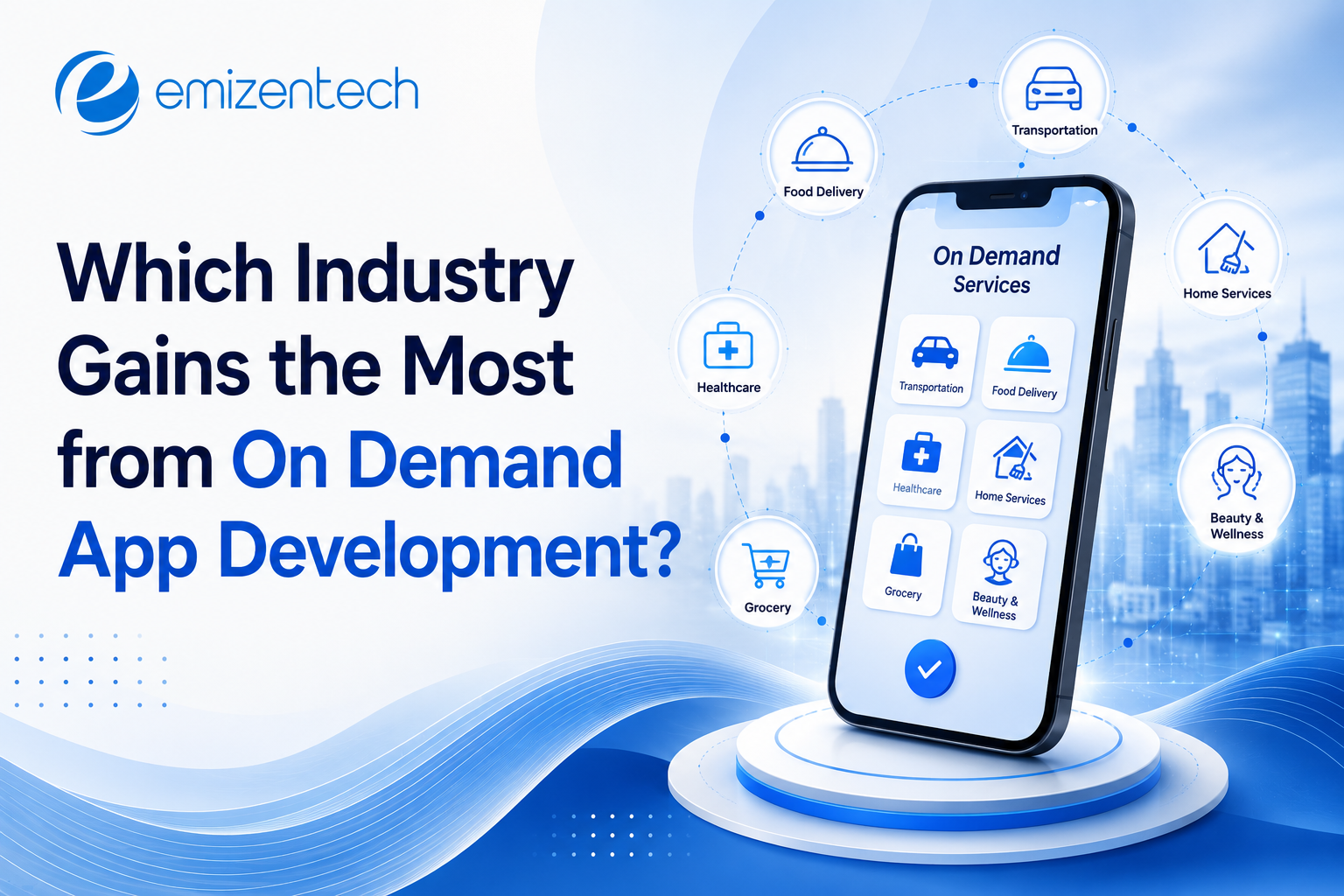
But one question remains: Which industry gains the most from on demand app development?
The answer is not limited to a single industry. Different sectors benefit in different ways depending on their business goals, customer needs, and digital strategy. Let's explore some of the industries where on-demand apps have made the biggest impact.
Why On-Demand Apps Are Becoming More Popular
Before discussing specific industries, it is important to understand why businesses are choosing this model.
Modern customers prefer services that save time. They want everything available on their smartphones without waiting in long queues or making multiple phone calls. On-demand apps make this possible by connecting customers and service providers in real time.
Some common advantages include:
These benefits explain why more industries continue adopting this business model.
Healthcare Industry
Healthcare has experienced one of the biggest digital transformations in recent years.
Patients no longer need to visit hospitals for every consultation. Many healthcare providers now offer online appointments, digital prescriptions, video consultations, and medicine delivery through mobile applications.
An on-demand healthcare app can help patients:
For healthcare providers, these apps improve appointment management, reduce administrative work, and offer better patient experiences.
As telemedicine continues to grow, healthcare remains one of the strongest sectors benefiting from digital services.
Food Delivery Industry
Food delivery is often the first example people think of when discussing on-demand services.
Customers enjoy browsing menus, placing orders, making online payments, and tracking deliveries without leaving their homes.
Restaurants also benefit because these apps help them:
Since customer convenience directly affects sales, food delivery businesses continue investing in better app experiences.
Transportation and Taxi Services
Booking a taxi has become much easier than it was a decade ago.
Instead of searching for local transport or waiting by the roadside, customers can book a ride within seconds through a mobile application.
These apps usually provide:
-
Live driver tracking
-
Fare estimation
-
Digital payments
-
Ride history
-
Safety features
-
Customer ratings
Drivers also benefit by receiving ride requests automatically, reducing idle time and improving earnings.
Transportation companies have shown how digital platforms can completely change traditional business operations.
Grocery Delivery
Online grocery shopping has become part of many households.
Busy professionals, families, and elderly customers appreciate the convenience of ordering groceries without visiting crowded stores.
A grocery delivery app allows customers to:
-
Browse products
-
Compare prices
-
Schedule deliveries
-
Track orders
-
Pay securely
Retailers gain valuable customer insights while improving inventory management and delivery efficiency.
This convenience keeps customers returning, making grocery delivery one of the fastest-growing digital markets.
Home Services
Many homeowners now prefer booking professionals through mobile apps rather than searching for local contacts.
Services commonly offered include:
-
Electricians
-
Plumbers
-
Carpenters
-
House cleaning
-
Appliance repair
-
Beauty services
-
Pest control
Customers can compare reviews, choose available professionals, and schedule appointments easily.
Service providers also receive verified bookings, making their work more organized and reducing time spent finding new customers.
E-commerce and Retail
Traditional retail businesses are increasingly combining physical stores with digital experiences.
Customers now expect more than just online shopping. They also want:
This is where on demand app development creates additional value by improving convenience and customer satisfaction.
Retail businesses that provide faster services often build stronger customer loyalty than those relying only on traditional shopping methods.
Beauty and Wellness Industry
Beauty salons, spas, and wellness professionals have also embraced digital booking platforms.
Instead of calling to schedule appointments, customers can simply choose available time slots through an app.
Additional features often include:
-
Service packages
-
Online consultation
-
Membership programs
-
Digital payments
-
Appointment reminders
These features improve customer convenience while helping businesses manage daily schedules more efficiently.
Logistics and Courier Services
The logistics industry has changed significantly with the rise of on-demand technology. Customers now expect to know exactly where their package is and when it will arrive.
An on-demand logistics app helps businesses provide features such as:
- Live shipment tracking
- Delivery notifications
- Route optimization
- Digital proof of delivery
- Easy communication between customers and delivery partners
For logistics companies, these features improve operational efficiency and reduce delays. Customers also appreciate the transparency, which builds trust and improves their overall experience.
Education and Online Learning
Education is another industry that has benefited from digital transformation.
Students today want flexible learning options that fit their schedules. On-demand learning apps make it possible to access courses, attend live classes, watch recorded lessons, and connect with instructors from anywhere.
These platforms often include:
- Video learning
- Live sessions
- Progress tracking
- Online assignments
- Discussion forums
- Certificates after course completion
This approach makes learning more convenient while allowing educational institutions to reach a wider audience.
Real Estate
Buying or renting a property no longer starts with visiting multiple locations. Most people begin their search online.
Real estate apps allow users to:
- Search properties by location
- View photos and virtual tours
- Schedule property visits
- Contact agents directly
- Compare listings
- Save favorite properties
For real estate businesses, these apps reduce manual work and help potential buyers make informed decisions before arranging a visit.
Entertainment and Media
Entertainment has become one of the biggest users of on-demand technology.
Whether it's watching movies, listening to music, or streaming live events, people prefer accessing content whenever they want.
Modern entertainment apps usually offer:
- Personalized recommendations
- Offline downloads
- Multi-device support
- Subscription management
- High-quality streaming
By understanding user preferences, businesses can deliver more relevant content and keep audiences engaged for longer periods.
Is There One Industry That Benefits the Most?
The simple answer is no.
Every industry gains value from on-demand technology in different ways.
For example:
- Healthcare focuses on improving patient care.
- Food delivery prioritizes speed and convenience.
- Retail enhances the shopping experience.
- Logistics improves delivery efficiency.
- Education increases accessibility.
- Real estate simplifies property discovery.
Rather than asking which industry benefits the most, a better question is whether an on-demand solution addresses real customer needs. Businesses that solve everyday problems through technology are more likely to achieve long-term success.
What Should Businesses Consider Before Building an On-Demand App?
Developing an app is not only about adding features. It starts with understanding your audience and identifying the challenges they face.
Before investing in an app, consider these questions:
- What problem will the app solve?
- Who will use it regularly?
- Which features are essential at launch?
- Can the platform scale as the business grows?
- How will customer data be protected?
- What kind of user experience do customers expect?
Answering these questions early can help avoid unnecessary development costs and improve the chances of building an app that people genuinely enjoy using.
Working with an experienced on demand app development company can also help businesses understand technical requirements, select the right technology stack, and plan for future growth based on their specific goals.
Final Thoughts
There is no universal answer to which industry gains the most from on demand app development. The real advantage depends on how effectively a business uses technology to improve customer experiences and simplify everyday processes.
As customer expectations continue to evolve, on-demand applications are likely to play an even bigger role across industries. Businesses that focus on solving real problems, delivering convenience, and continuously improving their services are more likely to stay competitive.
If you're exploring how different industries are adopting on-demand solutions and want to understand the development process in more detail, EmizenTech offers helpful insights and resources that can support your research before planning your next digital initiative.
Frequently Asked Questions (FAQs)
1. What is on demand app development?
On demand app development is the process of creating mobile or web applications that connect customers with products or services whenever they need them. These apps often include features like real-time booking, online payments, notifications, and order tracking.
2. Which industries benefit the most from on demand app development?
Several industries benefit from on demand app development, including healthcare, food delivery, logistics, transportation, eCommerce, real estate, education, beauty services, and home services. The impact depends on how well the app addresses customer needs and improves business operations.
3. What are the key features of an on-demand app?
Some of the most common features include:
- User registration
- Real-time tracking
- Secure payment integration
- Push notifications
- Ratings and reviews
- Booking or scheduling
- Order history
- Customer support
The exact features vary depending on the industry and business requirements.
4. How can businesses choose the right on demand app development company?
When selecting an on demand app development company, businesses should consider its industry experience, technical expertise, portfolio, communication process, development approach, and post-launch support. Reviewing previous projects and client feedback can also help in making an informed decision.
5. Is on demand app development suitable for small businesses?
Yes. Small businesses can use on-demand apps to improve customer convenience, streamline operations, and expand their reach. Starting with essential features and scaling over time is often a practical approach.
6. How long does it take to develop an on-demand app?
The timeline depends on the app's complexity, features, design, and integrations. A basic application may take a few months, while a feature-rich solution typically requires more development and testing time.
7. Why is user experience important in on-demand apps?
A simple and intuitive user experience helps customers complete tasks quickly and encourages them to return. Easy navigation, fast loading times, and secure transactions all contribute to higher customer satisfaction.
8. What should businesses consider before investing in on demand app development?
Before starting an on-demand app project, businesses should identify their target audience, define the problem they want to solve, prioritize essential features, set a realistic budget, and plan for future growth. A clear strategy helps create an app that delivers long-term value to both the business and its users.



 Pro Benefits
 About
About
 Terms
Terms
 Privacy
 Child Safety & Protection
 Notifications
 Ayrush Global It Services Pvt Ltd
 English
 Arabic
 French
 Spanish
 Portuguese
 Deutsch
 Turkish
 Dutch
Dutch
 Italiano
 Russian
 Romaian
 Portuguese (Brazil)
 Greek
Greek
