


 Pro Benefits
 О нас
О нас
 Условия использования
 Конфиденциальность
 Child Safety & Protection
 Оповещения
 Ayrush Global It Services Pvt Ltd
Essential Guide to the Best Marketing Automation Tools in 2026
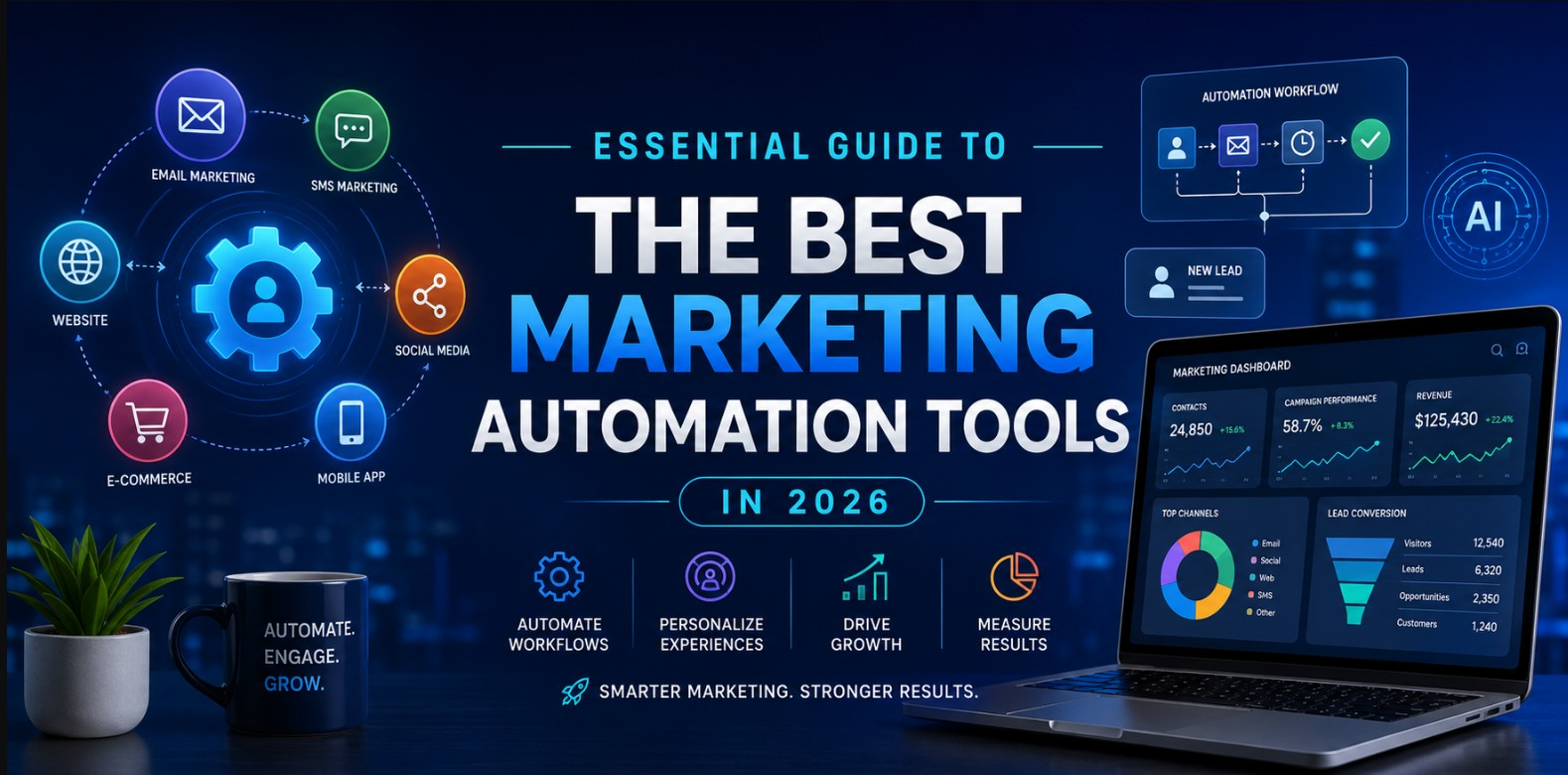
Marketing has changed more in the past five years than in the previous two decades. The rapid evolution of artificial intelligence, changes in buyer behavior, and the relentless demand for personalization have made marketing automation no longer just an advantage but a necessity.
Businesses today need tools that save time, foster meaningful customer relationships, and drive measurable growth. But with hundreds of options in the marketplace, choosing the right marketing automation platform is a daunting task.
In this guide, we break down the best marketing automation tools for 2026, identify their key strengths, and provide practical selection advice for marketing professionals, business owners, and agencies.
What Is Marketing Automation and Why Is It Essential?
Why is marketing automation considered essential in 2026?
-
It boosts productivity by automating repetitive tasks, freeing up time for strategic work.
-
It improves customer experience by delivering timely, personalized interactions.
-
It increases revenue by nurturing leads more effectively and shortening sales cycles.
-
It provides measurable analytics, helping marketing teams make data-driven decisions.
Criteria for Selecting Marketing Automation Tools
Not all automation platforms are built equally. The best choice depends on your organization’s size, goals, budget, and tech stack. However, the following key features are essential in any leading solution:
-
Cross-Channel Integration: Ability to manage campaigns across email, SMS, web, social, and emerging channels.
-
Powerful Workflow Builder: Visual, user-friendly tools to design complex automation without coding.
-
Personalization Capabilities: Dynamic content and AI-driven recommendations for target segments.
-
Analytics and Reporting: Real-time dashboards that connect marketing activities to business outcomes.
-
Scalability: Easy to adapt as your audience or needs grow.
-
Integration: Smooth compatibility with your CRM, sales, and customer support systems.
The Top Marketing Automation Tools of 2026
HubSpot Marketing Hub
HubSpot remains a favorite for companies that value an all-in-one platform. The tool combines automation for email, social media, CRM, and content management. With its robust analytics, drag-and-drop workflow builder, and deep contact insights, HubSpot is user-friendly yet powerful enough for enterprise needs.
Marketo Engage by Adobe
Marketo continues to set the standard for B2B marketing, offering extensive flexibility for lead management, account-based marketing, and multi-step nurture campaigns. Its integration with Adobe’s ecosystem provides advanced personalization options and seamless collaboration with design and web teams.
ActiveCampaign
ActiveCampaign stands out for its balance between power and simplicity. It is especially popular among small to medium-sized businesses. The platform’s automation builder allows users to personalize every touchpoint in real time and comes equipped with excellent customer support.
Salesforce Marketing Cloud
Salesforce’s Marketing Cloud excels in personalization and AI-powered analytics. With its Customer 360 approach, marketers can connect outreach across advertising, email, SMS, and even app messaging within a single dashboard. Its deep integration with Salesforce CRM is vital for data-driven sales and marketing alignment.
Mailchimp
Initially known for email marketing, Mailchimp has evolved into a complete marketing automation platform tailored for small businesses. Its visual journey builder, audience insights, and template libraries make campaign automation accessible even for non-experts.
Pardot
Pardot specializes in B2B marketing, focusing on lead scoring, nurturing, and ROI-driven campaign analytics. Its seamless integration with Salesforce makes it a popular choice for companies invested in the Salesforce ecosystem.
Omnisend
Omnisend shines in e-commerce automation, offering pre-built workflows for welcome messages, cart recovery, and post-purchase follow-up. It supports integration with most popular online storefront platforms, making it an indispensable tool for online retailers.
Making the Right Choice: Real-World Considerations
Choosing a marketing automation tool is not just a technical decision, it is a strategic one. Consider the following before committing to any platform:
-
Team Skills: Does your team need a straightforward solution or are you prepared to invest in training for more complex systems?
-
Scalability: Can the platform grow as your business expands?
-
Support and Community: Will you have access to expert assistance and user forums?
-
Cost: Review full costs, including onboarding, integration, and add-ons.
Remember, the best tool is the one you will actually use and that fits into your existing processes.
FAQs about Marketing Automation Tools
What size of business benefits most from marketing automation?
While enterprises often have the most to gain, small and medium-sized businesses now benefit greatly as modern tools offer tailored pricing and features. Automation saves time for any marketing team and helps companies of any size remain competitive.
How does marketing automation improve customer experience?
These platforms deliver more relevant, timely communications. By tracking customer behaviors and preferences, automation tools help create personalized journeys, leading to higher engagement and loyalty.
Are marketing automation tools difficult to implement?
Implementation complexity varies by platform. Most have invested in making onboarding user-friendly, offering templates and guided workflow builders. However, larger solutions or those requiring CRM integration may need IT assistance.
Can I use multiple automation tools at once?
Some businesses use separate platforms for different needs (like email and social), but managing multiple tools can cause data silos. Most organizations find it best to select one comprehensive solution that integrates with their other critical systems.
Conclusion
The landscape of marketing automation is rich with opportunity but filled with choice. Marketers must look beyond the hype and focus on tools that match their unique context, customer needs, and growth plans. Remember, success depends as much on the clarity of your marketing objectives as on the sophistication of your technology.
 Russian
 English
 Arabic
 French
 Spanish
 Portuguese
 Deutsch
 Turkish
 Dutch
Dutch
 Italiano
 Romaian
 Portuguese (Brazil)
 Greek
Greek
