


 Pro Benefits
 Sobre
Sobre
 Termos
 Privacidade
 Child Safety & Protection
 Notificações
 Ayrush Global It Services Pvt Ltd
Compressed Biogas Plant Approval Consultant
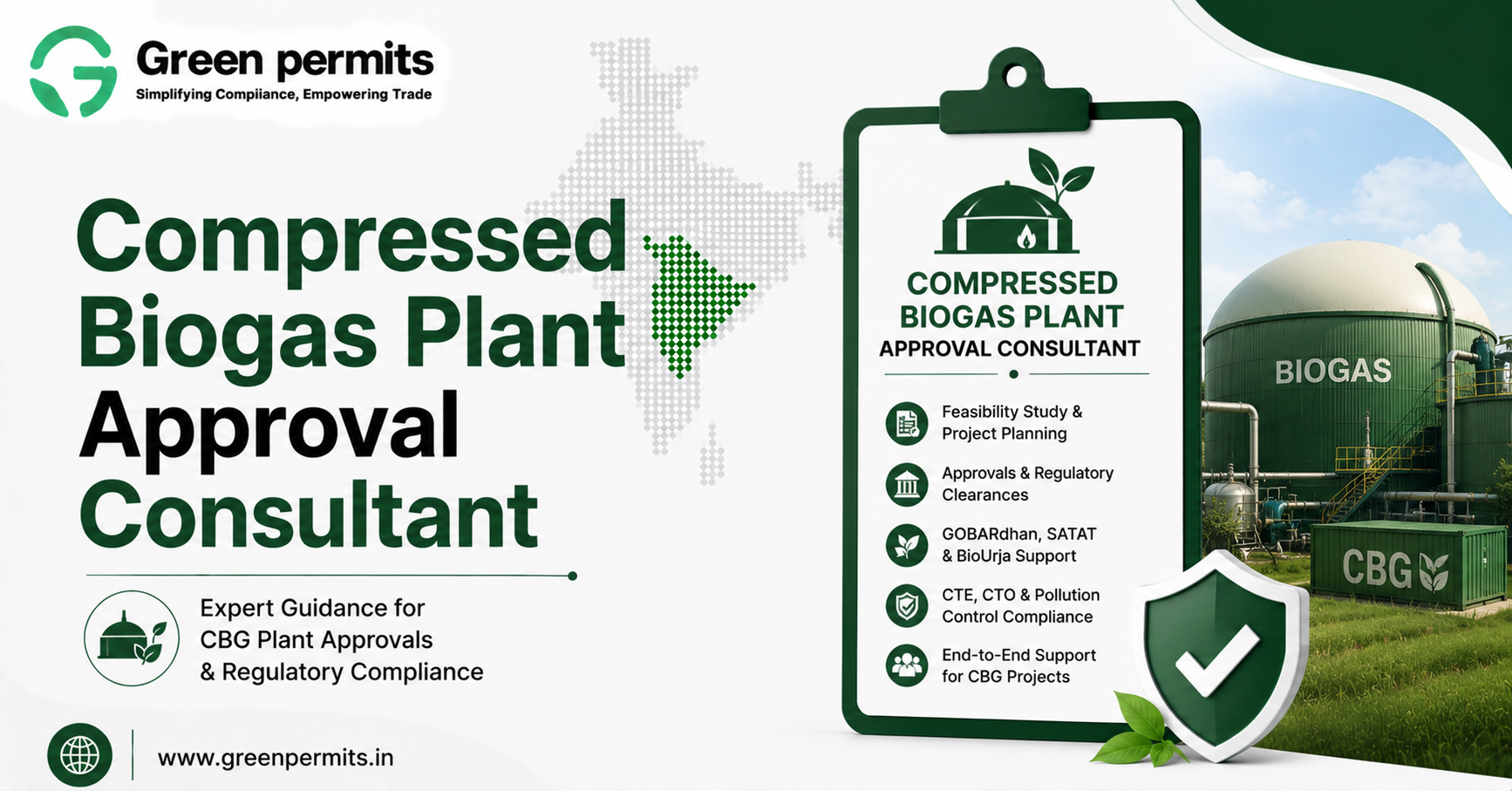
Compressed Biogas Plant Approval Consultant plays an important role for businesses, entrepreneurs, municipalities, gaushalas, farmer groups, waste management companies, and industrial investors planning to set up a CBG plant in India. Compressed Biogas, commonly known as CBG or Bio-CNG, is produced by processing organic waste, agricultural residue, cattle dung, food waste, press mud, municipal organic waste, sewage sludge, and other biodegradable materials.
CBG is considered a clean fuel because it can replace conventional compressed natural gas in automotive, industrial, and commercial applications. It also supports waste management, rural income generation, circular economy, bio-manure production, and reduction of unmanaged organic waste.
However, setting up a CBG plant is not only a technical project. It requires multiple approvals, land planning, pollution control permissions, registration, feedstock agreements, project reports, financial planning, safety compliance, and operational documentation.
A Compressed Biogas Plant Approval Consultant helps businesses manage the approval process from feasibility study to plant registration, Consent to Establish, Consent to Operate, GOBARdhan registration, SATAT support, BioUrja support, and ongoing environmental compliance.
What is a Compressed Biogas Plant?
A Compressed Biogas Plant is a facility where biodegradable waste is converted into biogas through anaerobic digestion. The biogas is then purified, upgraded, and compressed to produce CBG.
The plant generally uses feedstock such as:
- Cattle dung
- Agricultural residue
- Press mud
- Food waste
- Municipal organic waste
- Fruit and vegetable market waste
- Poultry litter
- Sewage sludge
- Industrial organic waste
- Bio-degradable waste from institutions
The final products may include:
- Compressed biogas
- Fermented organic manure
- Liquid bio-slurry
- Solid manure
- Carbon dioxide, where captured
- Other by-products, depending on plant design
A properly designed CBG plant can convert waste into valuable fuel and manure while reducing environmental burden.
Why CBG Plant Approval is Important
CBG plants involve waste handling, digestion tanks, gas generation, gas purification, compression, storage, transportation, and by-product management. Because of this, approvals are required to ensure environmental, safety, land, and operational compliance.
CBG plant approvals help businesses:
- Start operations legally
- Obtain pollution control permissions
- Register under relevant government portals
- Access applicable scheme benefits
- Manage feedstock legally
- Ensure safe gas handling
- Avoid regulatory notices
- Build confidence with OMCs and buyers
- Prepare for project finance
- Maintain environmental compliance
- Support long-term business operations
Without proper approvals, the project may face delays, investment risk, local objections, regulatory action, or operational restrictions.
Who Needs a CBG Plant Approval Consultant?
A CBG Plant Approval Consultant may be useful for any entity planning to set up or operate a CBG or Bio-CNG project.
The following businesses may need support:
- Private limited companies
- LLPs and partnership firms
- Municipal bodies
- Waste management companies
- Gaushalas
- Dairy farms
- Sugar mills
- Distilleries
- Food processing units
- Agricultural businesses
- Farmer producer organizations
- Renewable energy developers
- Industrial investors
- Biofuel companies
- Startups in waste-to-energy sector
- Existing biogas plant operators
The exact approval requirement depends on plant capacity, feedstock type, land location, gas storage system, buyer arrangement, and state-specific rules.
Role of Compressed Biogas Plant Approval Consultant
A consultant helps businesses plan, document, apply, respond, and comply during the complete project approval cycle.
Consulting support generally includes:
- Project feasibility assessment
- Feedstock availability study
- Land suitability review
- DPR preparation
- Approval checklist preparation
- Consent to Establish filing
- Consent to Operate filing
- GOBARdhan registration support
- BioUrja portal support
- SATAT and OMC documentation support
- Pollution control compliance planning
- Fire and safety approval guidance
- PESO-related guidance, where applicable
- Local body approval guidance
- Query response support
- Inspection coordination
- Ongoing compliance advisory
Professional support helps reduce approval delays and improves project readiness.
Major Approvals Required for CBG Plant Setup
The approvals required for a CBG plant may vary depending on the state, plant capacity, feedstock, land type, gas storage method, and project structure.
Common approvals may include:
- Company registration
- GST registration
- Land use approval
- Project report or DPR
- Consent to Establish from State Pollution Control Board
- Consent to Operate from State Pollution Control Board
- GOBARdhan unified registration
- BioUrja registration, if applying for MNRE support
- SATAT or OMC documentation, where applicable
- Fire NOC, where required
- Factory licence, where applicable
- Local body permission
- Building plan approval
- Electricity connection approval
- Weighbridge approval, where applicable
- PESO approval for gas storage or cylinder filling, where applicable
- Hazardous waste authorization, if applicable
- Labour and safety compliance approvals
Before investing in land or machinery, the business should prepare a proper approval roadmap.
Documents Required for CBG Plant Approval
Proper documents are important for approval, registration, finance, and operational compliance.
Common documents may include:
- Company Incorporation Certificate
- PAN Card
- GST Registration Certificate
- Authorized signatory ID proof
- Land ownership or lease agreement
- Land use certificate, where required
- Site layout plan
- Plant layout plan
- DPR or project report
- Process flow chart
- Feedstock availability details
- Feedstock supply agreement or MoU
- Machinery list
- Plant capacity details
- Pollution control system details
- Wastewater management plan
- Solid digestate management plan
- Gas storage and safety plan
- Fire safety plan
- Electricity load details
- Water requirement details
- Manpower details
- Financial documents, where required
- Undertaking and declarations
- Previous approvals, if any
Additional documents may be required depending on state policy, funding scheme, and project type.
CBG Plant Approval Process in India
The approval process should be handled step by step so that the project does not face legal or operational delays.
Step 1: Feasibility Study
The first step is checking whether the project is technically and financially viable.
The feasibility study includes:
- Feedstock availability
- Feedstock collection cost
- Land requirement
- Plant capacity
- Technology selection
- Gas output estimation
- Manure output estimation
- Market demand
- Buyer arrangement
- Investment requirement
- Approval requirement
- Project revenue model
A good feasibility study helps investors understand whether the CBG plant can operate sustainably.
Step 2: Site Selection
Site selection is one of the most important decisions for a CBG project.
The site should be checked for:
- Industrial or suitable land use
- Road access
- Feedstock availability nearby
- Distance from residential areas
- Water availability
- Power availability
- Space for digesters
- Space for feedstock storage
- Space for gas purification and compression
- Space for manure handling
- Drainage and wastewater management
- Fire safety suitability
- Pollution control feasibility
Wrong site selection can cause approval rejection, local objection, or operational problems.
Step 3: DPR Preparation
A detailed project report is required for planning, finance, government support, and approvals.
The DPR generally includes:
- Promoter profile
- Feedstock assessment
- Plant capacity
- Technology details
- Process description
- Machinery list
- Land and building requirement
- Pollution control measures
- Safety systems
- Manpower requirement
- Investment cost
- Revenue model
- Implementation timeline
- Compliance roadmap
A clear DPR improves project credibility before authorities, banks, investors, and buyers.
Step 4: Apply for Consent to Establish
Before construction or machinery installation, the project may need Consent to Establish from the State Pollution Control Board.
The application generally includes:
- Unit details
- Site details
- Feedstock details
- Process details
- Capacity details
- Wastewater generation details
- Air emission details
- Solid waste and digestate management
- Pollution control measures
- Supporting documents
CTE approval allows the project to proceed with setup as per approved conditions.
Step 5: GOBARdhan Registration
CBG and Bio-CNG plants may need registration on the GOBARdhan unified registration portal, especially when the project wants to access benefits or support from government departments.
This registration helps create a digital record of the plant and supports the organized development of the CBG ecosystem.
Details may include:
- Applicant details
- Plant location
- Plant capacity
- Feedstock category
- Project stage
- Technology details
- Contact details
- Supporting information
GOBARdhan registration is an important step for many CBG projects.
Step 6: SATAT and OMC Support
Under the SATAT ecosystem, entrepreneurs may supply CBG for use in automotive, industrial, or commercial applications through Oil Marketing Companies, subject to eligibility, commercial terms, quality standards, and buyer arrangements.
SATAT-related support may include:
- OMC application guidance
- Letter of Intent support
- Project documentation
- Feedstock planning
- Quality specification awareness
- Gas offtake planning
- Buyer communication support
- Commercial model planning
A consultant helps businesses prepare documents and understand buyer expectations.
Step 7: BioUrja and MNRE Support
Projects may also explore MNRE support through the BioUrja portal, subject to scheme eligibility and applicable guidelines.
BioUrja-related support may include:
- Portal registration
- CFA application support
- Project document preparation
- DPR submission support
- Query response
- Status tracking
- Compliance documentation
Financial assistance or scheme support should be checked carefully because eligibility may depend on project type, capacity, technology, timeline, and official guidelines.
Step 8: Machinery Installation and Plant Setup
After approvals and planning, the business can proceed with construction and machinery installation.
The setup may include:
- Feedstock receiving area
- Segregation and preprocessing unit
- Anaerobic digester
- Gas holder
- Gas cleaning system
- Biogas purification unit
- Compression system
- Cascade or storage system
- Manure handling system
- Effluent management system
- Fire safety system
- Laboratory and monitoring arrangement
The plant should be installed as per approved layout and safety requirements.
Step 9: Apply for Consent to Operate
After plant setup is completed, the business must apply for Consent to Operate before starting commercial operations.
During CTO review, the authority may check:
- Installed machinery
- Feedstock handling arrangement
- Wastewater management system
- Digestate and manure management
- Gas handling safety system
- Pollution control measures
- Fire safety readiness
- Compliance with CTE conditions
- Site readiness
- Monitoring records
CTO is required before regular operation.
Step 10: Start Operations and Maintain Compliance
After approvals, the CBG plant can begin operations as per consent conditions and registration requirements.
Ongoing compliance may include:
- Maintaining feedstock records
- Maintaining gas production records
- Maintaining manure disposal records
- Maintaining wastewater records
- Monitoring emissions and effluent, where applicable
- Renewing CTO before expiry
- Updating portal details, where required
- Following fire and safety conditions
- Maintaining buyer and dispatch records
- Keeping inspection documents ready
Compliance should be maintained throughout the plant lifecycle.
Cost of CBG Plant Approval Consultant
The cost of hiring a CBG Plant Approval Consultant depends on project size and approval scope.
Major cost factors include:
- Plant capacity
- State and location
- Feedstock type
- Land status
- DPR requirement
- Pollution control documentation
- GOBARdhan registration support
- BioUrja or SATAT support
- Fire and safety approval support
- PESO-related support, where applicable
- Query response requirement
- Consultant professional charges
A small project may need limited approval support, while a large integrated CBG project may require complete project compliance management.
Timeline for CBG Plant Approval
The timeline depends on land readiness, document availability, authority processing, project size, and inspection requirements.
The general timeline may include:
- Feasibility study: 3 to 7 working days
- DPR preparation: 5 to 15 working days
- Consent to Establish: depends on SPCB processing
- GOBARdhan registration: depends on portal and document review
- BioUrja or SATAT support: depends on project scope
- Machinery installation: depends on supplier and capacity
- Consent to Operate: depends on inspection and approval
Businesses should plan approvals before ordering machinery or starting construction.
Common Mistakes During CBG Plant Approval
Many CBG projects face delays because of weak planning or incomplete documentation.
Common mistakes include:
- Selecting unsuitable land
- Not confirming feedstock availability
- Preparing weak DPR
- Starting construction without CTE
- Ignoring local body requirements
- Not planning digestate management
- Missing wastewater control details
- Not considering fire safety
- Ignoring gas storage compliance
- Not registering on relevant portals
- Not preparing for CTO inspection
- Not maintaining operating records
Professional guidance helps avoid these mistakes and improves approval success.
Benefits of Hiring Compressed Biogas Plant Approval Consultant
Hiring a consultant provides several practical benefits.
These include:
- Correct project feasibility planning
- Better approval roadmap
- Faster document preparation
- Proper pollution control filing
- GOBARdhan registration support
- SATAT and BioUrja support
- Stronger DPR preparation
- Better query response
- Inspection readiness support
- Reduced project delays
- Improved compliance planning
- Better operational record management
A consultant helps businesses move from idea stage to approved project execution in a structured manner.
Learn More About Compressed Biogas Plant Approval
If you are planning to set up a CBG plant in India, understanding approvals, land requirements, feedstock planning, CTE, CTO, GOBARdhan registration, SATAT support, BioUrja support, and safety compliance is essential before starting the project.
Read the complete guide here:
👉 https://www.greenpermits.in/07/compressed-biogas-plant-approval-consultant-in-india/
📞 Get Expert Assistance for CBG Plant Approval
If you need help with Compressed Biogas Plant Approval or CBG compliance, Green Permits Consulting can guide you efficiently.
🌐 Website: https://www.greenpermits.in/
📞 Phone: +91 78350 06182
📧 Email: wecare@greenpermits.in
 Portuguese (Brazil)
 English
 Arabic
 French
 Spanish
 Portuguese
 Deutsch
 Turkish
 Dutch
Dutch
 Italiano
 Russian
 Romaian
 Greek
Greek
