


 Pro Benefits
 Σχετικά
 Όρους
Όρους
 Ιδιωτικότητα
 Child Safety & Protection
 Ειδοποιήσεις
 Ayrush Global It Services Pvt Ltd
Zipprr AI Chat Hacks: 8 Tips to Get Sharper Answers Every Time
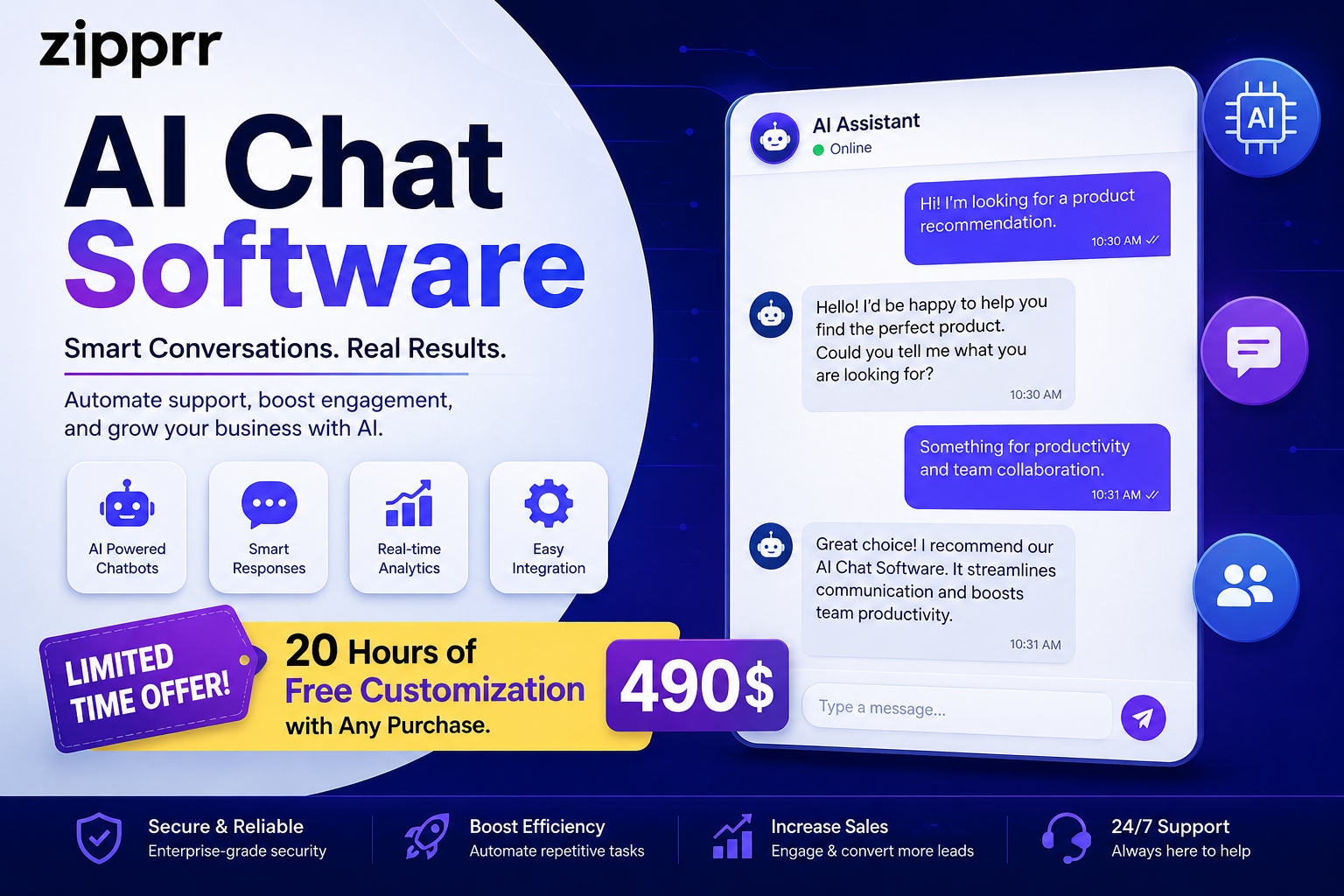
Ask a vague question, get a vague answer — that's the rule with AI chat tools, and most people break it without realizing it.
I've watched dozens of teams get frustrated with an AI chat assistant and quietly stop using it, convinced the tool just isn't smart enough. Nine times out of ten, the problem isn't the AI. It's how the question was framed. A few small habits can completely change the quality of what you get back.
Say What You Actually Want, Not Just the Topic
"Tell me about email marketing" gets you a generic essay. "Write a 3-email welcome sequence for a new SaaS trial user, friendly tone, under 150 words each" gets you something you can use today. The difference is specificity: audience, format, length, tone, and purpose.
This is the single biggest lever for better results from any AI chat assistant (/ai-chat), and it costs nothing to apply. Before you type your question, picture the exact output you want sitting in front of you, then describe that picture in the prompt.
Give It Context It Can't Guess
An assistant can't read your mind about your industry, your audience, or your brand voice unless you tell it. If you're asking for product descriptions, mention who buys the product and why. If you're asking for support replies, paste in your actual policy details.
Zipprr's AI Chat performs noticeably better once it has this kind of grounding, because the responses stop being generic and start reflecting your actual business. Teams who spend two minutes setting context up front save far more time later, since they aren't rewriting bland answers from scratch.
Break Big Requests Into Smaller Steps
Asking for an entire marketing plan in one message usually produces something shallow. Asking for the target audience first, then the messaging pillars, then the content calendar — one step at a time — produces something you can actually act on.
This step-by-step approach is worth practicing with a library of AI chat assistant prompts (/chat-prompts) you reuse across projects. Save the prompts that worked well and adjust them slightly for each new task instead of starting from a blank page every time.
Ask It to Show Its Reasoning
When an answer feels off, don't just reject it — ask why it chose that approach. "Why did you recommend this structure?" often surfaces an assumption you can correct in one follow-up, rather than restarting the whole conversation.
This back-and-forth is where conversational AI actually earns its name. A one-shot question treats the assistant like a search engine. A real conversation treats it like a collaborator, and collaborators do their best work when you tell them what's not working and why.
Correct It Instead of Starting Over
New users often delete a bad answer and rewrite their original question from scratch. That throws away useful context. Instead, tell the assistant exactly what to change: "Shorter," "less formal," "add a statistic," "remove the second paragraph." Small corrections compound into a much better final result than repeated cold starts.
Anyone building internal documentation around this workflow should check a solid AI chat assistant guide (/chatbot-guide) for examples of iterative prompting, since the pattern applies whether you're writing copy, debugging code, or planning a campaign.
Use It for the First Draft, Not the Final Word
The most productive teams treat AI chat output as a strong first draft, not a finished product. A quick human pass for tone, accuracy, and brand fit turns a good AI response into a great one. This is especially true for anything customer-facing, where a small factual slip can cost more trust than the time saved.
Pairing an AI chat assistant (/ai-writing) with a dedicated writing tool for polishing longer pieces gives you speed on the first pass and quality control on the last one.
Keep a Running List of What Works
Finally, treat your best prompts like reusable templates, not one-off experiments. Save the phrasing that reliably gets useful answers and reuse it across the AI chat assistant (/blog/ai-chat) tools your team relies on daily. Over time, you'll build an internal playbook that turns every new hire into a confident prompt writer within their first week, instead of months of trial and error.
Set Boundaries Around Length and Format Up Front
A lot of wasted back-and-forth happens because the assistant guesses at format and guesses wrong. Tell it upfront whether you want bullet points, a table, a short paragraph, or numbered steps. Mention word count limits if they matter. This one habit alone can cut the number of follow-up corrections in half, because you're removing guesswork before it ever starts.
Better answers rarely come from a smarter AI model alone. They come from asking better questions, giving better context, and treating the exchange like the conversation it's meant to be. Practice these habits for a week and you'll notice the difference less in any single answer and more in how much faster the whole workflow feels.
FAQ
Q: How can I get more useful answers from an AI chat assistant?
A: Give it specific instructions on format, tone, and length, add real context about your business, and correct it directly instead of restarting the conversation.
Q: Do I need technical skills to prompt AI chat well?
A: No. The tips that matter most, like being specific and giving context, are habits anyone on a team can learn in a single afternoon.
Q: How does Zipprr's AI Chat handle context and corrections?
A: Zipprr's AI Chat is designed to retain conversational context and respond well to iterative follow-ups, so responses improve the more you refine them together.
Q: How do I get more accurate answers from AI chat?
A: Be specific about audience, format, length, and tone, and give the assistant real context instead of a vague topic.
Q: Why does my AI chatbot give generic responses?
A: It usually lacks context about your business, so feeding it real details like policies or examples sharply improves output quality.
Q: Should I start a new AI chat for every question?
A: No. Continuing the same conversation and correcting the assistant directly preserves context and produces better results than starting over.
Q: Can AI chat tools understand follow-up corrections?
A: Yes, most modern AI chat assistants handle iterative corrections well, often improving faster through small follow-ups than through a rewritten prompt.
Q: What's the biggest mistake people make prompting AI chat?
A: Being too vague. A generic topic without specifics about format, tone, and purpose almost always produces a generic answer.
CTA
Ready to put these habits to work? Try Zipprr's AI chat assistant (/ai-chat) and see the difference specific prompting makes.
 Greek
Greek
 English
 Arabic
 French
 Spanish
 Portuguese
 Deutsch
 Turkish
 Dutch
Dutch
 Italiano
 Russian
 Romaian
 Portuguese (Brazil)
