


 Pro Benefits
 Σχετικά
 Όρους
Όρους
 Ιδιωτικότητα
 Child Safety & Protection
 Ειδοποιήσεις
 Ayrush Global It Services Pvt Ltd
How Augmented Reality and Virtual Reality Are Reshaping Retail
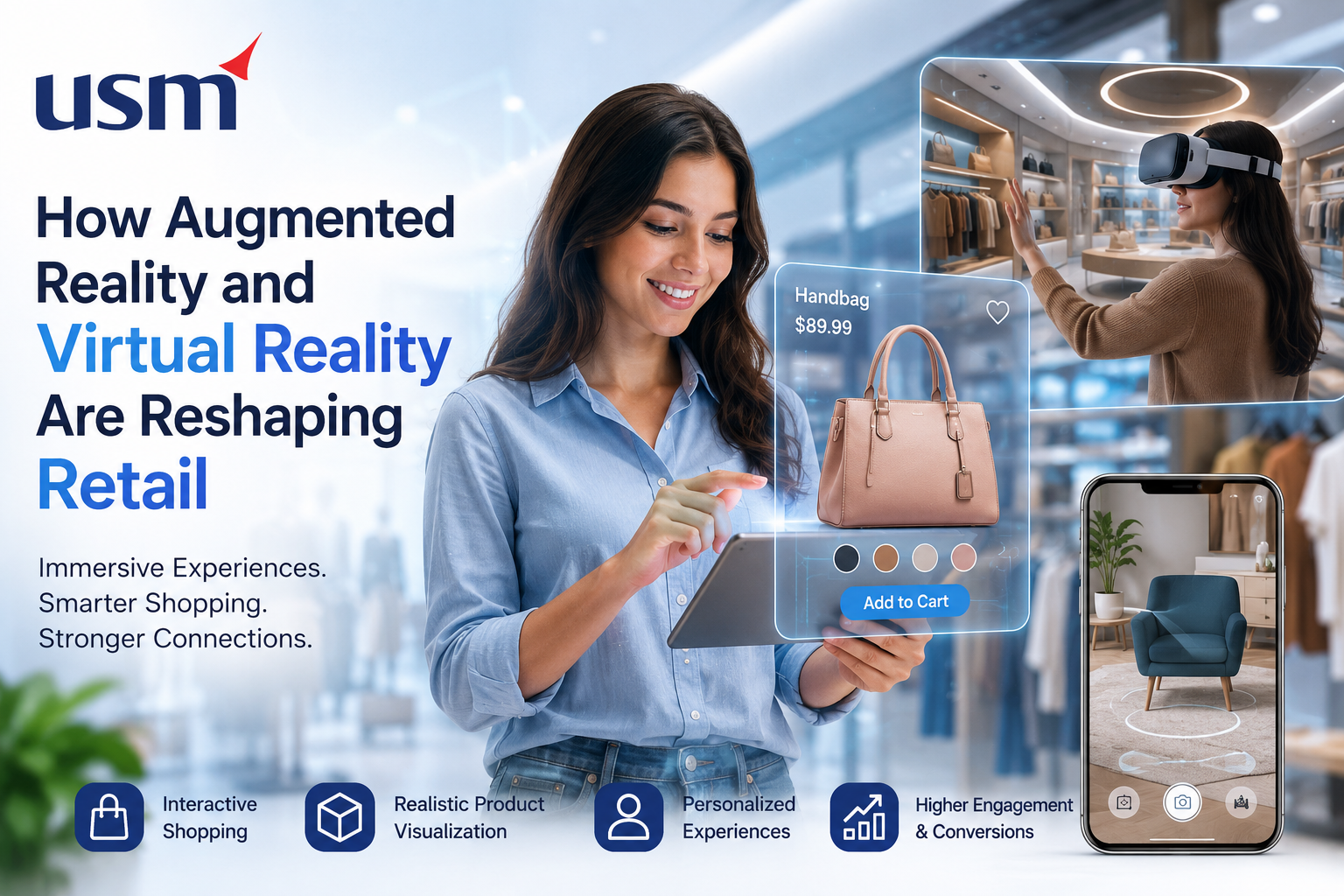
Shopping is no longer limited to the store shelf and checkout counters; the online catalog is also now part of retail. Consumers nowadays require not only interactivity and personalization but also convenience while shopping via their mobile phones or physically visiting the store. With the growing expectations of consumers, there is an increasing adoption of technologies for delivering immersive shopping experiences.
Augmented Reality (AR) and Virtual Reality (VR) have emerged as some of the most effective technologies to be used in the industry. Retailers are leveraging AR and VR technologies to provide the customers with an experience that will enable them to visualize the products or shop virtually to make informed decisions.
What Are Augmented Reality and Virtual Reality?
Although they are often mentioned together, AR and VR serve different purposes in retail.
Augmented Reality (AR) enhances the real-world environment by overlaying digital content onto a smartphone, tablet, or AR-enabled device. It allows shoppers to see how products look or fit before making a purchase.
Virtual Reality (VR) creates an entirely digital shopping environment where customers can explore stores, interact with products, and experience retail spaces using a VR headset.
Together, these technologies are transforming how consumers discover, evaluate, and purchase products while giving retailers new opportunities to engage customers.
Why AR and VR Matter in Modern Retail
Today's consumers want convenience without sacrificing the in-store experience. They want to compare products, visualize purchases, and receive personalized recommendations before making buying decisions.
AR and VR help retailers achieve these goals by:
-
Creating immersive shopping experiences
-
Building customer confidence
-
Reducing purchase uncertainty
-
Increasing customer engagement
-
Supporting omnichannel retail strategies
-
Improving shopping convenience
When combined with AI in Retail, immersive technologies become even more powerful by delivering intelligent recommendations based on customer preferences and shopping behavior.
How AR and VR Are Reshaping Retail
Virtual Try-On Experiences
One of the biggest advantages of AR is allowing customers to virtually try products before purchasing.
Retailers now offer virtual fitting experiences for:
-
Clothing
-
Footwear
-
Cosmetics
-
Watches
-
Eyewear
-
Jewelry
Instead of relying solely on product images, shoppers can instantly see how products look on themselves using their smartphone camera. This improves buying confidence while minimizing returns caused by incorrect expectations.
Furniture and Home Décor Visualization
Online shopping for furniture is typically accompanied by uncertainty as regards sizing, color, and fit within one’s home.
AR technology addresses this challenge by allowing consumers to place virtual furniture within their homes. This allows the consumers to try out different setups, compare various products, and figure out whether the product fits well with the current decor.
This enhances consumer satisfaction.
Immersive Virtual Showrooms
Virtual reality is changing the concept of online shopping.
Instead of looking through numerous product pages, shoppers can visit a virtual showroom where they can see collections, view products from different angles, and even feel the ambiance of a brick-and-mortar store.
Virtual showrooms have become popular among luxury brands, car manufacturers, furniture stores, and electronics companies.
Personalized Shopping Journeys
Every shopper has unique preferences and purchasing habits.
Retailers are integrating immersive technologies with Enterprise AI for Retail to analyze customer behavior and deliver personalized product recommendations during shopping experiences.
For example, a customer exploring a virtual clothing store may receive recommendations based on previous purchases, browsing history, seasonal trends, or preferred styles.
This level of personalization increases customer engagement and improves conversion rates.
Interactive Product Demonstrations
Some products are simpler to illustrate through demonstrations rather than static illustrations.
Through AR, consumers will be able to see product details interactively, learn about the features and specifications, and witness the functionality of the product.
With AR, customers will make a more informed decision regarding their purchases.
Smart In-Store Navigation
Large retail stores can sometimes make finding products difficult.
AR-powered navigation helps shoppers locate products quickly using digital maps displayed on their smartphones. Customers can also receive promotional offers, product information, and personalized shopping suggestions while moving through the store.
This improves the overall shopping experience while increasing operational efficiency.
Business Benefits of AR and VR
Retailers adopting immersive technologies experience advantages that extend beyond customer engagement.
Higher Conversion Rates
Customers who understand products better are more likely to complete purchases. AR and VR remove uncertainty, making shoppers feel more confident in their buying decisions.
Reduced Product Returns
One of the biggest challenges in eCommerce is product returns. By allowing customers to preview products before buying, immersive technologies significantly reduce returns caused by inaccurate expectations.
Stronger Brand Loyalty
Innovative shopping experiences create lasting impressions. Customers are more likely to revisit brands that provide interactive and enjoyable purchasing journeys.
Better Customer Engagement
Immersive technologies encourage customers to spend more time exploring products, increasing the likelihood of purchases while strengthening relationships with the brand.
Enhanced Competitive Advantage
Retailers adopting advanced technologies differentiate themselves from competitors and position themselves as industry innovators.
Industries Benefiting from AR and VR
Several retail sectors are successfully using immersive technologies.
Fashion Retail enables customers to try clothing virtually before purchasing.
Beauty Brands allow users to test makeup shades digitally.
Furniture Stores help customers visualize products inside their homes.
Consumer Electronics retailers offer interactive demonstrations of complex devices.
Luxury Brands create immersive virtual shopping experiences that enhance customer engagement.
Challenges of Implementing AR and VR
Although the benefits are substantial, businesses should carefully plan implementation.
Some common challenges include:
-
Initial technology investment
-
High-quality 3D content development
-
Integration with existing retail platforms
-
Device compatibility
-
Employee training
-
Customer adoption
Partnering with an experienced AI app development company can simplify deployment and ensure scalable, secure, and user-friendly solutions tailored to business needs.
The Future of AR and VR in Retail
The future of retail is going to become more immersive and intelligent.
Innovations in the areas of wearable technology, spatial computing, mixed reality, and artificial intelligence are expected to revolutionize the shopping experience in the coming years. Consumers are soon expected to visit virtual malls, engage with AI-based shopping assistance, and get personalized product recommendations in real time.
Retailers who have adopted these technologies at an early stage will be able to gain an advantage in the market.
Why Choose USM Business Systems?
USM Business Systems is a trusted technology partner helping retailers accelerate digital transformation through innovative software development and intelligent business applications.
Recognized as a Best app development Company, we build customized retail platforms that improve customer engagement, streamline operations, and support business growth. Our experienced team delivers scalable AI Solutions, mobile applications, cloud-based systems, and next-generation digital experiences tailored to modern retail businesses.
Whether you're planning to launch an immersive shopping application, modernize your existing retail platform, or implement intelligent automation, USM Business Systems has the expertise to bring your vision to life.
Ready to Build the Future of Retail?
AR and VR are no longer emerging technologies—they are becoming essential components of modern retail strategies. Businesses that embrace immersive experiences today will be better equipped to attract customers, increase conversions, and create memorable shopping journeys.
If you're ready to explore innovative retail technologies, our experts are here to help you identify the right strategy for your business.
Schedule Your Free AI Executive Briefing
 Greek
Greek
 English
 Arabic
 French
 Spanish
 Portuguese
 Deutsch
 Turkish
 Dutch
Dutch
 Italiano
 Russian
 Romaian
 Portuguese (Brazil)
