


 Pro Benefits
 Über
Über
 Bedingungen
 Datenschutz
 Child Safety & Protection
 Benachrichtigungen
 Ayrush Global It Services Pvt Ltd
Key Mobile App Development Tips Every Startup Should Know in 2026
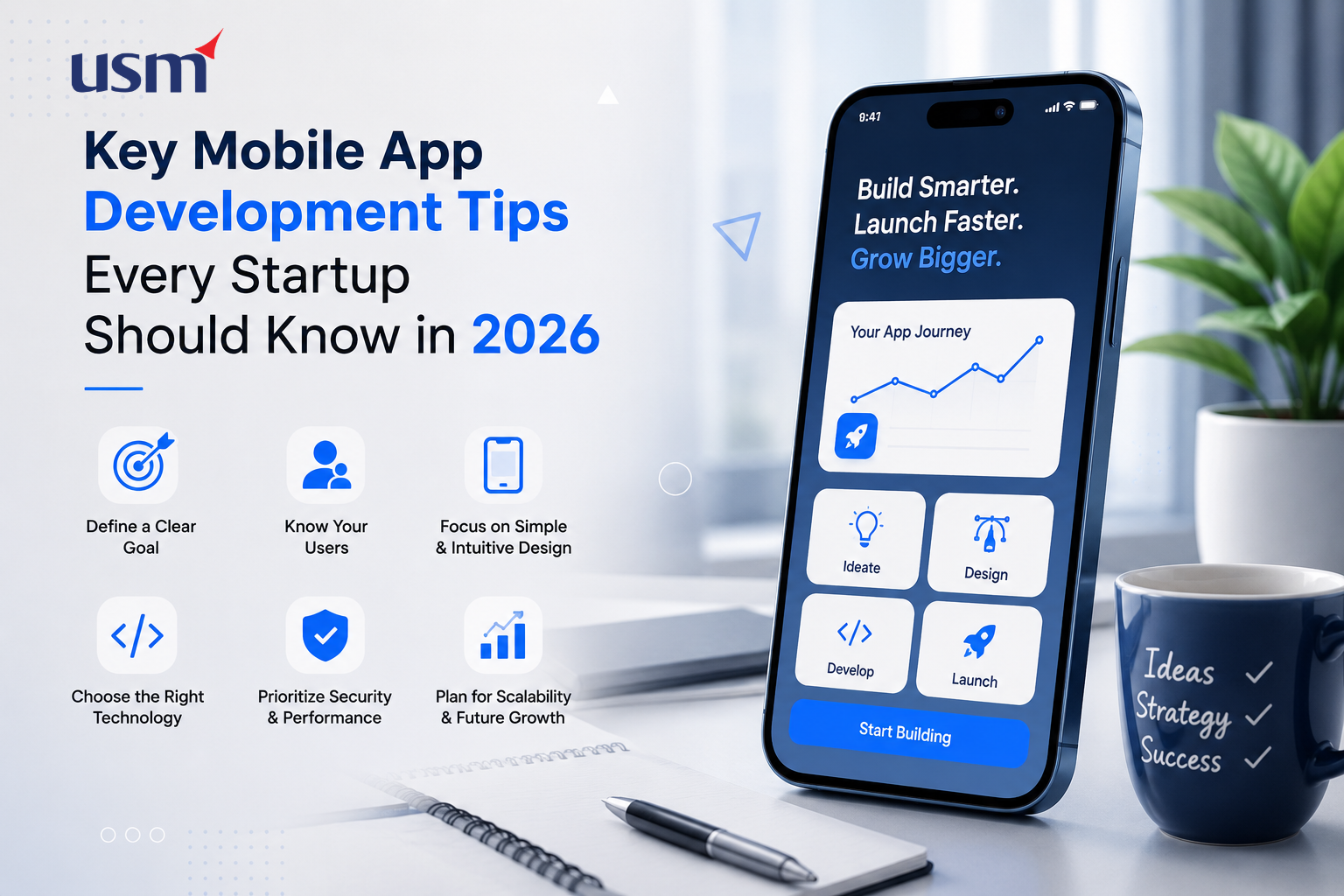
Every start-up starts with a vision, but creating an application that will be loved by the end-user is a completely different story. The competition that the entrepreneurs are facing now in 2026 is intense; people now demand speed, personalization, security, and a smooth experience right from the first day they interact with an app. Just having an idea that is innovative is not enough anymore to distinguish yourself.
Mobile applications have become a key for businesses to interact with the end-users, simplify their processes, and make money. Be it a healthcare platform, eCommerce marketplace, logistics, or fintech app, you'll succeed only through careful planning and execution. There are many start-ups that go ahead with development even without validating the idea, as they don't know what the users actually need.
Below are some strategies that should be kept in mind while developing a mobile application this year.
Begin with a Problem Worth Solving
However, the most effective mobile applications are developed based on problems in the real world, not popular concepts. You should describe what problem your start-up is going to resolve before talking about what technology will be used in the application. By understanding the frustration of your customers, you can develop an app that gives a solution and not excess.
Think about the reasons why people will use your app instead of other options. What advantages does your product have compared to the others? The answer to this question will become the starting point for all the subsequent decisions on development. Moreover, it will help you avoid adding unnecessary features, which can cost you more time and money.
Know Your Users Better Than Anyone Else
Great apps are created with people in mind, not with the platform. The time you invest in understanding your intended audience will help you get a better insight into their needs and preferences.
The way people use mobile phones, the reasons behind their decisions, and the difficulties they face daily can have an impact on such aspects as navigation and prioritizing features.
When startups consider their customers’ interests when creating their products, they provide an experience that promotes user engagement and loyalty.
It is also crucial to listen to what potential users think about the app through surveys, interviews, and other feedback mechanisms.
Study the Market Before Writing Code
No startup operates in isolation. Even if your concept feels unique, chances are that similar applications already exist. Instead of viewing competitors as obstacles, treat them as valuable learning resources.
Analyze their strengths, identify recurring customer complaints, and observe how they present their products. Reading reviews can uncover unmet customer expectations that your startup can address more effectively. Rather than copying successful apps, use market insights to discover ways to differentiate your product and deliver greater value.
This research also helps define realistic goals and reduces the likelihood of investing in features that users don't actually need.
Build Smart, Not Big
Many startup founders believe launching with dozens of features increases their chances of success. In reality, it often creates longer development cycles, higher costs, and unnecessary complexity. A smarter strategy is to begin with a Minimum Viable Product (MVP) that focuses on solving one core problem exceptionally well.
An MVP allows startups to enter the market faster, gather real customer feedback, and improve the application based on actual usage instead of assumptions. This iterative approach minimizes risk while creating opportunities for continuous innovation.
It also provides a better understanding of the cost to build mobile app, allowing businesses to allocate budgets strategically instead of spending heavily on features that may never be used.
Choose the Right Development Approach
Selecting the appropriate development strategy is one of the most important technical decisions a startup will make. Native applications offer exceptional performance and access to device-specific capabilities, making them suitable for feature-rich experiences. Cross-platform frameworks, on the other hand, enable developers to create applications for multiple operating systems using a shared codebase, helping startups accelerate time-to-market.
The best choice depends on your business goals, expected user base, performance requirements, and available budget. A thoughtful evaluation during the planning stage can save significant resources in the future while ensuring the application remains scalable as your startup grows.
User Experience Is Your Biggest Competitive Advantage
Today's users have countless alternatives available at their fingertips. If an application feels confusing, slow, or visually inconsistent, they'll quickly move on to another option. That's why user experience should never be treated as a final design step—it should influence every phase of development.
An effective mobile application guides users naturally through each interaction without requiring lengthy instructions. Clean layouts, logical navigation, consistent branding, and responsive interfaces contribute to a positive experience that encourages repeat usage.
Performance also plays a major role in usability. Fast loading times, smooth transitions, and optimized interactions create confidence in your product while reducing user frustration.
Plan for Growth from the Beginning
Many startups build applications that satisfy immediate business needs but struggle to support future expansion. As your customer base grows, your application should be capable of handling increased traffic, additional features, and evolving business requirements without requiring a complete rebuild.
Choosing scalable cloud infrastructure, flexible APIs, and modern development frameworks ensures your application can adapt to future demands. Investing in scalability early often reduces long-term maintenance costs and minimizes operational disruptions.
Similarly, understanding the overall Mobile app development cost involves more than the initial launch. Ongoing updates, infrastructure management, feature enhancements, and security improvements should all be considered part of your long-term investment strategy.
Embrace AI to Create Smarter Applications
Artificial intelligence is transforming how users interact with mobile applications. From personalized recommendations and intelligent search to predictive analytics and conversational chatbots, AI is helping startups deliver experiences that feel faster, more relevant, and highly engaging.
Integrating AI doesn't mean overcomplicating your product. Even simple capabilities such as automated customer support, personalized notifications, or intelligent content suggestions can significantly improve user satisfaction. Partnering with an experienced AI app development company enables startups to implement advanced AI solutions that align with their business goals while maintaining scalability and performance.
Security Is Essential, Not Optional
As mobile applications collect increasing amounts of personal and financial information, users expect businesses to prioritize data protection. Security should be integrated throughout the development lifecycle rather than added after the application is complete.
Implementing secure authentication methods, encrypting sensitive information, protecting APIs, and performing regular security assessments helps safeguard customer trust. Compliance with evolving privacy regulations also reduces legal risks while strengthening your brand's credibility.
Choose the Right Technology Partner
Technology plays an important role in application success, but the people behind the technology matter even more. An experienced development partner helps startups transform ideas into scalable digital products while avoiding common mistakes that delay launches or increase expenses.
Working with the Best Mobile app development Company means gaining access to experienced designers, developers, business analysts, quality assurance specialists, and project managers who understand both technology and business strategy. This collaborative approach enables startups to focus on innovation while ensuring technical excellence throughout the project.
Build Your Startup App with USM Systems
Turning an innovative idea into a successful mobile application requires more than coding expertise—it demands strategic planning, user-centric design, modern technologies, and continuous support. USM Systems specializes in delivering custom mobile applications that help startups accelerate digital transformation and compete confidently in today's dynamic market.
From idea validation and UI/UX design to development, testing, AI integration, cloud deployment, and ongoing maintenance, our experts build secure, scalable, and high-performing applications tailored to your business objectives.
Whether you're launching your first MVP or expanding an existing product, USM Systems provides end-to-end mobile app development services designed for long-term success.
Ready to Bring Your App Idea to Life?
Every successful mobile application begins with the right strategy and the right technology partner. If you're planning to launch a startup app in 2026, let USM Systems help you transform your vision into a market-ready solution that delivers measurable business value.
Schedule a free consultation today:
 Deutsch
 English
 Arabic
 French
 Spanish
 Portuguese
 Turkish
 Dutch
Dutch
 Italiano
 Russian
 Romaian
 Portuguese (Brazil)
 Greek
Greek
