


 Pro Benefits
 About
About
 Koşullar
 Gizlilik
 Child Safety & Protection
 Bildirimler
 Ayrush Global It Services Pvt Ltd
Industrial Solar for Textile Industries: A Complete Guide
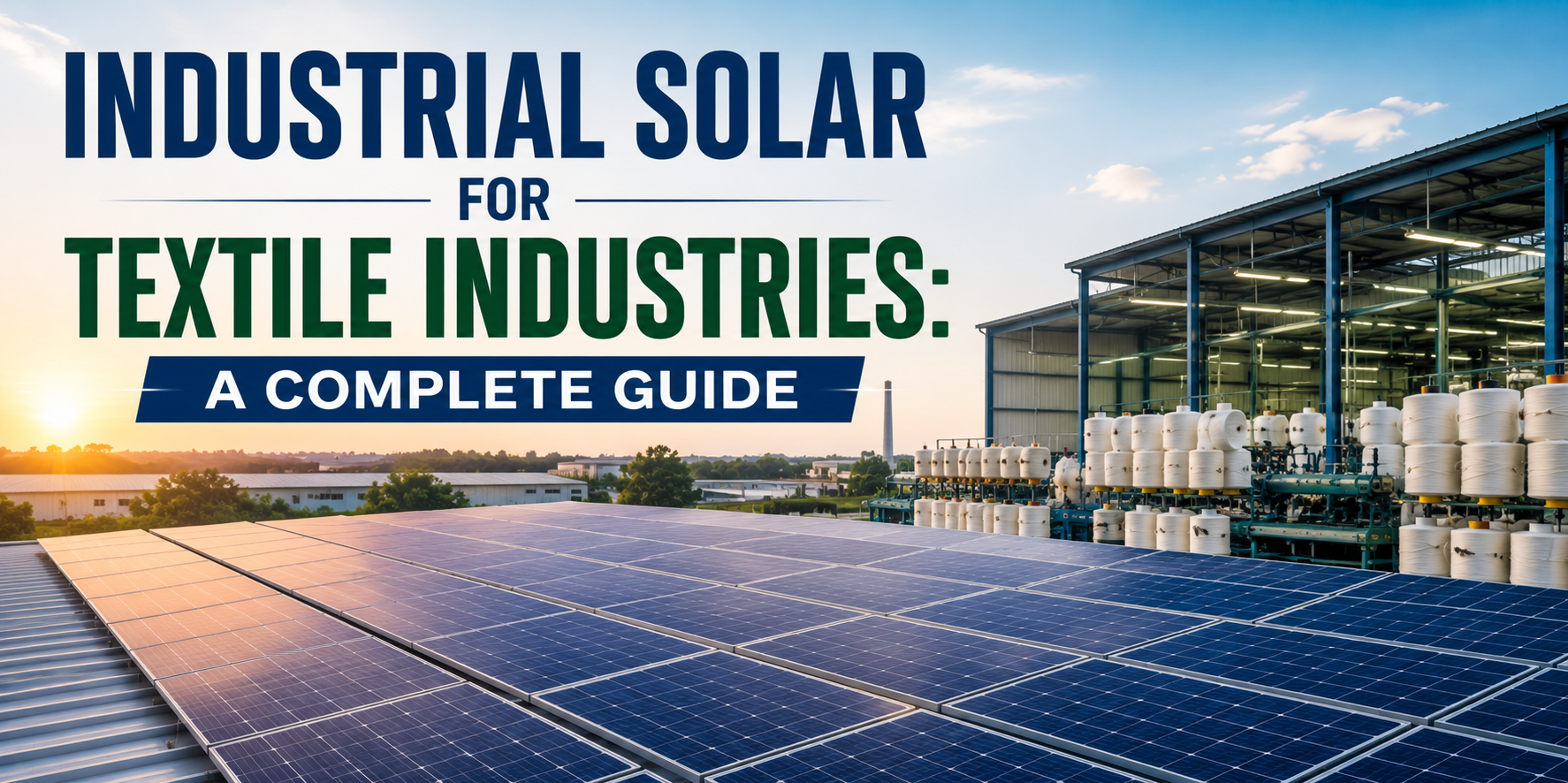
Textile factories are known for using a massive amount of power. From spinning and weaving to dyeing and finishing, every step needs a lot of electricity. High energy bills can eat up your profits and make it hard to stay ahead of the competition. This is where industrial solar comes into play. By switching to solar energy, textile mill owners can take control of their energy costs and run a more sustainable business. In this guide, we will show you how solar power can change your factory for the better.
About Industrial Solar for Textile Industries
Industrial Solar for Textile Industries refers to installing large-scale solar panels on the roofs or grounds of textile mills. These systems are designed to handle the heavy energy loads required by industrial machinery. Unlike home solar, these systems are much larger and more powerful. They turn sunlight directly into electricity that can run your looms, spinning frames, and cooling systems. Using Industrial Solar for Textile Industries is not just a trend; it is a smart business move for anyone looking to modernize their factory.
Most textile mills have large, flat roofs that are perfect for solar panels. Instead of letting that space go to waste, you can use it to generate your own clean power. This helps you move away from relying solely on the local power grid, which often has fluctuating prices and occasional power cuts. By choosing Solar for Textile Industry setups, you are investing in a reliable energy source that lasts for decades.
Why Textile Industries Should Invest in Industrial Solar
Reduce Electricity Bills
The most obvious reason to switch is the money you save. Electricity is one of the biggest expenses for a textile mill. When you use Industrial Solar for Textile Industries, you generate your own power for free after the system is paid for. This significantly cuts down what you owe to the utility company each month. Many factories see their bills drop by 50% or even more.
Lower Production Costs
When your power bills go down, the cost of making your products also goes down. This means you can offer better prices to your customers or keep more profit for yourself. In a competitive market, having lower production costs is a huge advantage. It allows you to invest more money back into better machinery or growing your workforce.
Reliable Daytime Power Generation
Textile mills usually run most of their heavy machines during the day. This is exactly when solar panels work best. The sun provides a steady flow of energy during your peak working hours. This reduces the strain on your electrical systems and ensures you have the power you need when you need it most.
Improve Business Profitability
Saving money on energy directly improves your bottom line. Industrial Solar for textile industries provides a high return on investment. The money you save over 25 years can be worth millions. It turns a monthly expense into a long-term asset that adds value to your company.
Reduce Carbon Emissions
Global buyers are now looking for "green" suppliers. By using solar, you stop burning as many fossil fuels. This lowers your carbon footprint and helps the environment. It is a great way to show that your business cares about the planet while still being productive.
Enhance Brand Image with Green Manufacturing
Being a green factory helps your reputation. Many international clothing brands prefer to work with factories that use renewable energy. Using Industrial Solar for Textile Industries makes your brand more attractive to high-end clients who value sustainability. It sets you apart from other factories that still rely on old, dirty energy sources.
Benefits of Industrial Solar for Textile Factories
Switching to solar offers many perks that help your business grow. Here are the top benefits:
- Significant long-term savings: You lock in low energy costs for the next 25 years.
- Protection from rising electricity prices: You no longer have to worry when the government raises power rates.
- Low maintenance requirements: Solar panels have no moving parts and only need occasional cleaning.
- Long system lifespan: Most solar panels are built to last and perform for over two decades.
- Better return on investment (ROI): Most industrial systems pay for themselves within 3 to 5 years.
- Increased property value: A factory with a solar power plant is worth more on the market.
- Energy independence: You become less dependent on the local power grid and its frequent price hikes.
Factors to Consider Before Installing Industrial Solar
Available Roof Space
Before you start, you need to check how much space you have. Solar panels need a lot of room to generate enough power for a factory. Our team will look at your roof to see how many panels can fit and where they should go for the best results.
Monthly Electricity Consumption
We need to know how much power you use. By looking at your past year's bills, we can decide the right size for your Industrial Solar for Textile Industries project. A system that is too small won't save you enough, while one that is too large might cost more than you need.
Roof Strength and Condition
Solar panels are heavy. Your roof must be strong enough to hold the weight of the panels and the mounting structures. If your roof is old or damaged, it is better to fix it before the solar installation begins to avoid problems later.
Shadow Analysis
Shadows from nearby buildings, trees, or chimneys can lower the efficiency of your panels. A professional shadow analysis ensures that the panels are placed in the sunniest spots. This step is vital to make sure you get the most electricity possible.
Solar System Capacity
Capacity refers to how much power the system can produce. For textile mills, this is usually measured in kilowatts (kW) or megawatts (MW). We match the capacity to your factory's specific needs so you never run short of power.
Budget and Financing Options
While solar saves money, it does require an upfront cost. Luckily, there are many ways to pay for it. You can choose to buy it outright, take a bank loan, or look into government subsidies that help lower the initial price.
How Much Does Industrial Solar Cost for Textile Industries?
The solar cost depends on the size of your factory and the quality of the panels you choose. Generally, a larger system costs more upfront but offers a lower price per unit of electricity produced. Most textile owners find that the system pays for itself very quickly through monthly savings. When you factor in tax benefits like accelerated depreciation, the cost becomes even more manageable. Investing in Industrial Solar for Textile Industries is one of the safest financial moves a business owner can make today.
Why Choose Shree Hari Solar for Industrial Solar Projects?
Shree Hari Solar is a leader in helping textile mills go green. We understand the unique needs of the textile industry. Our team handles everything from the initial design to the final solar installation. We use high-quality materials to ensure your system lasts for many years. With our expert help, you can stop worrying about high power bills and focus on growing your textile business. We provide honest advice and clear pricing so you know exactly what to expect.
Contact Shree Hari Solar
Address:
2nd Floor, Plot No. 6 Opp. Nr. Samast Patidar Samaj Hall, Aamba Talavadi, Katargam, Surat, Gujarat, India, 395004.
Phone: +91 70415 82232
Conclusion
Installing Industrial Solar for Textile Industries is the best way to secure the future of your factory. It lowers your bills, protects you from price hikes, and makes your brand look great to global buyers. With low maintenance and a long lifespan, it is a worry-free solution for energy problems. If you are ready to save money and help the planet, now is the time to switch. Contact a professional today to see how much your textile mill can save with solar energy.
Frequently Asked Questions
How much can a textile mill save with industrial solar?
Most textile mills save between 30% to 70% on their monthly electricity bills. The exact amount depends on the size of the solar system and your daily energy use.
Does industrial solar work during cloudy days?
Yes, solar panels still produce electricity on cloudy days, though at a lower rate than on sunny days. The system is designed to provide power throughout the year.
How long does it take to install solar on a factory?
A typical industrial solar installation for a textile factory takes between 4 to 8 weeks, depending on the system size and roof complexity.
What is the lifespan of an industrial solar system?
Most high-quality industrial solar systems are designed to last for 25 to 30 years with very little maintenance required.
Are there government incentives for solar in the textile industry?
Yes, many governments offer tax credits, subsidies, and accelerated depreciation benefits to help businesses afford the initial solar project cost.
Kullanıcı Adı
 Turkish
 English
 Arabic
 French
 Spanish
 Portuguese
 Deutsch
 Dutch
Dutch
 Italiano
 Russian
 Romaian
 Portuguese (Brazil)
 Greek
Greek
