


 Pro Benefits
 About
About
 Voorwaarden
 Privacy
 Child Safety & Protection
 Meldingen
 Ayrush Global It Services Pvt Ltd
Bullet Proof Security Door: Engineering Real Protection Against Armed Threats
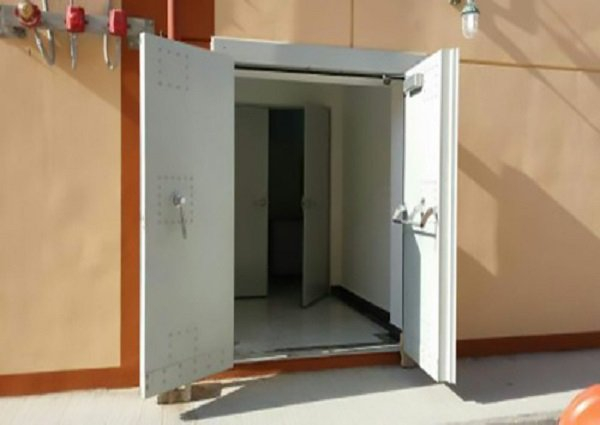
Facilities operating in high-risk environments cannot depend on ordinary doors to protect people and assets from armed threats. A bullet proof security door is specifically engineered to stop projectiles from penetrating an entry point, offering a level of protection that standard steel or wooden doors simply cannot match. As security concerns intensify across banking, government, defence, and high-value commercial sectors, more organizations are recognizing that physical entry points deserve the same attention as digital security systems.
What Defines a Bullet Proof Security Door
A bullet proof security door is built using multiple layers of hardened steel combined with specialized ballistic-resistant materials sandwiched between the outer panels. This layered construction absorbs the kinetic energy of a bullet on impact, preventing it from passing through to the other side. Unlike a regular door that might dent or crack under gunfire, a properly engineered bullet proof security door is tested against specific firearm calibers and rated according to recognized ballistic protection standards.
The manufacturing process behind these doors is far more complex than standard door fabrication. Each layer must be precisely aligned and bonded, since even a small gap or inconsistency in the material composition can create a weak point that compromises the entire door's protective capability. This is why a genuine bullet proof security door requires specialized engineering knowledge rather than simply adding extra steel to an existing door design.
Essential Features to Evaluate
Not every door marketed with ballistic claims actually delivers reliable protection. Facility managers evaluating a bullet proof security door should look closely at several critical factors. The most important is a certified ballistic rating from a recognized testing authority, confirming the door has been tested against live ammunition under controlled conditions rather than simply advertised as secure.
The door frame deserves equal attention, since attackers and forced-entry attempts often target the frame rather than the door panel itself if it happens to be weaker. A high-rated door leaf paired with a standard frame creates an obvious vulnerability that defeats the purpose of the installation. Locking hardware must also match the door's protection level, with multi-point locking systems generally preferred over single-point mechanisms for facilities requiring higher security tiers.
If the design includes viewing panels or vision panes, these must use ballistic-rated glazing consistent with the door's overall rating. A standard glass insert in an otherwise reinforced door would undermine the entire security investment. Weight distribution and structural support are equally important considerations, since a bullet proof security door is considerably heavier than conventional doors and requires walls and frames capable of bearing that load safely over time.
Industries That Rely on Bullet Proof Security Doors
The applications for bullet proof security doors span multiple sectors where the risk of armed intrusion is a genuine operational concern. Banks and financial institutions install them at vault entrances, cash-handling counters, and treasury areas to protect against robbery attempts. Government buildings and defence installations use them to secure command centres, weapons storage, and other restricted zones where unauthorized access could have serious consequences.
Police stations, correctional facilities, and courthouses depend on bullet proof security doors to control access to sensitive operational areas and protect personnel during high-risk situations. Private sector facilities have also increased adoption of these doors in recent years. Jewellery showrooms, currency processing centres, and high-value logistics hubs use them to safeguard valuable inventory from armed theft attempts. Corporate offices operating in higher-risk regions sometimes install bullet proof security doors around executive areas or critical infrastructure rooms, treating physical protection as a core part of their overall risk management strategy.
Why Manufacturing Expertise Is Non-Negotiable
Producing a dependable bullet proof security door demands precision that goes well beyond adding thick steel plates to a standard frame. The ballistic-grade materials must be layered in a tested configuration, manufactured with tight tolerances, and verified through actual testing before the product reaches a client site. This level of engineering discipline is exactly where an experienced manufacturer becomes essential to getting genuine protection rather than a door that merely appears secure.
Ecotone Systems engineers bullet proof security doors using tested ballistic materials and controlled fabrication processes, ensuring consistent performance across every unit produced. The team at Ecotone Systems works directly with clients across defence, government, and high-security industrial sectors to understand the specific threat level a facility faces before recommending a door specification, avoiding the common mistake of over- or under-engineering the solution.
This client-first approach means Ecotone Systems doesn't simply sell a fixed catalog product. Instead, each bullet proof security door is custom-designed around the access patterns, structural constraints, and risk profile unique to that facility, resulting in a solution that genuinely matches operational needs rather than a generic specification.
Installation Requirements That Cannot Be Overlooked
A bullet proof security door only performs as well as its installation allows. Even a door with an excellent ballistic rating can fail to provide adequate protection if the surrounding wall structure is weak or if the frame is not anchored into load-bearing elements correctly. Installation teams need to account for the door's substantial weight from the outset, ensuring hinges and support structures can handle years of daily operation without sagging, warping, or misaligning.
Sealing around the frame is another critical detail, both for maintaining structural integrity and preventing gaps that could reduce the door's tested protection level. Facilities should work with installation professionals experienced specifically in ballistic-rated door systems rather than treating the project like a routine door replacement, since the margin for error is considerably smaller when ballistic performance is at stake.
Long-Term Maintenance and Reliability
A bullet proof security door requires periodic inspection to remain fully effective over its service life. Hinges, locking mechanisms, and any viewing panels should be checked regularly, particularly in facilities where the door is used frequently throughout the day as part of routine access control. Corrosion prevention is especially important in coastal or humid regions, where exposed metal components can degrade faster without proper protective coatings.
Regular alignment checks also help ensure the door continues to seal correctly against its frame, since even minor structural shifts over time can affect performance. A bullet proof security door that receives consistent maintenance and periodic inspection can remain reliable for decades, making routine upkeep a sound investment compared to the far greater cost of failure during an actual security event.
Choosing a Manufacturer You Can Trust
Selecting the right manufacturer for a bullet proof security door is a decision that carries real consequences, given how much depends on the product actually performing when tested. Facility managers should prioritize manufacturers with documented testing certifications, verifiable project experience in comparable high-security environments, and the technical capability to customize doors for specific ballistic and structural requirements. Ecotone Systems brings this combination together, supported by an in-house engineering team that manages the entire process from initial design through final installation.
Final Thoughts
In environments where the threat of armed intrusion is real, a bullet proof security door is far more than a standard building component; it is a critical safeguard for people and assets. From certified ballistic materials and precise manufacturing to correct installation and consistent maintenance, every stage determines whether the door will perform when it actually matters most. Partnering with an experienced manufacturer like Ecotone Systems ensures facilities receive bullet proof security doors built for genuine, proven protection rather than doors that only look secure.
 Dutch
Dutch
 English
 Arabic
 French
 Spanish
 Portuguese
 Deutsch
 Turkish
 Italiano
 Russian
 Romaian
 Portuguese (Brazil)
 Greek
Greek
