


 Pro Benefits
 About
About
 Términos
 Privacidad
 Child Safety & Protection
 Notificaciones
 Ayrush Global It Services Pvt Ltd
How Urban Air Mobility Is Shaping Future Transportation
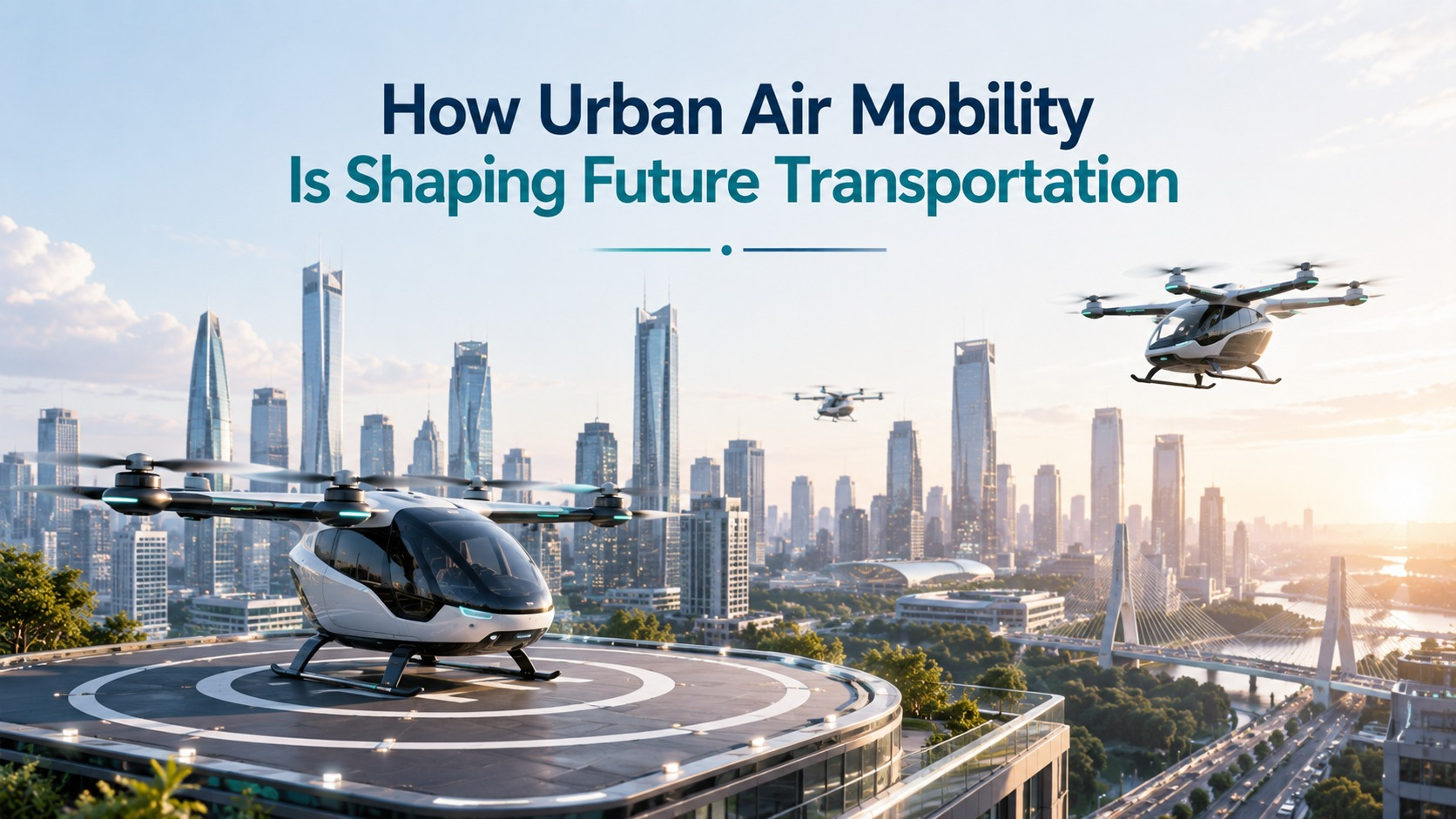
Urban Air Mobility (UAM) is steadily emerging as a transformative concept in modern transportation. As cities continue to expand and traffic congestion becomes more challenging, innovative aerial transportation solutions are gaining attention from governments, technology developers, and mobility providers. Urban air mobility focuses on utilizing advanced aircraft, including electric vertical take-off and landing (eVTOL) vehicles, to transport passengers and cargo efficiently across urban environments.
Continuous advancements in advanced aerial transportation technologies are encouraging stakeholders to explore practical applications of urban air mobility. Organizations are investing in research, infrastructure planning, and regulatory development to ensure that future air transportation systems can operate safely while integrating with existing transportation networks.
Unlike traditional aviation, urban air mobility aims to provide short-distance transportation within metropolitan regions. These aircraft are designed to reduce travel times while minimizing environmental impact through cleaner propulsion technologies. As innovation continues, UAM is expected to complement existing road, rail, and public transit systems rather than replace them.
Why Urban Air Mobility Is Gaining Momentum
Rapid urbanization has increased pressure on transportation infrastructure across many cities worldwide. Growing populations, longer commuting hours, and rising demand for efficient mobility have encouraged policymakers and private organizations to explore alternative transportation options. Urban air mobility offers an opportunity to improve connectivity while reducing dependence on heavily congested road networks.
Technological innovation is another important factor supporting the development of UAM. Improvements in battery technology, lightweight materials, autonomous flight systems, artificial intelligence, and digital navigation have enhanced the feasibility of electric aircraft designed specifically for urban environments. These innovations continue to improve operational efficiency while supporting safer and more sustainable transportation systems. According to the Federal Aviation Administration (FAA), regulatory planning remains a key component in enabling the safe integration of advanced air mobility into national airspace systems.
Key Technologies Driving Urban Air Mobility
Several advanced technologies work together to make urban air mobility possible. Electric propulsion systems help reduce emissions while lowering operational noise compared to conventional aircraft. Autonomous flight technologies, supported by artificial intelligence and sophisticated sensors, assist pilots and may eventually enable higher levels of automated operations.
Digital connectivity also plays an essential role in coordinating aircraft movement, monitoring air traffic, and ensuring real-time communication between operators and infrastructure. Cloud computing, advanced software platforms, and data analytics contribute to efficient fleet management and predictive maintenance, improving overall operational reliability.
Potential Applications Across Industries
Although passenger transportation receives significant attention, urban air mobility has applications across multiple industries. Emergency medical services may benefit from faster transportation of patients, medical professionals, and essential supplies during critical situations. Logistics companies are also exploring aerial delivery services for time-sensitive shipments, particularly within densely populated urban regions.
Public safety agencies can utilize urban air mobility for disaster response, surveillance, infrastructure inspection, and search-and-rescue operations. Tourism, business travel, and airport connectivity are additional areas where aerial mobility solutions may improve travel efficiency while offering greater flexibility for commuters.
Challenges That Need to Be Addressed
Despite significant progress, urban air mobility faces several important challenges before widespread adoption becomes possible. Regulatory frameworks must continue evolving to address aircraft certification, pilot training, air traffic management, cybersecurity, and operational safety. Collaboration among governments, aviation authorities, manufacturers, and technology companies will remain essential throughout this process.
Infrastructure development is equally important. Dedicated landing facilities, charging stations, maintenance centers, and digital communication networks must be carefully planned to support regular urban air mobility operations. Public acceptance, affordability, and environmental considerations will also influence long-term adoption.
The Future of Urban Transportation
Urban air mobility represents a significant step toward creating smarter, more connected transportation ecosystems. As cities embrace digital transformation and sustainable mobility strategies, aerial transportation is likely to become one component of integrated multimodal travel systems. Rather than replacing existing transportation options, UAM has the potential to complement them by providing faster and more flexible travel alternatives.
Continued collaboration between technology developers, aviation regulators, infrastructure providers, and city planners will shape the future of urban air mobility. As innovation advances and supporting infrastructure matures, urban air mobility may play an increasingly important role in improving connectivity, enhancing transportation efficiency, and supporting sustainable urban development for future generations.
 Spanish
 English
 Arabic
 French
 Portuguese
 Deutsch
 Turkish
 Dutch
Dutch
 Italiano
 Russian
 Romaian
 Portuguese (Brazil)
 Greek
Greek
