


 Pro Benefits
 О нас
О нас
 Условия использования
 Конфиденциальность
 Child Safety & Protection
 Оповещения
 Ayrush Global It Services Pvt Ltd
Common Application Mistakes Australia Admission Consultants Help Students Avoid
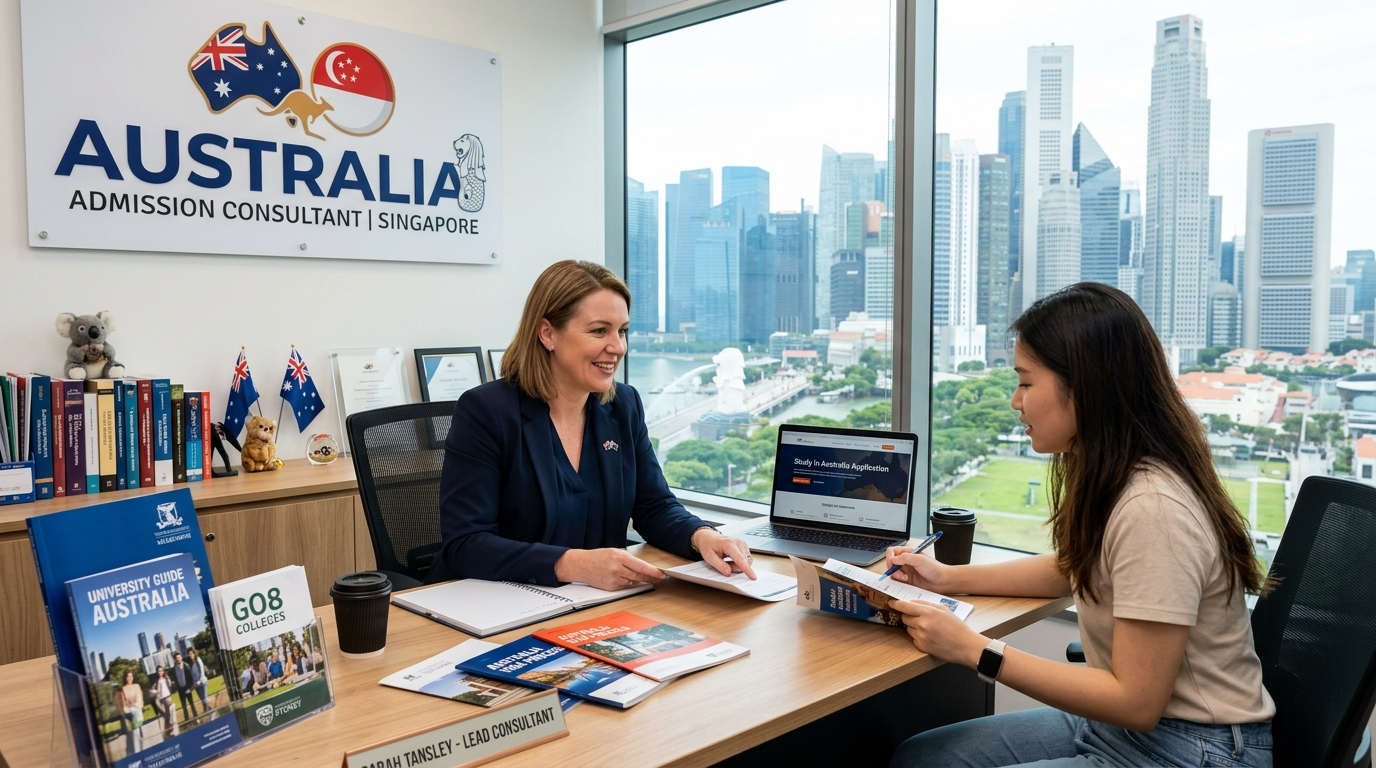
The landscape of international education in Australia has undergone a seismic shift as we move through 2026. With the Australian government implementing a National Innovation Visa and strict caps on international student enrollments—set at approximately 295,000 places—the margin for error in applications has never been slimmer. For students in Singapore and across the globe, the process is no longer just about meeting academic grades; it is about navigating a complex web of "Genuine Student" (GS) metrics and rigorous financial scrutiny.
Experienced australia admission consultants play a pivotal role in this new era. They act as more than just facilitators; they are strategic advisors who ensure your application survives the high-rejection environment of 2026, where university refusal rates for some regions have reached historical highs of over 30%. By identifying subtle inconsistencies that a student might overlook, these consultants protect your investment of time and money.
Treating the "Genuine Student" (GS) Requirement Like a Generic SOP
One of the most frequent mistakes students make is submitting a traditional, flowery Statement of Purpose (SOP) instead of addressing the specific, structured questions of the Genuine Student (GS) requirement. Since its introduction in March 2024, the GS test has completely replaced the old Genuine Temporary Entrant (GTE) framework. While the GTE focused on proving you would leave Australia, the GS requirement focuses on why you are choosing Australia as a primary study destination and how it aligns with your past and future.
Admission consultants help students navigate the strict 150-word limits per response in the ImmiAccount portal. Many students lose their visa because they provide vague answers about "loving Australian culture" rather than demonstrating a deep understanding of the course curriculum and its specific economic ROI in their home country. Consultants ensure that every word serves a purpose, linking your previous study history directly to your proposed course in a logical, evidence-backed narrative.
Key Differences: GTE vs. Genuine Student (GS) Requirement
| Feature | Old GTE Requirement | 2026 GS Requirement |
| :--- | :--- | :--- |
| Primary Focus | Proof of intent to return home | Proof of genuine intent to study |
| Format | Single long-form essay | Structured questions (150 words each) |
| Post-Study Intent | Immigration intent was penalized | PR pathways are acknowledged if logical |
| Scrutiny Level | Moderate | High (Ministerial Direction 115) |
| Evidence Weight | Balanced | Heavy emphasis on document-backed claims |
Underestimating the New 2026 Financial Capacity Thresholds
In mid-2024, the Australian Department of Home Affairs significantly raised the financial capacity requirements for student visas, a change that remains a primary cause of rejection in 2026. A common error is calculating funds based on outdated figures found on old blogs or forums. As of mid-2026, a single student must demonstrate access to at least AUD 29,710 for annual living expenses alone, excluding tuition fees and travel costs.
Australia admission consultants help students avoid "fund sourcing" mistakes. Immigration officers now conduct manual verifications of bank statements, looking for large, unexplained deposits or "recent" money that hasn't been in the account for at least three to six months. Consultants provide a thorough audit of your financial documents, ensuring that every dollar shown has a transparent history and that the sponsor’s relationship is clearly documented according to current evidentiary standards.
2026 Financial Evidence Requirements (Single Student)
-
Annual Living Expenses: AUD 29,710 (minimum).
-
Annual Tuition Fees: 100% of the first year as per the Letter of Offer.
-
Travel Costs: Approximately AUD 2,000 – AUD 3,000 for return airfare.
-
Evidence Duration: Funds should ideally show a 3-6 month stable history.
-
Sponsorship: Legal proof of relationship and income source for the sponsor.
Misaligning Course Selection with Career Logic and Labor Needs
A "confused" application is a rejected application. In the 2026 visa processing climate, choosing a course that does not logically follow your previous education or work experience is a major red flag. For instance, a student with a background in Mechanical Engineering applying for a Master’s in Social Work without a compelling, documented reason for the career pivot is likely to face a refusal under the GS criteria.
Consultants work with students to perform a "gap analysis." If there is a break in your studies or a radical shift in your career path, they help you document the professional or personal reasons that justify the change. They also align your course selection with Australia’s 2026 Skilled Occupation Lists. By choosing courses that meet both your passion and Australia's labor shortages (such as Healthcare, specialized Engineering, or Veterinary Science), you present a much stronger case for being a "genuine" student.
Common Course Alignment Pitfalls
-
The "Random Switch": Changing fields without explaining how the new skills apply to your home country's economy.
-
The "Double Degree Trap": Applying for a second Master's degree at the same level as one you already hold without showing a specialization upgrade.
-
Ignoring CRICOS: Applying for courses that are not CRICOS-registered for international students, leading to an automatic visa failure.
-
VET vs. Higher Ed: Applying for lower-level Vocational Education (VET) courses after completing a Bachelor's degree, which is often viewed as "visa hopping."
Overlooking the Strictness of Document Verification and Certification
Australian universities, especially those in the Group of Eight (Go8), have become incredibly stringent regarding document authenticity in 2026. A simple scan of an original document is often insufficient. Many students make the mistake of submitting documents that are not "Certified True Copies" by an authorized person, such as a Justice of the Peace, a Notary Public, or an authorized education agent.
Consultants ensure that your transcripts, degree certificates, and English test results meet the specific verification standards of your target university. For example, some institutions now require verification through digital platforms like MyEquals or CHSI for certain regions. If your documents are not in English, they must be translated by a NAATI-accredited translator. Missing these technical nuances can delay your application by months, causing you to miss your intended intake.
Essential Document Checklist for 2026 Applications
1. Passport: Valid for at least six months beyond the course start date.
2. Academic Transcripts: Certified copies of all post-secondary results.
3. English Proficiency: Valid IELTS, PTE, or TOEFL iBT scores (checked against the August 2025 updated score requirements).
4. Health Insurance: Proof of Overseas Student Health Cover (OSHC) for the entire visa duration.
5. Biometrics: Proof of appointment for biometric collection (required for many regions, including Singapore).
Failing to Account for Ministerial Direction 115 and University Rankings
Under Ministerial Direction 115, the Australian government now prioritizes visa processing based on the "risk level" of the education provider. Students often mistakenly choose a university based solely on tuition price, without realizing that lower-tier or "high-risk" private colleges may face significantly longer visa processing times or higher refusal rates. In 2026, the "University Risk Rating" system is a decisive factor in your application’s success.
Australia admission consultants have access to the latest PRISMS data and provider risk ratings. They guide students toward "Level 1" providers (low risk), which typically enjoy faster visa processing and fewer evidentiary requirements for funds and English. By balancing your academic aspirations with the provider's risk profile, consultants maximize your chances of a "straight-through" visa grant without a Request for Information (RFI) from the Department of Home Affairs.
Understanding Provider Risk Levels in 2026
| Provider Level | Visa Processing Priority | Evidentiary Requirements | Typical Institutions |
| :--- | :--- | :--- | :--- |
| Level 1 (Low Risk) | Highest / Priority | Streamlined (less documentation) | Go8 Universities, Top Public Unis |
| Level 2 (Medium Risk) | Standard | Standard documentation required | Most Public Unis, reputable Colleges |
| Level 3 (High Risk) | Lower / Heavy Scrutiny | Full documentation required | Private VET providers, newer Colleges |
Miscalculating the Timeline for 2026-2027 Intakes and Visa Processing
Timing is the final hurdle that catches many students off guard. With the increased scrutiny on the Genuine Student test and higher volumes of manual financial checks, visa processing times have lengthened in 2026. A common mistake is applying for a February intake in November or December. By the time the university issues a Confirmation of Enrolment (CoE) and the visa is lodged, it is often too late to meet the start date.
Consultants manage a strict timeline, often starting the process 12 months in advance. They account for "peak" periods where the Department of Home Affairs is backlogged and ensure that all health examinations and biometrics are completed early. They also help students navigate the transition to the Temporary Graduate (Subclass 485) visa, which in 2026 has a strict age limit of 35 for most applicants. Missing these windows can derail not just your education, but your long-term career plans in Australia.
Optimized Timeline for February 2027 Intake
-
June - July 2026: Finalize university shortlisting and take English proficiency tests.
-
August - September 2026: Submit university applications and secure a Letter of Offer.
-
October 2026: Pay tuition deposit, secure OSHC, and receive the CoE.
-
November 2026: Lodge the Subclass 500 Visa application and complete health checks.
-
December 2026 - January 2027: Visa grant and pre-departure orientation.
Navigating the Australian admission process in 2026 requires a blend of academic excellence and strategic compliance. By partnering with professional australia admission consultants, students can avoid the common pitfalls of the "Genuine Student" era, ensuring their application is not just a collection of documents, but a compelling, credible, and successful roadmap for their future.
 Russian
 English
 Arabic
 French
 Spanish
 Portuguese
 Deutsch
 Turkish
 Dutch
Dutch
 Italiano
 Romaian
 Portuguese (Brazil)
 Greek
Greek
