


 Pro Benefits
 Sobre
Sobre
 Termos
 Privacidade
 Child Safety & Protection
 Notificações
 Ayrush Global It Services Pvt Ltd
Healthcare AI for Smarter Surgical Capacity Planning
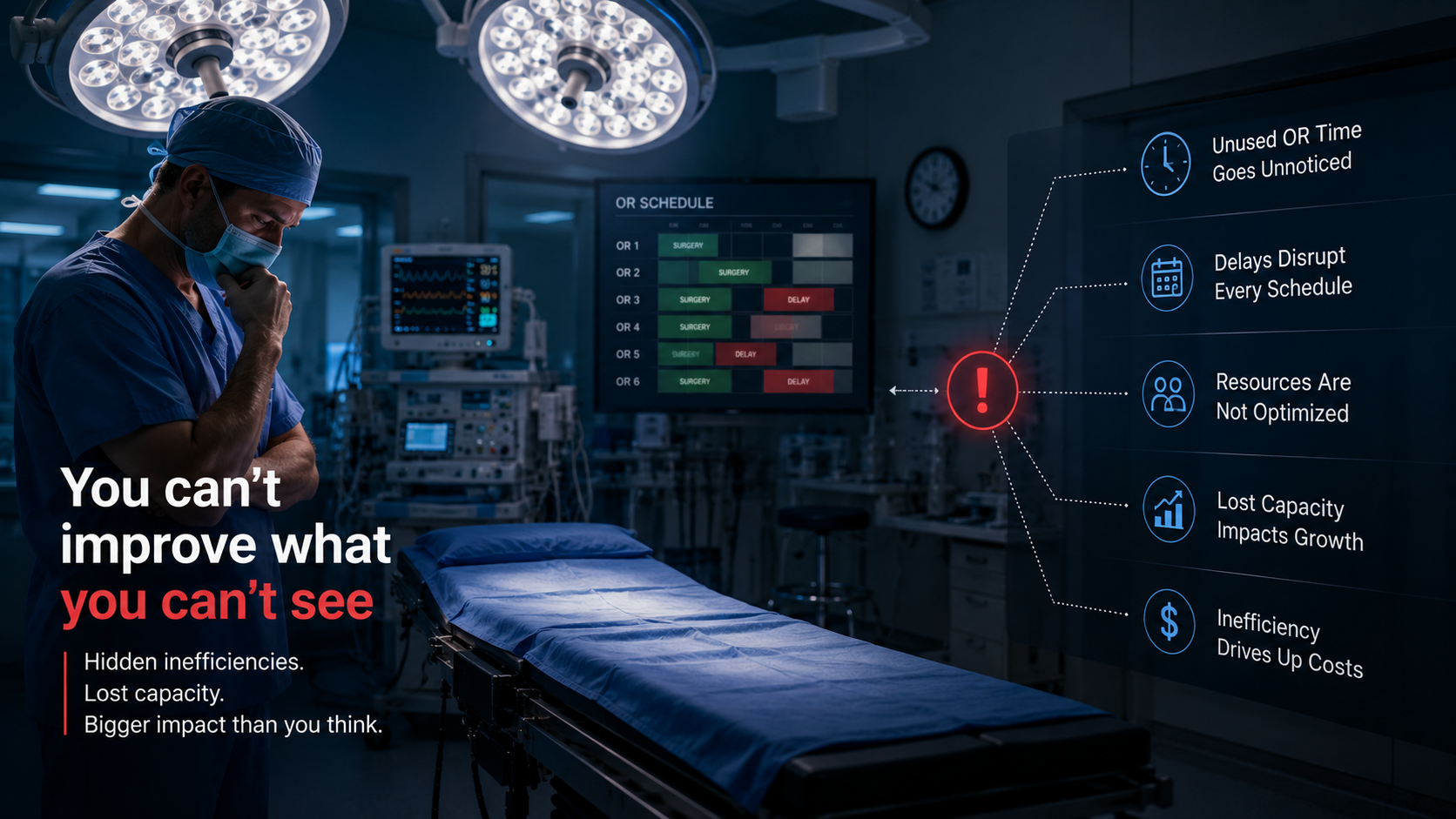
Healthcare organizations collect an enormous amount of surgical data every day.
Operating room schedules, procedure durations, turnover times, staffing levels, cancellations, patient flow, and resource utilization all generate valuable operational information.
Yet many hospitals continue to face the same challenge.
If the data already exists, why is it still difficult to understand where surgical capacity is being lost?
The answer isn't a lack of information.
It's a lack of operational intelligence.
Hospitals often have dashboards that show what happened yesterday. What leaders need is visibility into why delays occur, where inefficiencies develop, and how existing capacity can be used more effectively before investing in additional resources.
Looking Beyond Traditional Reporting
Hospital leadership teams are under constant pressure to improve patient access while controlling operating costs.
Expanding surgical capacity often seems like the obvious solution.
However, before adding operating rooms, increasing staffing levels, or investing in new infrastructure, many organizations are beginning to ask a different question.
Are current resources being used as efficiently as they could be?
The answer is frequently hidden within operational data that already exists across scheduling systems, electronic health records, staffing applications, and enterprise platforms.
Without connecting that information, hospitals can measure activity but struggle to understand how operational decisions affect overall performance.
The Questions Hospital Leaders Need Answered
Healthcare executives are shifting their focus from reporting metrics to understanding operational performance.
Questions such as:
- How much unused surgical capacity exists today?
- Which operating rooms consistently experience lower utilization?
- Where are delays affecting patient throughput?
- Which scheduling patterns create avoidable downtime?
- How many additional procedures could current resources support?
- Which operational bottlenecks have the greatest financial impact?
These questions influence strategic planning, financial performance, and patient care.
Finding accurate answers requires more than additional reports.
It requires AI in Healthcare.
Small Delays Create Larger Operational Challenges
Capacity isn't usually lost through a single major issue.
It disappears through dozens of routine operational events.
A delayed first case.
An operating room turnover that exceeds expected time.
A scheduling conflict.
Equipment arriving later than planned.
A manual approval that slows patient movement.
Individually, these events appear manageable.
Together, they reduce operating room utilization, delay procedures, increase administrative effort, and limit the number of patients hospitals can serve.
Understanding these relationships is where AI provides measurable value.
How Healthcare AI Improves Surgical Capacity Planning
Healthcare AI analyzes operational data across multiple systems to identify patterns that traditional reporting often misses.
Instead of showing isolated metrics, AI connects scheduling, staffing, utilization, patient flow, and operational performance to provide a broader view of surgical operations.
This enables hospital leaders to:
- Identify hidden surgical capacity without expanding infrastructure
- Improve operating room utilization
- Reduce avoidable scheduling delays
- Optimize staffing based on demand patterns
- Detect workflow bottlenecks before they affect patient care
- Support better operational and financial decisions with predictive insights
The result is better use of existing resources while improving patient access and operational efficiency.
Why Predictive Analytics Matters
Traditional reports explain what happened.
Predictive Analytics in Healthcare helps leaders anticipate what is likely to happen next.
By identifying recurring trends and operational risks early, hospitals can address capacity constraints before they become larger business challenges.
Rather than reacting to delays after they occur, leadership teams gain the information needed to make proactive decisions that improve throughput, resource utilization, and financial performance.
From Data to Operational Intelligence
Healthcare organizations don't need more dashboards.
They need greater confidence in the decisions they make every day.
Artificial Intelligence, Machine Learning, Predictive Analytics, and Enterprise Automation help transform operational data into actionable intelligence that supports long-term growth and sustainable performance.
Hospitals that understand where capacity is being lost are better positioned to improve efficiency, increase patient access, and maximize the value of existing resources.
Conclusion
Surgical capacity planning is no longer based solely on historical reports or assumptions.
Healthcare AI enables organizations to understand how operational decisions influence patient flow, resource utilization, and financial outcomes before additional investments are made.
Before expanding infrastructure or increasing operational costs, healthcare leaders should ask one important question:
Are we truly out of surgical capacity, or are we missing the operational insights needed to use our existing capacity more effectively?
About Hyena.ai
Hyena.ai helps healthcare organizations improve operational performance through Healthcare AI, Artificial Intelligence, Machine Learning, Predictive Analytics, Enterprise Automation, and Intelligent Workflow Automation.
By connecting operational data across clinical and business systems, Hyena.ai enables hospitals to uncover hidden surgical capacity, optimize workflows, improve operating room utilization, and make faster, data-driven decisions.
Schedule an Executive AI Strategy Session with Hyena.ai to explore how Healthcare AI can strengthen surgical capacity planning and improve operational efficiency.
 Portuguese (Brazil)
 English
 Arabic
 French
 Spanish
 Portuguese
 Deutsch
 Turkish
 Dutch
Dutch
 Italiano
 Russian
 Romaian
 Greek
Greek
