


 Pro Benefits
 Σχετικά
 Όρους
Όρους
 Ιδιωτικότητα
 Child Safety & Protection
 Ειδοποιήσεις
 Ayrush Global It Services Pvt Ltd
What a Toll-Free Number Actually Does Behind the Scenes, Explained Simply
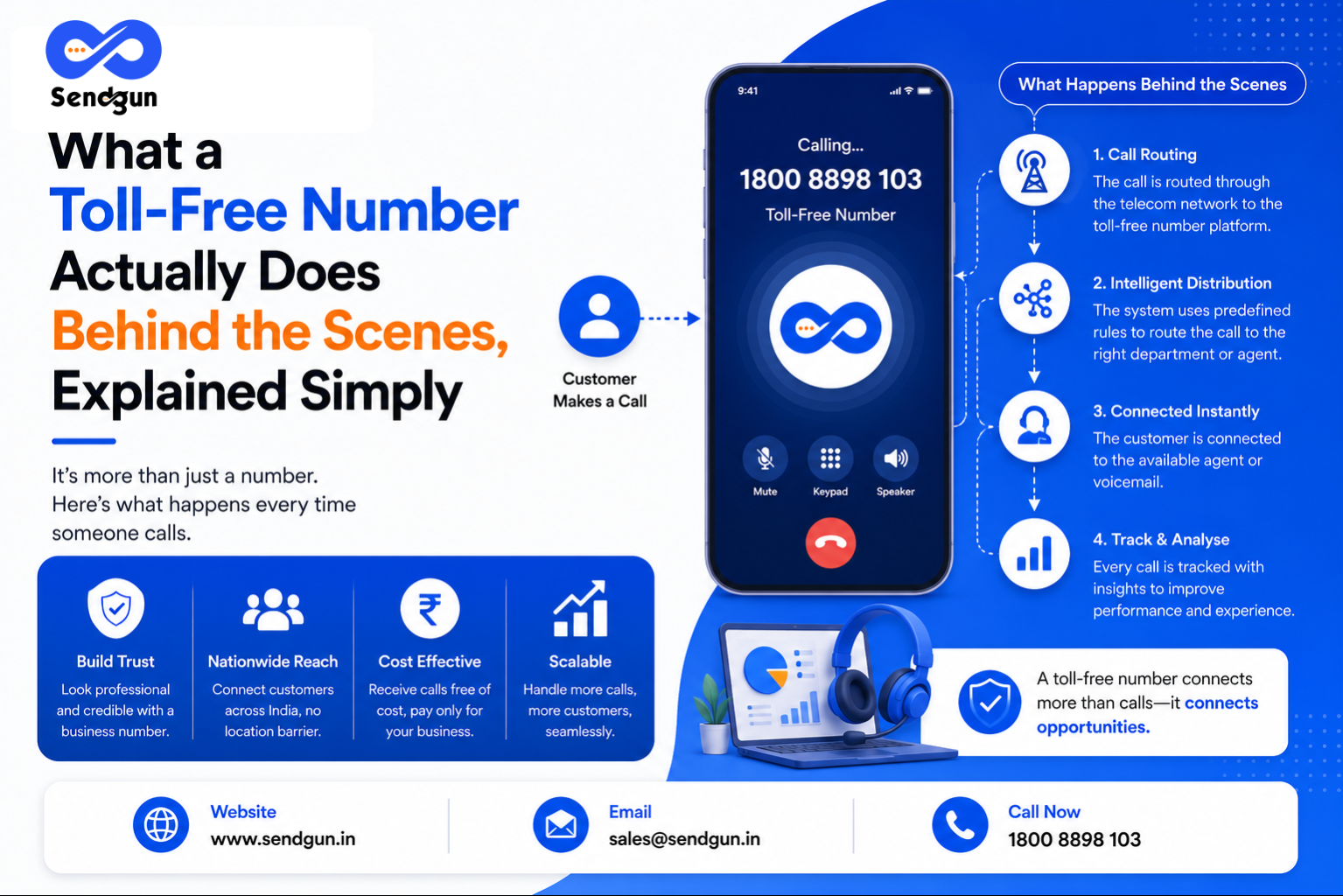
Most people know what a toll-free number is from the customer side, dial 1800 followed by some digits, the call doesn't cost anything, done. What happens on the business side once that call connects is a lot more involved than most business owners realise, and understanding it actually helps you make a better decision when you're choosing how to set one up.
Why the cost actually shifts the way it does
A toll-free number in India works on a simple principle that's easy to state but worth understanding properly. The business receiving the call pays for it, not the person making it.
That's the entire mechanism. Numbers starting with 1800 are reserved specifically for this purpose, and when someone dials one, the telecom carrier identifies it as toll-free and routes the billing to the business account instead of the caller's. This removes a barrier that's bigger than it sounds. Working with a genuine toll-free number provider means this billing redirection happens automatically and reliably every single time, without the customer needing to think about it at all.
What actually happens in the few seconds after someone dials
There's a sequence of steps happening extremely fast every time a customer calls your toll-free number, and it's worth knowing roughly what they are.
The call first travels through the public telephone network to whichever carrier hosts your number. From there, it gets handed to your cloud telephony platform, which is the system actually responsible for deciding where the call goes next based on rules you've already set up. This could mean playing an IVR menu, checking which agents are available, or routing based on the time of day. All of this typically happens within milliseconds, which is why a customer dialling your number experiences it as instant, even though several systems are coordinating behind the scenes to make that happen.
Why IVR matters more than people initially think
A toll-free number without any IVR setup is just a phone line that rings somewhere. Adding IVR is what actually turns it into a system.
IVR stands for interactive voice response, and it's the greeting and menu a caller hears, press 1 for sales, press 2 for support, that kind of thing. Beyond just sounding professional, IVR genuinely reduces agent workload, since callers can self-select into the right department before a human ever picks up, instead of every call landing on whoever happens to be free and getting redirected manually from there.
What TRAI's rules actually mean for your business
Toll-free numbers aren't unregulated, and a few specific rules matter depending on what industry you're in.
The Telecom Regulatory Authority of India governs how these numbers get allocated and used, and the 1800 prefix is specifically reserved for this purpose, so you can't simply pick any number you like. There's also a more recent development worth knowing about if you're in banking or financial services specifically. TRAI has mandated that BFSI sector entities phase in the 1600 series for financial transactional calls, which means a bank or fintech company can't just rely on a generic 1800 number for everything anymore. A genuine Best toll-free number service provider in India keeps up with these regulatory changes and helps you stay compliant rather than leaving you to figure it out after something's already gone wrong.
How call routing actually decides where your calls go
Routing rules are what make a toll-free number genuinely useful rather than just a free way to receive calls.
Time-based routing sends calls to different teams or locations depending on when they come in, useful for businesses operating across different hours or time zones. Geographic routing can identify roughly where a caller is dialling from and connect them to a regional office or a language-specific agent, which matters a lot for businesses operating across a country with this many different languages and regions. None of this requires the customer to know that any of it is happening; they just experience getting connected to the right person faster.
What setup actually involves and how long it takes
Getting a toll-free number active isn't an overnight process, but it's also not the multi-week ordeal some businesses expect.
Setup generally requires submitting KYC documentation, choosing a number pattern, and configuring your initial IVR and routing rules. Through a cloud telephony provider, this process typically completes within two to three business days, compared to traditional telecom routes that can take considerably longer and involve more paperwork. The actual activation speed depends heavily on how prepared you are with documentation upfront, since most of the delay in practice comes from back-and-forth over missing or incorrect paperwork rather than the technical setup itself.
How this looks different depending on your business size
Startups typically use a toll-free number early to project credibility they haven't fully built yet through brand recognition alone. A professional-sounding 1800 number can make a five-person team sound considerably more established than it actually is, which matters during those crucial early sales and support conversations.
SMEs tend to lean on toll-free numbers for tracking, since assigning different numbers to different campaigns reveals which marketing channel is actually driving inquiries, rather than guessing based on overall sales numbers. Enterprises generally need the routing and compliance depth most, particularly in banking, healthcare, or insurance, where call volume is high, and the regulatory requirements around things like the BFSI 1600-series mandate genuinely matter to how the number gets used.
Conclusion
A toll-free number looks simple from the customer's side because it's supposed to. Underneath that simplicity sits carrier routing, IVR logic, compliance requirements, and a cloud telephony platform coordinating all of it within milliseconds every single time someone calls. Understanding this doesn't require becoming a telecom expert; it just makes it considerably easier to evaluate whether a provider you're considering is actually equipped to handle all of it properly.
Where this leaves you
A toll-free number isn't just a phone line; it's an infrastructure that quietly determines how every single inbound call gets handled from the first ring onward. Working with a reliable Toll-free number service provider in India means that the infrastructure actually holds up once real call volume starts coming in.
 Greek
Greek
 English
 Arabic
 French
 Spanish
 Portuguese
 Deutsch
 Turkish
 Dutch
Dutch
 Italiano
 Russian
 Romaian
 Portuguese (Brazil)
