


 Pro Benefits

 الشروط
 الخصوصية
 Child Safety & Protection
 الإشعارات
 Ayrush Global It Services Pvt Ltd
How a Baby’s Heart Develops During Pregnancy?

-Contributed by Aditi Srivastava

The first system to develop in a foetus due to the growing embryo’s ever increasing metabolic demand is the cardiovascular system. Initially simple diffusion of necessary nutrients is sufficient but eventually becomes in adequate to supply oxygen and nutrients. Cardiovascular development is a complicated interplay of molecular communication, ensuring the proper formation of structures and special configuration changes in appropriate timing. If there is an interference with this process, it leads to congenital heart disease. The interference may be genetic or environmental.
Development
The cardiovascular systems embryological demand begins with the cardiac progenitor cells’ migration in the epiblast, just lateral to the primitive streak of the embryo. The cell eventually developed into cardiac myoblasts. Within this splanchnic layer of the mesoderm tissue clusters eventually undergo a period of vasculogenesis to form vascular structures. Coalescence of the cell forms a region known as cardiogenic field. The cardiogenic field is initially horseshoe-shaped and surrounded by cardiac myoblast with a cardiogenic fields apex eventually developing into a primitive ventricle along with their respective outflow tracks. Then the cardiogenic field changes its configuration by cephalocaudal rotation and by doing so it forms a primitive heart tube continuous with vascular structures.
The cranial aspect of the heart tube direct blood into the dorsal layout and the caudal aspect serves as a conduit for systemic venous return. The cephalocaudal rotation is not the only change in configuration at this developmental stage. The closure of the neural tube and anterior displacement of the buccopharyngeal membrane facilitates the embryological heart’s movement into the thorax. The primitive heart tube is composed of three layers which are analogous to the adult heart. The endocardium forms the endothelial lining of the embryonic heart; the myocardium forms the muscular bulk of the embryonic Heart while the visceral pericardial forms the embryological hard tube’s external surface. By the 22nd day of gestation, the heart tube is elongated, and it alters its configuration again forming a cardiac loop. The cardiac loop forms when the cranial aspect of the heart tubes bend ventrally to the right while the caudal aspects of the heart tube bend towards the cranial aspect of the embryo and towards the left. This takes about five days and is usually completed by the 28th day of gestation. The development is as followers:
-
The proximal aspect of the heart to forms the bulbus cordis which develops into the trabeculated parts of the right ventricle.
-
The middle segment of the heart tube is the conus cordis and is the precursor of the ventricular outflow tracts.
-
The distal portion of the heart tube is referred to as truncus arteriosus, and it gives rise to the proximal portion of the aorta and pulmonary artery.
There are trabeculations present in the cardiac loop, which serve as primitive ventricles. The impaired development or the total lack of development of the trabecular meshwork has associations with Embryonic lethality.
The heart’s septa are typically formed between the 27th and 37th days of development via fusion of tissue masses called endocardial cushions. By the end of first developmental, the common atrium roof develops a crest like structure known as septum primum. The two inferior limbs of this migrate towards the endocardial cushion and the remains of an opening called ostium primum is present. There is physiological apoptosis, which leads to the formation of ostium secundum. This connects the two atria. The septum secundum overlaps incompletely the ostium secundum and the remaining opening is the foramen ovale. This is responsible for directing blood flow from the developing lungs. The remnant of the septum primum forms the valve of the foramen ovale. After birth, the increased oxygen tension taken from the newborn’s first breath allows for increased blood into the lungs, and this increases, the left inter atrial pressure, allowing for blood to close the valve against the septum secundum.
In the embryo, there is initially a single pulmonary vein next to the posterior left of the septum primum. With the lung buds’ codevelopment, the pulmonary vein and its branches become a part of the left atrium. This portion is smooth walled. This is followed by the development of the left and right atrioventricular canals. Mesenchymal tissue surrounds the peripheral edges of each atrioventricular canal. This tissue then thins out to form the valves. The valves themselves connect to thick capillary muscles via the chordae tendinae. The meshwork is an essential morphological development. During the 5th week of development swellings appear and eventually fuse to form the aorticopulmonary septum. This septum divides the truncus into the aortic channel and the pulmonary channel. As the truncus swellings begin to form the walls of the conus cordis also start to develop structures called conus swellings. The swelling form two tracks with the anterolateral portion becoming the outflow track of the right ventricle under posteromedial portion becoming the outflow track of the left ventricle. The development of the seminar valves begins near the completion of the truncus partitioning starting with primordial seminar valves located on the truncal swellings. These thin out to become semilunar valves.
The septum formation of the ventricles has a different approach. It begins approximately in the fourth week with gradual apposition and merger of the medial ventricular walls forming a muscular interventricular septum. The membrane is part of the inter-ventricular septum forms from the complete closure of the inter-ventricular foramen which closes from tissue growth from the endocardial cushions. The pacemaker of is located in the caudal portion and its incorporation into the right atrium serves as the origin of Sino-atrial node. Although numerous genetic factors bear on the heart’s structural development several factors play a role in the development of the conduction system itself.
Clinical significance
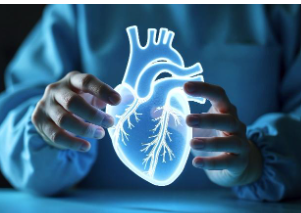
Understanding the embryological cardiac development is necessary to understand the pathophysiology of congenital heart disease. The medical community’s knowledge of cardiovascular embryology and congenital heart disease has expanded tremendously. An understanding of the genetic influences in addition to teratogenic effects at various developmental stages has led to a more profound view of congenital heart disease management. Embryological development of the heart is highly regulated but still influenced by genetic as well as environmental influences.
Addressing parents whose child may have a congenital heart condition requires a great deal of sensitivity and empathy. “Congenital heart disease” or “heart defect” are words that frighten most parents and rightfully so. While it is true that some congenital heart defects are incompatible with life, a significant portion of congenital heart disease patients can grow into adulthood and live fulfilling lives with proper monitoring and management.
Genesis Foundation, one of the top 10 NGOs in Delhi NCR facilitates heart treatment of children with congenital heart defects. If you have any questions about the same, you can call the foundation at +91 96506 03438 or drop an e-mail at contactus@genesis-foundation.net.
 Arabic
 English
 French
 Spanish
 Portuguese
 Deutsch
 Turkish
 Dutch
Dutch
 Italiano
 Russian
 Romaian
 Portuguese (Brazil)
 Greek
Greek
