


 Pro Benefits
 Environ
 Conditions générale de vente
 Confidentialité
 Child Safety & Protection
 Notifications
 Ayrush Global It Services Pvt Ltd
Which procedures can be performed in an Ophthalmic Modular Operation Theatre?
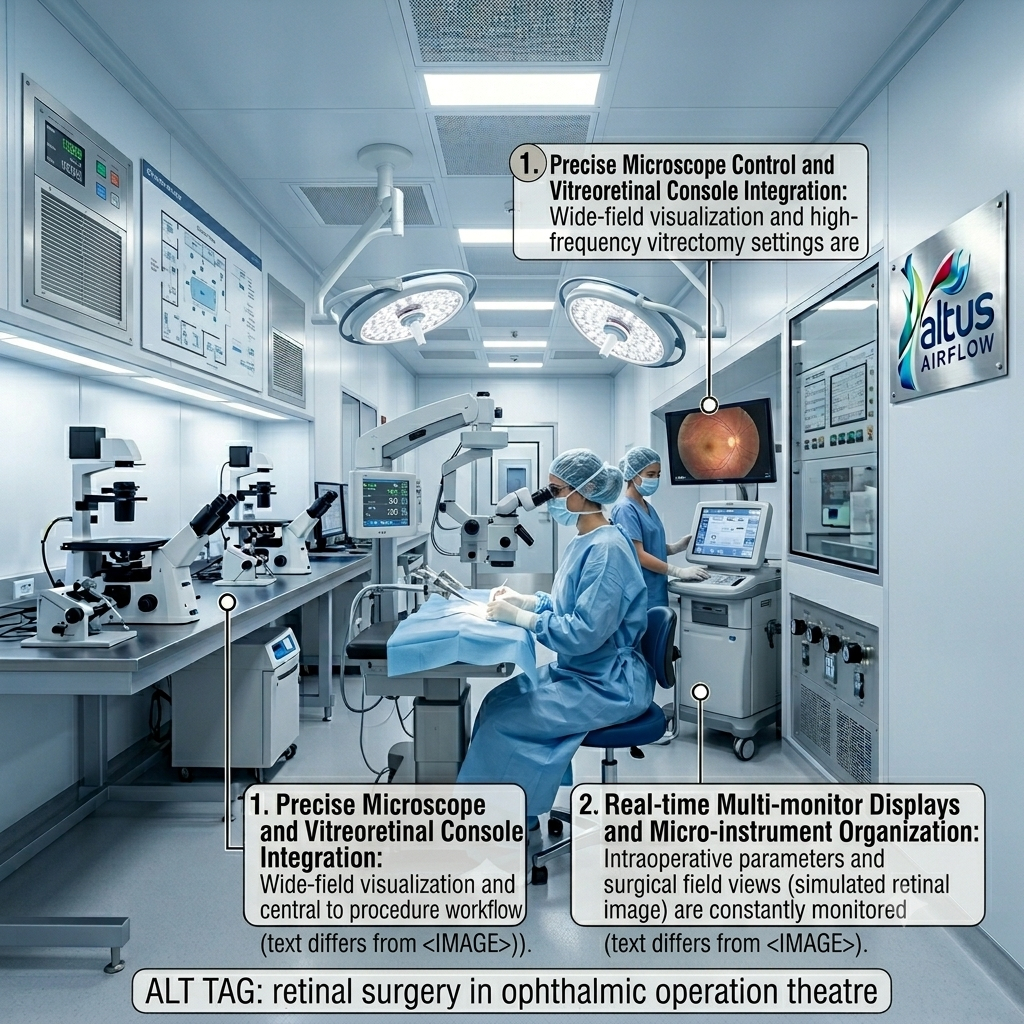
INTRODUCTION
An Ophthalmic Modular Operation Theatre is a specialized surgical environment designed specifically for eye-related procedures. With advancements in ophthalmology, surgical techniques have become increasingly precise, requiring highly controlled environments that support sterility, advanced equipment integration, and optimal environmental conditions. Modern eye care centers and hospitals rely on modular operation theatres to perform a wide range of ophthalmic procedures safely and efficiently.
The primary purpose of an ophthalmic operation theatre is to provide a contamination-free, ergonomically designed, and technologically advanced space where surgeons can perform delicate procedures involving microscopic structures of the eye. These operation theatres are equipped with advanced HVAC systems, specialized lighting, modular wall systems, HEPA filtration, laminar airflow systems, and integrated surgical technologies that support successful outcomes.
Understanding an Ophthalmic Modular Operation Theatre
An Ophthalmic Modular Operation Theatre is specifically engineered to support eye surgeries and ophthalmic interventions.
Key features include:
- Controlled air quality
- Sterile surgical environment
- Specialized ophthalmic equipment integration
- Advanced HVAC systems
- Efficient workflow design
These features allow surgeons to perform highly delicate procedures with precision.
Importance of Specialized Eye Surgery Facilities
Eye surgeries often involve microscopic structures and highly sensitive tissues.
Specialized operation theatres help provide:
- Better infection control
- Enhanced surgical accuracy
- Improved patient safety
- Optimal environmental conditions
These advantages contribute to successful surgical outcomes.
Cataract Surgery
Cataract surgery is one of the most common procedures performed in an Ophthalmic Modular Operation Theatre.
The procedure involves:
- Removal of the clouded natural lens
- Implantation of an intraocular lens (IOL)
Modern cataract surgery requires precise surgical environments to ensure successful outcomes.
Phacoemulsification Procedures
Phacoemulsification is the most widely used cataract surgery technique.
Benefits include:
- Small incisions
- Faster recovery
- Minimal discomfort
A controlled operation theatre environment supports precision during phacoemulsification.
Premium Intraocular Lens Implantation
Advanced cataract surgeries often include premium lens implantation.
Examples include:
- Multifocal lenses
- Toric lenses
- Extended depth-of-focus lenses
These procedures require highly accurate surgical techniques.
LASIK and Refractive Surgery
Refractive surgeries are commonly performed in an Ophthalmic Modular Operation Theatre.
These procedures help correct:
- Nearsightedness
- Farsightedness
- Astigmatism
Controlled environments support laser accuracy and patient safety.
LASIK Surgery
LASIK remains one of the most popular vision correction procedures.
The procedure involves:
- Corneal reshaping
- Laser-based correction
Precise environmental control helps maintain optimal surgical conditions.
PRK Procedures
Photorefractive Keratectomy (PRK) is another refractive surgery option.
PRK may be suitable for:
- Thin corneas
- Certain corneal conditions
Specialized ophthalmic operation theatres support safe execution.
SMILE Surgery
Small Incision Lenticule Extraction (SMILE) is an advanced refractive procedure.
Advantages include:
- Minimal incision size
- Reduced recovery time
- Improved comfort
Modern ophthalmic theatres support advanced laser technologies.
Glaucoma Surgery
Glaucoma management often requires surgical intervention.
Procedures performed include:
- Trabeculectomy
- Drainage device implantation
- Laser glaucoma surgery
Controlled environments support delicate glaucoma procedures.
Trabeculectomy
Trabeculectomy remains a common glaucoma surgery.
The goal is to:
- Reduce intraocular pressure
- Prevent optic nerve damage
Sterile conditions are critical for surgical success.
Glaucoma Drainage Device Implantation
Drainage implants help manage difficult glaucoma cases.
These procedures require:
- Surgical precision
- Specialized equipment
A Modular Ophthalmic Operation Theatre supports successful implantation.
Retinal Surgery
Retinal procedures are among the most complex ophthalmic surgeries.
Common retinal surgeries include:
- Vitrectomy
- Retinal detachment repair
- Macular surgery
These procedures require highly controlled surgical environments.
Vitrectomy
Vitrectomy involves removing the vitreous gel from the eye.
It may be performed for:
- Retinal detachment
- Diabetic retinopathy
- Macular conditions
Advanced surgical infrastructure supports successful vitrectomy procedures.
Retinal Detachment Repair
Retinal detachment requires immediate attention.
Surgical techniques may include:
- Vitrectomy
- Scleral buckling
- Pneumatic retinopexy
Specialized operation theatres support emergency retinal interventions.
Macular Hole Surgery
Macular hole repair requires exceptional precision.
These procedures help:
- Restore vision
- Improve retinal function
Controlled surgical conditions are essential.
Corneal Surgery
Corneal procedures are frequently performed in ophthalmic theatres.
Common surgeries include:
- Corneal transplantation
- Keratoplasty
- Corneal reconstruction
Sterility and environmental stability are vital.
Penetrating Keratoplasty
Penetrating keratoplasty involves full-thickness corneal transplantation.
Indications may include:
- Corneal scarring
- Advanced corneal disease
A sterile environment supports transplant success.
Endothelial Keratoplasty
Modern corneal transplantation techniques include:
- DSEK
- DMEK
These procedures require advanced surgical precision.
Oculoplastic Surgery
Oculoplastic procedures address eyelid, orbit, and tear duct conditions.
Common surgeries include:
- Eyelid reconstruction
- Ptosis correction
- Orbital surgery
An Ophthalmic Modular Operation Theatre supports these specialized interventions.
Ptosis Surgery
Ptosis surgery corrects drooping eyelids.
Benefits include:
- Improved vision
- Enhanced appearance
Precision surgical environments improve outcomes.
Eyelid Reconstruction
Reconstructive procedures may be necessary after:
- Trauma
- Tumor removal
- Congenital abnormalities
Sterile operating conditions support successful reconstruction.
Pediatric Ophthalmic Surgery
Children often require specialized ophthalmic interventions.
Common procedures include:
- Squint correction
- Congenital cataract surgery
- Tear duct surgery
Specialized operation theatres support pediatric safety.
Strabismus Surgery
Strabismus surgery corrects eye alignment problems.
The procedure helps:
- Improve binocular vision
- Enhance eye coordination
Accurate surgical techniques are essential.
Ocular Trauma Surgery
Emergency ophthalmic procedures often involve trauma management.
Examples include:
- Globe repair
- Foreign body removal
- Orbital fracture management
Rapid access to advanced surgical facilities improves patient outcomes.
Globe Injury Repair
Serious eye injuries may require immediate intervention.
Surgery focuses on:
- Restoring eye integrity
- Preventing complications
A sterile environment is critical.
Lacrimal Surgery
Tear drainage disorders often require surgical treatment.
Common procedures include:
- Dacryocystorhinostomy (DCR)
- Tear duct reconstruction
Specialized ophthalmic facilities support successful procedures.
Ocular Oncology Procedures
Eye tumors may require surgical management.
Procedures include:
- Tumor excision
- Biopsy
- Reconstructive surgery
Advanced ophthalmic operation theatres support these specialized interventions.
Diagnostic and Minor Procedures
Not all procedures require major surgery.
Minor interventions include:
- Intravitreal injections
- Laser treatments
- Diagnostic biopsies
A modular operation theatre supports both major and minor procedures.
Intravitreal Injections
Intravitreal injections are commonly used to treat:
- Macular degeneration
- Diabetic retinopathy
- Retinal vein occlusions
Sterility is essential during administration.
Benefits of Performing Procedures in an Ophthalmic Modular Operation Theatre
A specialized environment offers numerous advantages.
Benefits include:
- Enhanced infection prevention
- Better surgical precision
- Improved patient safety
- Advanced equipment compatibility
- Regulatory compliance
These factors contribute to superior outcomes.
Role of HVAC Systems During Ophthalmic Procedures
HVAC systems support all ophthalmic procedures.
Benefits include:
- Air filtration
- Temperature control
- Humidity regulation
- Positive pressure maintenance
Environmental control supports successful surgeries.
Future Trends in Ophthalmic Surgical Procedures
Ophthalmology continues advancing rapidly.
Emerging trends include:
- Robotic-assisted surgery
- AI-guided diagnostics
- Advanced laser procedures
- Minimally invasive techniques
Modern operation theatres are designed to support future innovations.
Conclusion
An Ophthalmic Modular Operation Theatre is a highly specialized surgical environment capable of supporting a wide range of eye care procedures, including cataract surgery, LASIK, glaucoma surgery, retinal surgery, corneal transplantation, pediatric ophthalmology, ocular trauma management, oculoplastic surgery, lacrimal surgery, ocular oncology procedures, and various diagnostic interventions. The advanced infrastructure, controlled air quality, specialized equipment integration, and strict infection control measures found in these facilities help ensure precision, safety, and successful outcomes for both patients and surgeons. As ophthalmic technology continues to evolve, modular operation theatres remain essential for delivering high-quality eye care. With expertise in modular healthcare infrastructure and advanced cleanroom engineering, Altus Airflow helps healthcare facilities create modern ophthalmic operation theatres that support comprehensive eye care services.
Frequently Asked Questions (FAQs)
1. What procedures can be performed in an Ophthalmic Modular Operation Theatre?
An Ophthalmic Modular Operation Theatre can support cataract surgery, LASIK, retinal surgery, glaucoma procedures, corneal transplantation, pediatric ophthalmology, oculoplastic surgery, and many other eye care procedures.
2. Is cataract surgery commonly performed in an Ophthalmic Modular Operation Theatre?
Yes, cataract surgery is one of the most frequently performed procedures in an Ophthalmic Modular Operation Theatre due to the need for sterile and controlled surgical conditions.
3. Can retinal surgeries be performed in an Ophthalmic Modular Operation Theatre?
Yes, complex retinal procedures such as vitrectomy and retinal detachment repair are commonly performed in an Ophthalmic Modular Operation Theatre.
4. Why is an Ophthalmic Modular Operation Theatre important for LASIK procedures?
An Ophthalmic Modular Operation Theatre provides controlled environmental conditions that support laser accuracy and patient safety during LASIK surgery.
5. Does an Ophthalmic Modular Operation Theatre support pediatric eye surgeries?
Yes, an Ophthalmic Modular Operation Theatre is suitable for pediatric ophthalmic procedures such as squint correction and congenital cataract surgery.
Read Our Previous Blog------>How does the HVAC system support a Modular Ophthalmic Operation Theatre?
 French
 English
 Arabic
 Spanish
 Portuguese
 Deutsch
 Turkish
 Dutch
Dutch
 Italiano
 Russian
 Romaian
 Portuguese (Brazil)
 Greek
Greek
