


 Pro Benefits
 Über
Über
 Bedingungen
 Datenschutz
 Child Safety & Protection
 Benachrichtigungen
 Ayrush Global It Services Pvt Ltd
What Is WhatsApp AI Automation and How Does It Work?
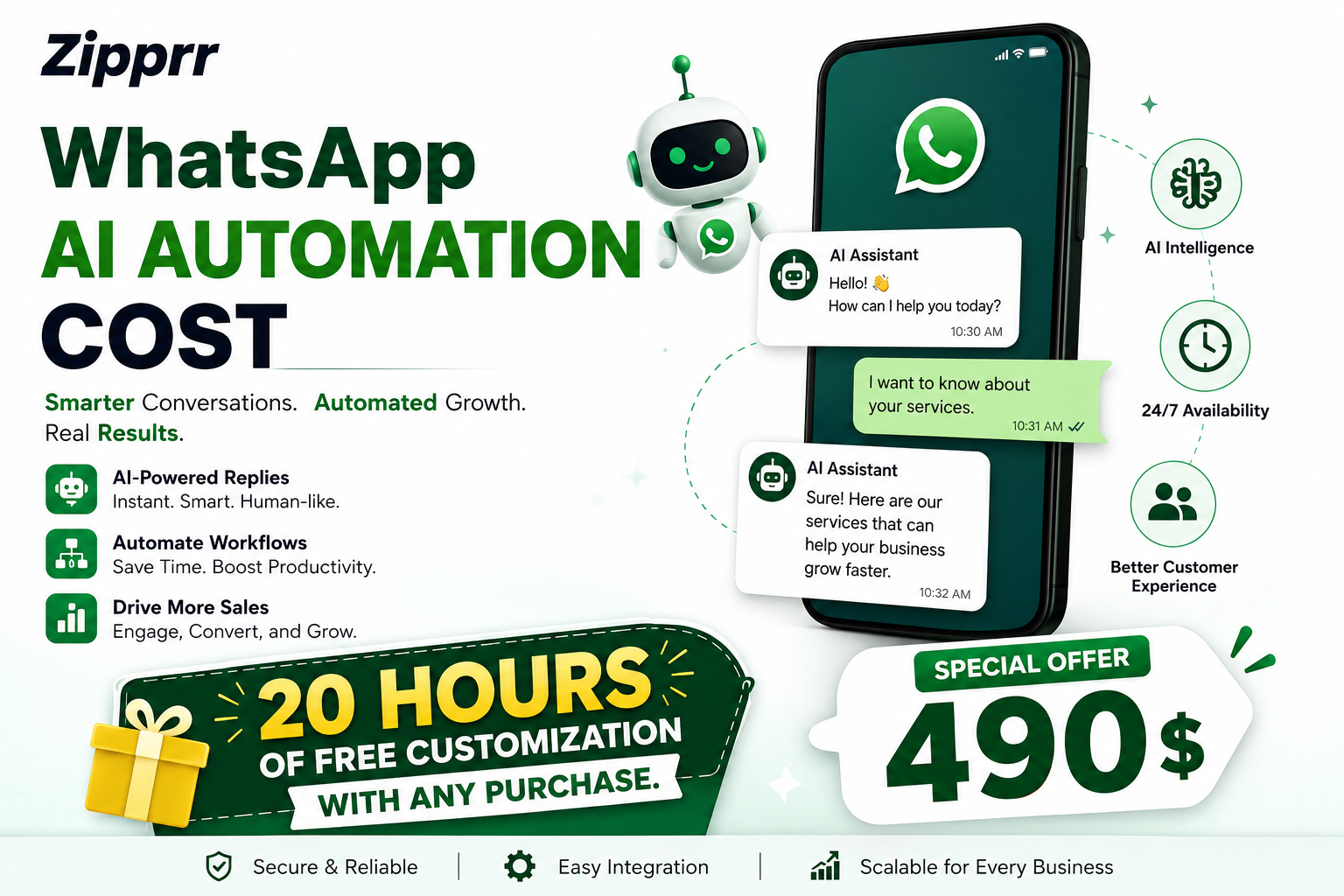
WhatsApp AI automation is the use of artificial intelligence to read, understand, and respond to WhatsApp conversations without a human typing every reply. In practice it means a customer sends a question at 2 a.m., the system interprets what they actually meant, pulls the relevant answer or order status, and replies in seconds. The short answer to how it works: a connection to the WhatsApp Business Platform feeds incoming messages into a language model and a set of business rules, and that combination decides what to say or do next.
So what exactly is it?
At its core, WhatsApp AI automation blends three things. First, a messaging channel approved by Meta. Second, natural language understanding that figures out intent from messy, real-world phrasing. Third, a workflow layer that connects to your catalog, CRM, or order system so the bot can act, not just chat. Older tools relied on rigid keyword menus where customers had to type "1" for sales and "2" for support. Modern systems understand full sentences, remember context across a thread, and hand off to a person when the conversation gets complicated. Teams that run this on a self-hosted WhatsApp automation platform keep that intelligence on their own infrastructure rather than renting it by the message.
How does it work under the hood?
Every automated WhatsApp setup starts with the WhatsApp Business API, the official pipe Meta provides for programmatic messaging. When a contact writes in, the platform receives a webhook event containing the message. That text is passed to an AI layer that classifies intent, extracts details like an order number or a date, and chooses a response. If the answer lives in another system, the automation calls that API, retrieves the data, and formats a reply. Outbound campaigns work in reverse: you trigger an approved template, and the engine sends it to a segmented list. A capable engine ties all of this together, which is why many businesses standardize on an all-in-one WhatsApp automation solution instead of stitching five separate tools together.
What can it actually do?
The everyday wins are unglamorous but valuable: answering "where is my order," confirming appointments, qualifying leads before a salesperson ever picks up the phone, sending shipping updates, and collecting feedback after a purchase. Because WhatsApp open rates dwarf email, these touches land. A clinic can fill a cancelled slot in under two minutes of chat. A store can recover an abandoned cart with a single, well-timed nudge. The reason these flows feel effortless is that the routing, templates, and fallbacks are pre-wired inside purpose-built WhatsApp automation software rather than improvised.
Where does the human still matter?
Automation is not a replacement for judgment. The best deployments automate the repetitive 70 to 80 percent and escalate the rest to a live agent with full context attached, so the customer never repeats themselves. Meta also expects automation to stay within defined use cases such as support triage, reservations, and order updates, which keeps these systems firmly in the helpful-assistant lane. Owners who want that control without a per-seat subscription often choose a WhatsApp automation tool they fully own.
Cloud or self-hosted: which model fits?
There are two delivery models, and the choice shapes both cost and control. Cloud SaaS tools host everything for you: fast to start, nothing to maintain, but your data and conversations live on a vendor's servers and your bill scales with usage. Self-hosted platforms run on your own infrastructure, giving you ownership of data, freedom to customize, and a largely fixed cost once you have paid for the software. For regulated industries or businesses with strict privacy needs, the self-hosted route is often the only one that satisfies legal teams.
The right answer depends on volume and appetite for control. A solo founder testing the channel may prefer the zero-setup cloud path, while an established operation sending thousands of messages a month usually benefits from owning the stack outright. Either way, the underlying WhatsApp Business API and the AI logic work the same; what differs is who holds the keys, who sees the data, and how the cost behaves as you grow.
Getting started
If you are evaluating your options, start by mapping the five questions your customers ask most, then automate those first. That single exercise usually covers the majority of your inbound volume. From there you can layer in broadcasts, AI replies, and CRM sync. To see how a complete, deployable system handles the full journey from first message to closed sale, explore Zipprr's WhatsApp AI automation platform and match its workflows against the conversations your team handles every day.
 Deutsch
 English
 Arabic
 French
 Spanish
 Portuguese
 Turkish
 Dutch
Dutch
 Italiano
 Russian
 Romaian
 Portuguese (Brazil)
 Greek
Greek
