


 Pro Benefits
 About
About
 Termini e Condizioni
 Privacy
 Child Safety & Protection
 Notifiche
 Ayrush Global It Services Pvt Ltd
Why Your Website Is Invisible to Google (And How to Fix It)
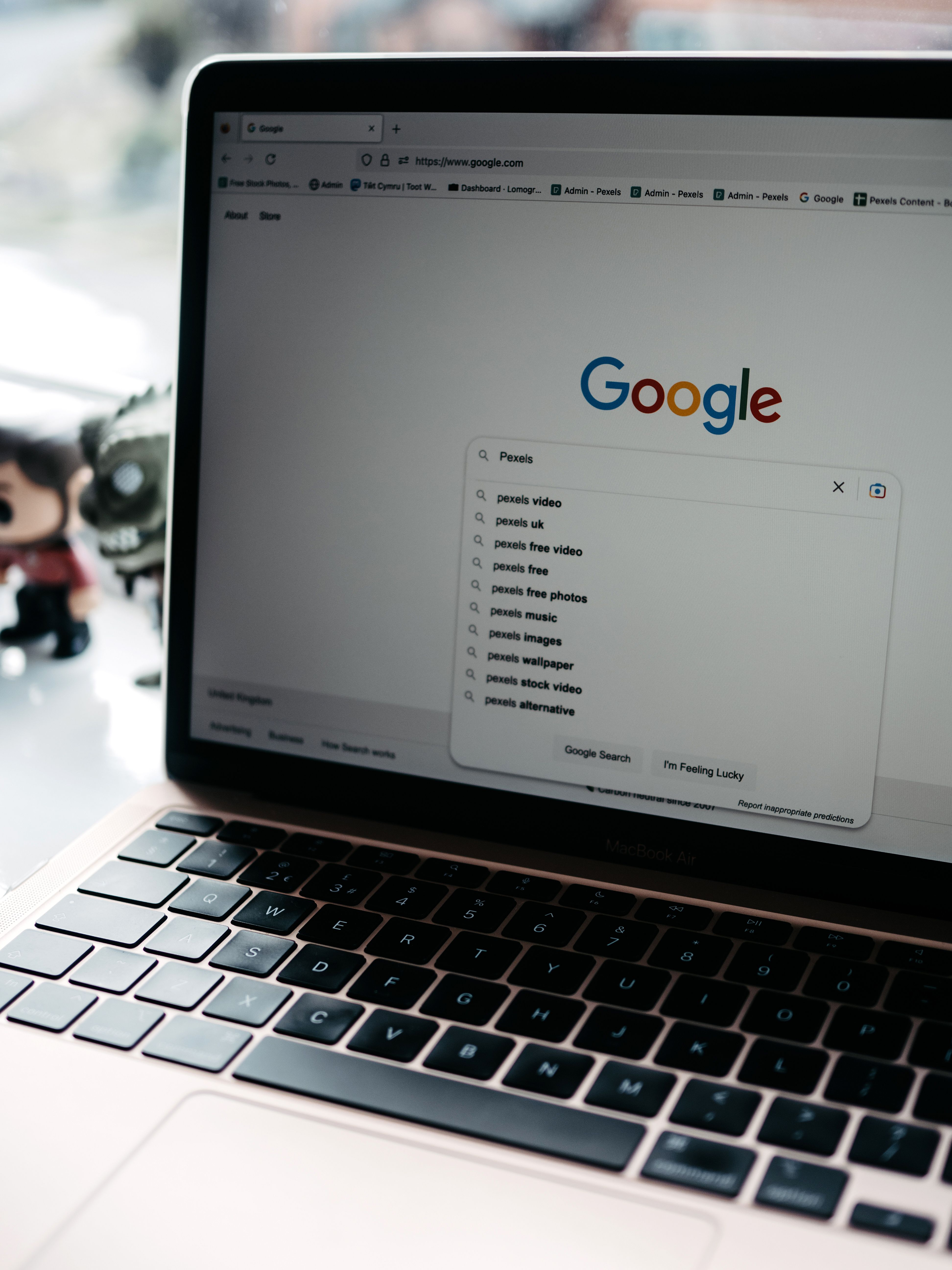
Most business owners build a website expecting customers to find them. Instead, they get silence — no clicks, no calls, no conversions. The website exists, but from Google's perspective, it might as well not.
This isn't a rare problem. Millions of websites never appear on the first three pages of search results, not because the business is bad, but because the site wasn't built with visibility in mind. Understanding why this happens — and what to do about it — is where strategic digital marketing begins.
The Crawl-and-Index Problem Nobody Talks About
Before a page can rank, search engines must first find it and store it. This two-step process — crawling and indexing — is where many websites quietly fail.
Crawlers are bots that scan the internet by following links. If your site has broken internal links, a poorly configured robots.txt file, or pages hidden behind JavaScript that bots can't parse, those pages never make it into the index. You can't rank for what Google hasn't seen.
The fix starts with a technical audit. Check your robots.txt file at yourdomain.com/robots.txt and confirm it isn't accidentally blocking important pages. Submit an XML sitemap through Google Search Console so bots have a roadmap to your content. Then use the URL Inspection tool inside Search Console to verify individual pages are indexed.
A surprising number of businesses working with search engine optimization companies discover their sites had indexing blocks in place for months — sometimes years — without anyone noticing. Fixing this alone can produce a visible uptick in organic impressions within weeks.
Thin Content: Google's Quiet Penalty
Content quality signals have grown more sophisticated with every algorithm update. Pages with fewer than 300 words, pages that repeat the same sentence in different configurations, and pages that answer nothing specific are all considered "thin" by search quality standards.
Google's guidelines specifically reward content that demonstrates experience, expertise, authoritativeness, and trustworthiness — collectively known as E-E-A-T. A landing page that says "We offer great services at affordable prices" tells a crawler nothing. A page that explains your methodology, provides data, cites real outcomes, and is attributed to a named professional tells it everything.
The solution is a content depth audit. Go through your existing pages and ask: does this page fully answer the question a visitor came here with? If the answer is no, the page needs expansion, not a tweak. Rewrite it from the reader's intent outward, not from the keyword inward.
This is a core principle in effective digital marketing: content written for humans that happens to satisfy search signals consistently outperforms content written for algorithms that humans don't want to read.
Why Backlinks Still Matter More Than Most Think
A backlink is a vote of confidence from one website to another. Google treats sites with more high-quality backlinks as more authoritative — and authority is one of the strongest ranking signals in modern SEO.
If your website is new or has never attracted links from credible sources, it's competing for attention on the merit of content alone. That's a disadvantage in competitive niches where established sites have spent years building domain authority.
The most sustainable link-building strategies are:
Guest posting on authoritative industry publications (which is exactly what this article is doing). Resource link building — creating genuinely useful tools, guides, or data that other sites reference. Brand mentions — when sites mention your company but don't link to you, reaching out and requesting the link is a simple, often successful tactic.
One common mistake is chasing volume over quality. A hundred links from low-quality directories are worth far less than three links from respected industry sites. The seo market has evolved; quality signals are weighted heavily.
Core Web Vitals: Speed Is a Ranking Factor
Since Google's Core Web Vitals update, page experience has been a confirmed ranking signal. Three metrics matter most: Largest Contentful Paint (how quickly the main content loads), Interaction to Next Paint (how fast the page responds to user input), and Cumulative Layout Shift (how stable the layout is while loading).
A page that loads in under 2.5 seconds on mobile, responds to clicks instantly, and doesn't have elements that jump around as content loads will outperform a slower competitor with comparable content.
Test your scores using Google PageSpeed Insights or the Core Web Vitals report inside Search Console. Common culprits for poor scores include uncompressed images, too many third-party scripts (chat widgets, analytics tags, ad pixels), slow server response times, and render-blocking JavaScript.
Investing in a faster hosting environment, converting images to WebP format, and deferring non-critical scripts are technical changes with measurable ranking impact.
On-Page Signals Most Sites Underuse
Even with great content and decent backlinks, on-page structure matters. Search engines parse specific signals to understand what a page is about and how relevant it is to a given query.
Title tags should contain the primary concept front-loaded, ideally within the first 50 characters. Meta descriptions, while not a direct ranking factor, influence click-through rate — which is a behavioral signal that can indirectly affect rankings.
Header tags (H1, H2, H3) act as a content outline. A single H1 per page, followed by logical H2 sections, tells both readers and crawlers how the content is organized. Alt text on images isn't just for accessibility — it contributes to contextual signals.
Internal linking is one of the most underused tactics in digital marketing. When you link from a high-authority page on your site to a newer page that needs ranking support, you're passing authority through your own domain. This is entirely within your control and costs nothing.
The Role of Structured Data in Visibility
Structured data (schema markup) is code added to your pages that helps search engines understand your content at a deeper level. FAQ schema, Article schema, LocalBusiness schema, and Product schema all enable enhanced search results — rich snippets — that increase click-through rate substantially.
A recipe page with recipe schema can show star ratings and cooking time directly in the search result. A FAQ page with FAQ schema can display expandable Q&A blocks in the SERP, taking up significantly more visual space without any additional ranking required.
Implementing schema doesn't require advanced coding. Google's Structured Data Markup Helper lets you tag content visually and generates the code automatically. Most search engine optimization companies include schema implementation as part of a technical audit package.
Behavioral Signals: What Happens After the Click
Rankings aren't entirely determined before someone clicks. Behavioral signals — what visitors do once they land on your page — feed back into Google's understanding of page quality.
A high bounce rate (visitors arriving and immediately leaving) signals that the page didn't deliver what searchers expected. Dwell time (how long someone stays) and pogo-sticking (returning to the search results quickly) are both signals that content may not be satisfying intent.
This creates a self-reinforcing dynamic: content that genuinely helps people stay longer, engage more, and return less frequently to the SERP tends to maintain or improve its rankings. Content that disappoints tends to slip.
The practical implication: match what you promise in the title and meta description to what's actually on the page. Don't write sensational titles for mediocre content. The short-term click isn't worth the long-term ranking damage.
Local Visibility: The Google Business Profile Factor
For businesses serving a geographic area, local SEO is a distinct discipline with its own ranking factors. The Google Business Profile (formerly Google My Business) is the single most important asset for local visibility — it controls whether you appear in the Map Pack, the prominent set of three local results that appears above organic listings for queries with local intent.
A complete, regularly updated Business Profile — with accurate hours, photos, service descriptions, and a stream of recent reviews — dramatically outperforms neglected profiles. Review velocity and rating average both influence local rankings.
Consistent NAP (Name, Address, Phone) information across all online directories reinforces local authority signals. Inconsistent citations — one directory lists an old address, another a different phone number — confuse crawlers and dilute trust.
Tracking Progress: What to Measure and When
Visibility improvements don't happen overnight. A realistic timeline for meaningful SEO results ranges from three to six months for technical and on-page changes, and six to twelve months for link building and authority growth.
Track these metrics in Google Search Console monthly: total impressions, click-through rate, average position for target queries, and new pages entering the index. In Google Analytics (GA4), monitor organic traffic growth, engagement rate, and conversions attributed to organic search.
Set a 90-day baseline when you start. Compare month-over-month and quarter-over-quarter, not day-over-day. SEO is a long game measured in trends, not spikes.
Frequently Asked Questions
How long does it take to rank on the first page of Google?
For new sites targeting competitive queries, 6–12 months is a realistic expectation. Lower-competition queries and locally focused terms can appear in 2–4 months with proper optimization.
Should I hire an agency or do SEO in-house?
Both work. In-house teams have deep brand knowledge; agencies bring technical depth and diverse experience. Many businesses use a hybrid: in-house content, agency technical and link work.
Does social media affect SEO rankings?
Social signals aren't a direct Google ranking factor, but social distribution drives traffic and content discovery, which can lead to natural backlinks — which do affect rankings.
What's the single most impactful change I can make today?
Fix your indexing. Check Search Console for crawl errors, submit your sitemap, and confirm your highest-value pages are indexed. No ranking work matters if your pages aren't in Google's index.
Every website that's currently invisible has a path back into view. The steps are technical, methodical, and measurable. Start with what's blocking visibility, then build from there.
 Italiano
 English
 Arabic
 French
 Spanish
 Portuguese
 Deutsch
 Turkish
 Dutch
Dutch
 Russian
 Romaian
 Portuguese (Brazil)
 Greek
Greek
