


 Pro Benefits
 About
About
 Termini e Condizioni
 Privacy
 Child Safety & Protection
 Notifiche
 Ayrush Global It Services Pvt Ltd
Common Mistakes International Students Make in the First Semester
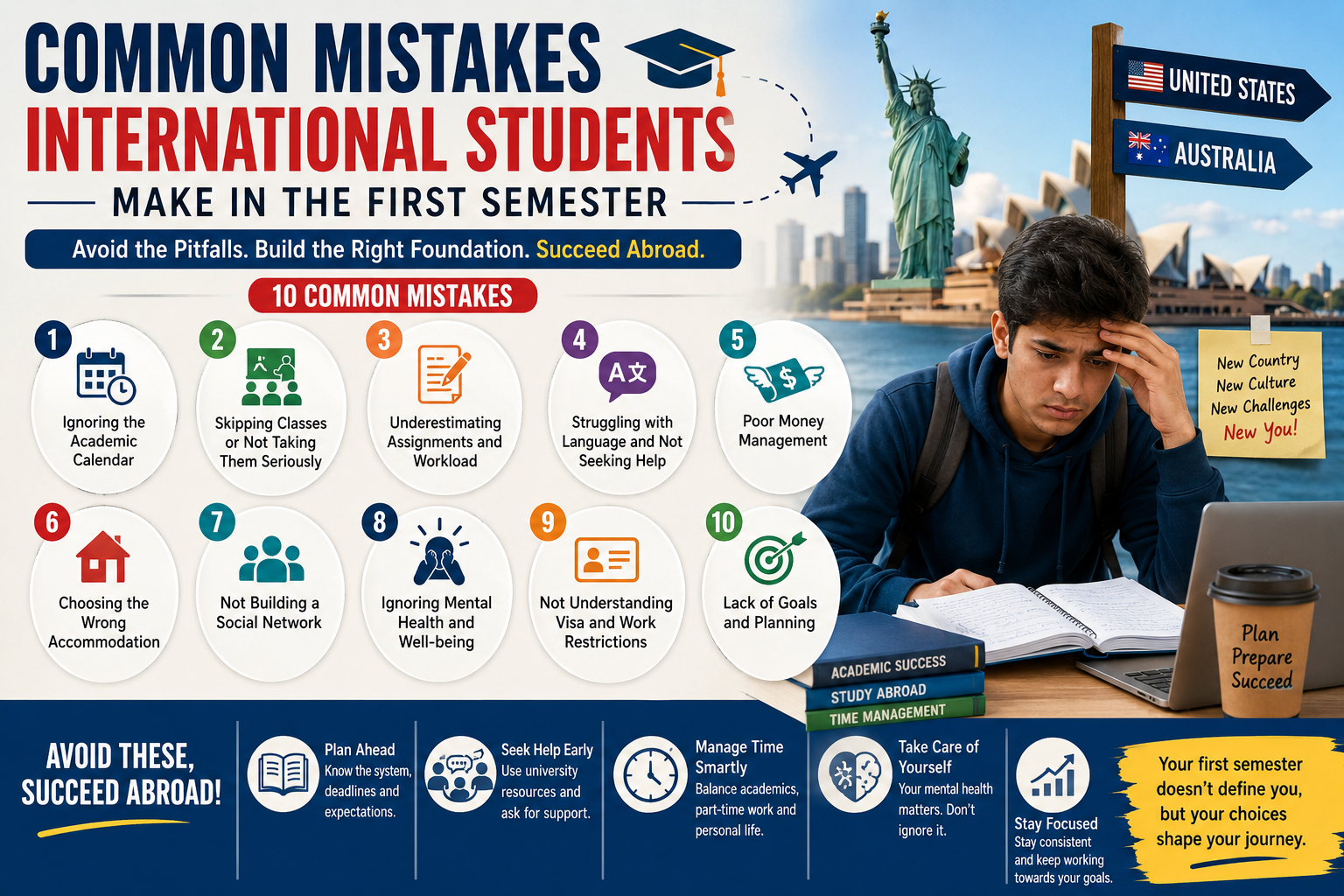
Moving to the United States or Australia for higher education is a dream for thousands of Indian students every year. The excitement of studying abroad, experiencing a new culture, and pursuing global career opportunities is undeniable. However, the reality often hits harder than expected. The first semester is a critical period that shapes your academic performance, mental well-being, and overall success abroad. Many students unknowingly make mistakes that lead to stress, poor grades, financial difficulties, and emotional challenges.
Understanding these common mistakes early can help you prepare better and avoid the pitfalls that trap so many international students. Whether you are heading to the USA or Australia, this guide will walk you through the ten most frequent mistakes international students make during their first semester and provide actionable strategies to avoid them. The insights are based on real student experiences, university guidance resources, and expert advice from international education professionals.
Why the First Semester Sets the Foundation for Your Entire Study Journey
The first semester is not just about attending classes and submitting assignments. It is the period where you build your foundation for academic, social, and personal success abroad. Students who adapt quickly during this time tend to perform better in later years, secure internships, and build strong professional networks. On the other hand, students who struggle in the first semester often carry that stress forward, which affects their confidence, grades, and mental health.
Research and student surveys show that international students face unique challenges, including cultural adjustment, language barriers, financial pressure, and academic expectations. These challenges become even more difficult when students do not plan properly or make common mistakes that worsen their situation. By understanding what to avoid from the beginning, you can create a smoother transition and build a stronger foundation for the rest of your studies.
Mistake 1: Skipping University Orientation Programs
One of the most damaging mistakes international students make is skipping orientation programs. Many students feel tired after traveling, assume that orientation is not important, or think they can learn everything on their own later. This is a serious error. Orientation programs are designed to give you essential information about campus rules, academic policies, visa compliance, support services, and social opportunities.
At universities in the USA and Australia, orientation helps you understand how to access tutoring, counseling, career services, and international student advisors. It also introduces you to classmates, professors, and campus culture. Students who skip orientation often miss key deadlines, misunderstand academic expectations, and fail to access resources that could help them succeed. Some even face visa or compliance issues because they were not aware of required reporting or enrollment rules.
To avoid this mistake, treat orientation as a mandatory part of your arrival. Plan your schedule to attend every session, ask questions, and introduce yourself to advisors and peers. Take notes, collect handouts, and save important emails. This initial step will save you from confusion and stress in the coming weeks.
Mistake 2: Overloading Your Course Schedule
Many students try to take too many courses in their first semester because they want to complete their degree faster or show academic commitment. While this mindset sounds positive, it often leads to burnout, poor grades, and high stress. Adapting to a new education system, teaching style, and language environment takes time and energy. When you add an overloaded course schedule, the pressure becomes overwhelming.
International students often struggle with academic writing, lecture comprehension, and classroom participation. These skills require practice and gradual improvement. Taking on too many courses reduces the time you have to develop these skills and increases the risk of failing exams or missing assignments. Some students even face visa issues if they drop courses later due to poor performance.
The best approach is to start with a manageable course load. Focus on understanding the academic system, building confidence, and establishing a routine. Once you have adapted to the new environment and improved your skills, you can gradually increase your course load in the following semesters. This ensures long-term success instead of short-term pressure.
Mistake 3: Not Practicing Academic English Skills Regularly
Having a good IELTS or TOEFL score does not guarantee that you will be comfortable with academic English. Many international students struggle with writing assignments, understanding complex lectures, participating in discussions, and speaking with professors. Academic English is different from everyday English, and it requires specific skills in vocabulary, grammar, structure, and critical thinking.
Students who neglect academic English often face challenges in assignments, exams, and classroom participation. They may struggle to express their ideas clearly, misunderstand instructions, or lose points due to poor writing. These issues can lead to lower grades and increased stress, especially during the first semester when expectations are high.
To avoid this mistake, practice academic English daily. Join conversation clubs, attend writing workshops, read academic materials, and use university writing support services. Seek feedback on your assignments and ask professors for clarification when needed. Building strong academic English skills early will help you perform better in all your courses.
Mistake 4: Only Making Friends From Your Own Country
It is natural to feel comfortable with people from India, especially when you are in a new and unfamiliar environment. However, limiting your social circle to only students from your country can slow your cultural adjustment and reduce your long-term opportunities. Building relationships with local students and people from different backgrounds helps you improve your language skills, understand cultural norms, and expand your professional network.
International students who isolate themselves often miss internships, networking opportunities, and career guidance that local students can provide. They also struggle more with cultural adjustment and may feel lonely or stuck in their comfort zone. Universities in the USA and Australia encourage diversity and provide many platforms for international students to connect with others.
To avoid this mistake, join student clubs, attend campus events, volunteer, and participate in extracurricular activities. These opportunities help you build a diverse network of friends and peers. While it is okay to stay connected with Indian students, make sure you also engage with the broader campus community.
Mistake 5: Ignoring Campus Support Services
Universities in the USA and Australia offer extensive support services for international students, including tutoring, counseling, career guidance, writing centers, and international student advisors. Many students ignore these resources because they are unfamiliar with them, feel shy about asking for help, or assume they can manage on their own. This is a serious mistake that can lead to academic struggles, mental health issues, and missed opportunities.
Support services are designed to help students overcome challenges, improve performance, and access resources that can boost their success. Counseling services can help with homesickness and stress, tutoring can improve grades, and career services can guide internship and job search strategies. International student advisors can assist with visa compliance, enrollment rules, and other important matters.
Take time to explore campus services during orientation and early in the semester. Visit the counseling center, writing center, and career office. Introduce yourself to advisors and ask about available resources. Using these services early will prevent problems from becoming worse later.
Mistake 6: Poor Financial Planning and Budgeting
Many international students underestimate the cost of living in the USA or Australia. They overspend in the first one to two months on furniture, electronics, shopping, and eating out. This leads to a shortage of emergency funds, financial stress, and reliance on loans. Poor budgeting also affects mental health and academic performance, as students worry about money instead of focusing on studies.
Costs for accommodation, food, transport, insurance, and study materials are often higher than students expect. Some students also face challenges with banking, currency exchange, and understanding part-time job rules. Without a clear budget, financial mistakes become common.
To avoid this mistake, create a monthly budget and track your expenses regularly. Learn about part-time job opportunities, scholarship options, and student discounts. Understand the cost of essentials before you arrive and plan accordingly. Building a financial plan early will help you manage money better and reduce stress throughout your studies.
Mistake 7: Not Creating a Study Plan or Weekly Schedule
Without a clear study plan or schedule, students often struggle with missed deadlines, procrastination, last-minute stress, and poor time management. The first semester introduces many new responsibilities, including assignments, exams, projects, and extracurricular activities. Without structure, it becomes difficult to balance everything effectively.
Students who plan well tend to perform better academically and maintain better mental health. They avoid last-minute stress, complete assignments early, and have time for rest and social activities. Creating a schedule also helps you stay organized and focused.
Start by planning your weekly schedule based on your syllabus and course requirements. Set deadlines for assignments, allocate study time, and include breaks for rest. Use planners, apps, or calendars to stay on track. Building a consistent routine early will help you manage your workload and avoid stress.
Mistake 8: Neglecting Self-Care and Mental Health
Adjusting to a new environment is mentally and emotionally draining. Many students neglect self-care because they focus only on studies. They skip meals, sleep too little, stop exercising, and ignore stress signals. This leads to burnout, homesickness, anxiety, and mental health struggles.
Self-care is essential for maintaining physical and mental well-being. It includes eating regularly, sleeping enough, exercising, and managing stress. Universities offer counseling services and support groups for students facing mental health challenges. Ignoring self-care can lead to serious issues that affect your academic performance and overall quality of life.
To avoid this mistake, prioritize self-care from the beginning. Eat nutritious meals, sleep 7–8 hours, exercise regularly, and take breaks when needed. Use counseling services if you feel overwhelmed or stressed. Building a healthy routine early will help you stay strong and focused throughout your studies.
Mistake 9: Hesitating to Ask Professors and Advisors for Help
Many international students hesitate to ask professors, advisors, or support services for help because they feel shy, proud, or uncomfortable. This leads to misunderstandings, poor grades, and missed opportunities. Universities in the USA and Australia encourage students to seek help and provide many channels for communication.
Professors hold office hours specifically for students to ask questions, clarify doubts, and get guidance. Advisors can assist with academic planning, course selection, and career guidance. Support services can help with writing, tutoring, and counseling. Asking for help is not a weakness, but a sign of responsibility and maturity.
To avoid this mistake, attend professor office hours, ask for academic support, contact advisors when needed, and talk to counselors if you feel stressed. Building a communication habit early will help you succeed academically and personally.
Mistake 10: Focusing Only on Academics and Missing Career Opportunities
Studying well is important, but success abroad also includes internships, networking, extracurricular activities, volunteering, and building a resume. Students who focus only on marks may miss career opportunities that can lead to internships, jobs, and professional growth.
Universities offer career services, internship programs, and networking events that help students build professional connections. Participating in clubs, volunteering, and attending events can boost your resume and open doors to future opportunities. internship and job searches often begin early, and students who prepare in the first semester have better chances of securing opportunities.
To avoid this mistake, join clubs, look for internships, build LinkedIn connections, and participate in campus events. Balance academics with career-building activities to ensure long-term success.
FAQ: First-Semester Mistakes for International Students
What is the biggest mistake international students make in the first semester?
Skipping orientation and not using campus support services are the most damaging mistakes. These decisions can lead to confusion, missed deadlines, and lack of access to resources that are essential for success.
How can Indian students adjust faster in the USA or Australia?
Attend orientation, join clubs, budget well, practice academic English, and use campus resources early. Building a routine and connecting with peers also helps speed up adjustment.
Should I take many courses in the first semester?
No. Start with a manageable course load to avoid stress and burnout. Increase your course load gradually as you adapt to the academic system.
What if I feel lonely or homesick?
Use counseling services, join student groups, and connect with peers early. Building a social network and staying active on campus helps reduce loneliness.
How can ExpertsMind help international students?
ExpertsMind provides assignment help, study planning support, writing guidance, and academic assistance for students studying abroad. We help students manage deadlines, improve writing skills, and succeed academically while balancing life abroad.
Get Academic Support from ExpertsMind
If you are struggling with assignments, deadlines, study planning, or academic writing while studying in the USA or Australia, ExpertsMind can help you succeed. We offer reliable support for international students, including professional assignment help, homework assistance, study guidance, and academic writing support.
Contact ExpertsMind today to get the support you need and overcome the challenges of your first semester abroad.
 Italiano
 English
 Arabic
 French
 Spanish
 Portuguese
 Deutsch
 Turkish
 Dutch
Dutch
 Russian
 Romaian
 Portuguese (Brazil)
 Greek
Greek
