


 Pro Benefits
 About
About
 Terms
Terms
 Privacy
 Child Safety & Protection
 Notifications
 Ayrush Global It Services Pvt Ltd
Custom Precision Machining with Advanced CNC Technology
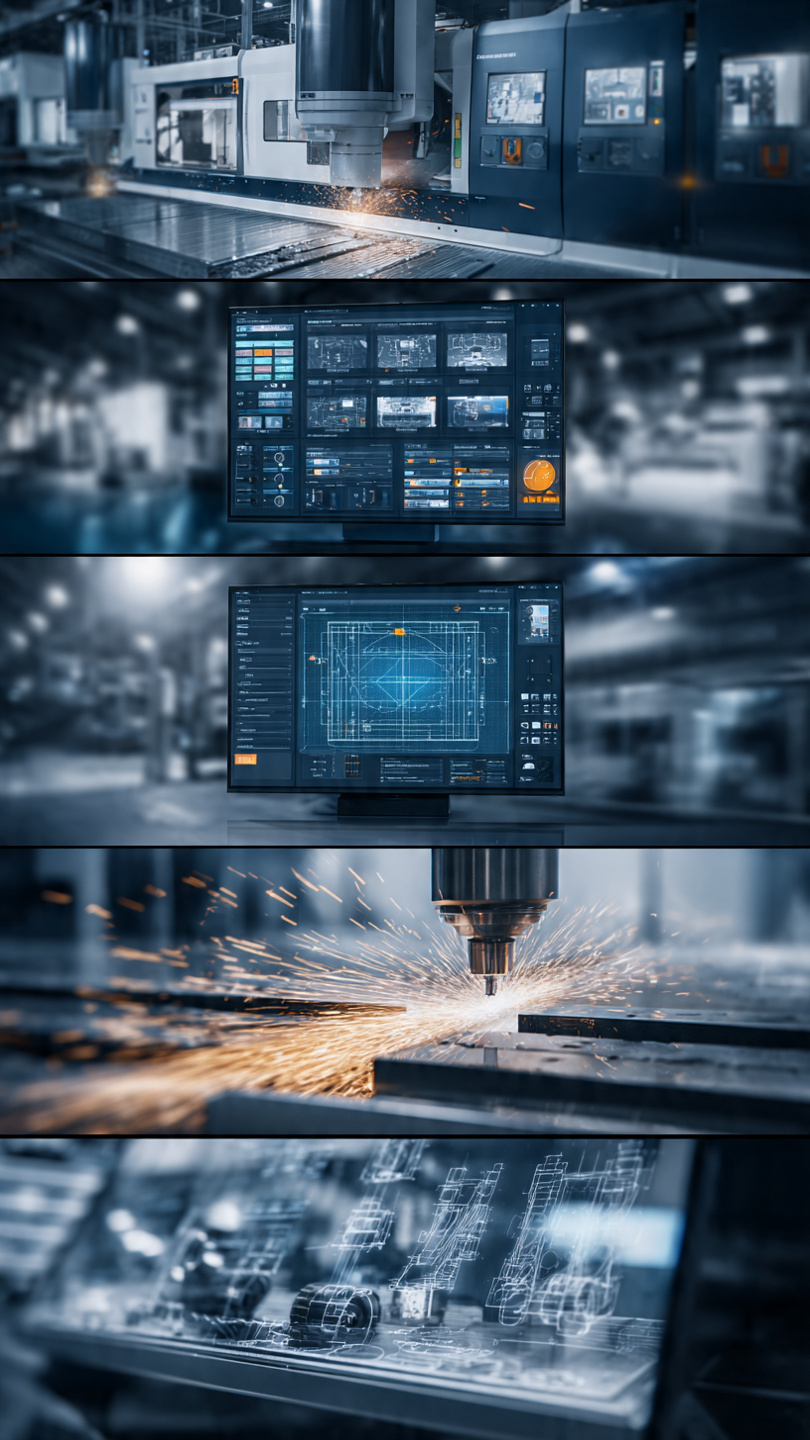
The energy sector doesn't forgive mistakes. Equipment operating under thousands of PSI of pressure, at extreme temperatures, in corrosive environments it has to work. Every time. Without question.
That's not marketing copy. It's an engineering reality that shapes how the industry sources its components. And it's why custom precision machining has become so central to energy company supply chains around the world.
If you work in energy upstream, midstream, or downstream, what precision machining brings to your operations is worth understanding properly.
Why Standard Parts Often Aren't Good Enough
There's a temptation in procurement to default to catalogue parts. They're quick, they're priced, and they're familiar. But the energy sector regularly deals with conditions that push standard components past their design limits.
Consider a subsea wellhead operating in deepwater. The temperature differentials, the hydrostatic pressure, the corrosive effects of seawater and hydrogen sulphide, these aren't conditions that generic parts are built for. Custom precision machining lets engineers specify materials, geometries, and surface treatments that are matched to the actual operating environment rather than to a statistical average of possible uses.
The same logic applies above ground. Compressors, heat exchangers, valve assemblies, pump internals when these are custom machined to exact specifications, they perform better, last longer, and are far less likely to cause unplanned downtime.
In an industry where a single day of lost production can cost hundreds of thousands of pounds, component reliability is as much a financial issue as an engineering one.
How Oil and Gas Equipment Suppliers Depend on Precision Machining
Oil and gas equipment suppliers sit between the machining shop and the end operator. They're responsible for sourcing, assembling, and delivering equipment that meets stringent technical and regulatory standards.
For these suppliers, the quality of their machined components is inseparable from the quality of their reputation. A supplier whose components fail in the field doesn't get second chances in this industry. That's why serious oil and gas equipment suppliers maintain long-term relationships with machining partners they trust shops that understand API standards, can work to tight tolerances in difficult materials, and produce the documentation that downstream compliance requires.
Common machined components in the oil and gas supply chain include valve bodies and stems (requiring precise bore geometries and sealing surfaces), pump shafts and impellers (balanced and finished to tight runout tolerances), flange and fitting assemblies (manufactured to ANSI, ASME, or BS standards), wellhead components (often in exotic alloys with complex geometry), and manifold blocks (machined from solid material to handle high-pressure fluid circuits).
Each of these demands a machining partner who can work to the relevant standards and who understands the consequences of getting it wrong.
Materials That Define Oil and Gas Machining
Material selection in oil and gas applications is never casual. The wrong alloy in a sour gas environment can fail catastrophically through stress corrosion cracking. The right material, properly machined, will outlast the installation it was designed for.
Common materials in this sector include stainless steels (316L, 316Ti, Duplex, Super Duplex) for corrosion resistance in aggressive environments; Inconel and nickel alloys for high-temperature, high-pressure applications where strength must be maintained at heat; carbon and low-alloy steels for structural components where cost matters more than corrosion resistance; titanium, increasingly used in subsea applications for its combination of strength and corrosion immunity; and PEEK and engineering polymers for seals, bushings, and non-metallic wear components.
Machining these materials requires the right tooling, the right cutting parameters, and, critically, experience. A shop that primarily works in mild steel and aluminium may not have the process knowledge to machine Inconel to the tolerances an oil and gas application requires.
Documentation, Traceability, and Compliance
In the energy sector, a component without paperwork isn't a component. It's a liability. Every part that goes into an oil and gas system needs to be traceable from the raw material heat certificate through to the final inspection report.
Machining shops that serve this sector understand this. Material test reports (MTR), dimensional inspection reports, heat treatment records, and non-destructive testing results all of this documentation is part of the delivery, not an optional extra.
Buyers who work with suppliers that provide full traceability are protecting themselves. When a component is questioned during an audit or an incident investigation, having the paperwork available is the difference between a quick resolution and a protracted, expensive process.
Our Background in the Energy Sector Machining
[Company Name] has supplied precision-machined components to the oil and gas sector for over [X] years. Our team knows the technical standards API 6A, API 11B, NACE MR0175 and the material requirements that come with them. We work closely with equipment suppliers and operators to make sure every component we produce meets the specifications.
We don't just machine parts. We understand why the tolerances matter, what the material needs to achieve, and how our work fits into the larger system it belongs to.
Conclusion
In the energy sector, precision isn't optional. It's the foundation everything else is built on. Work with oil and gas equipment suppliers who understand that.
FAQs
Q: What API standards should a precision machining company know for oil and gas work?
A: The most common are API 6A (wellhead and Christmas tree equipment), API 11B (sucker rod pumping), API 17D (subsea equipment), and NACE MR0175/ISO 15156 for sour service material requirements. Your supplier should be able to discuss these fluently, not just reference them.
Q: How do oil and gas equipment suppliers typically qualify a new machining partner?
A: Qualification usually involves reviewing quality certifications, conducting a facility audit, completing sample machining trials, and assessing documentation capability. The process can take weeks, so start early.
Q: Can you machine components in NACE-compliant materials?
A: Yes. NACE compliance relates to both material selection and heat treatment. A capable machining manufacturer will source certified material and maintain the traceability chain throughout the process.
Q: What's the minimum order quantity for custom-machined oil and gas components?
A: Most precision machining companies accommodate single-piece and small-batch orders, which matters for spares and replacement parts. Confirm this with your supplier before you need something urgently.
 English
 Arabic
 French
 Spanish
 Portuguese
 Deutsch
 Turkish
 Dutch
Dutch
 Italiano
 Russian
 Romaian
 Portuguese (Brazil)
 Greek
Greek
