


 Pro Benefits
 About
About
 Terms
Terms
 Privacy
 Child Safety & Protection
 Notifications
 Ayrush Global It Services Pvt Ltd
Top 10 Essential Construction Equipment Machines Every Contractor Needs
In the highly competitive construction industry, operational efficiency, safety, and project execution speed depend heavily on the machinery a contractor deploys. Whether executing residential builds, commercial developments, or heavy infrastructure projects, having the right fleet is the definitive line between a profitable timeline and costly project delays. While specific jobs demand specialized tools, a core group of versatile, heavy-duty machines forms the backbone of any successful construction enterprise. This comprehensive guide outlines the top 10 essential construction equipment machines that every contractor needs to maintain a versatile, productive, and highly capable fleet.
1. Excavators
Excavators are arguably the most recognizable and indispensable pieces of Construction Equipment on any modern construction site. Consisting of a booming arm, bucket, rotating cab, and moving tracks, these powerhouse machines are primarily utilized for bulk earthmoving, digging trenches, structural foundations, and demolition work. Their true value, however, lies in their versatility. By swapping the standard bucket for hydraulic breakers, augers, grapples, or shears, a single excavator can transition seamlessly from heavy excavation to site clearing or utility installation. Available in sizes ranging from agile mini-excavators to massive industrial units, excavators remain among the most essential Construction Equipment solutions for projects of any scale, helping contractors improve productivity, efficiency, and job site performance.
2. Backhoe Loaders
The backhoe loader is the ultimate multi-tool of the construction world. Featuring a tractor-like body equipped with a front-loading bucket and a rear-mounted backhoe arm, this machine provides dual-functionality within a highly compact footprint. Contractors rely on backhoes for light excavation, material transport, backfilling, and minor grading work. Because they are tire-mounted, they can easily travel across paved surfaces and move between close-proximity job sites without the need for flatbed transportation. This mobility and versatility make them an incredibly cost-effective investment for growing contractors.
3. Skid Steer Loaders
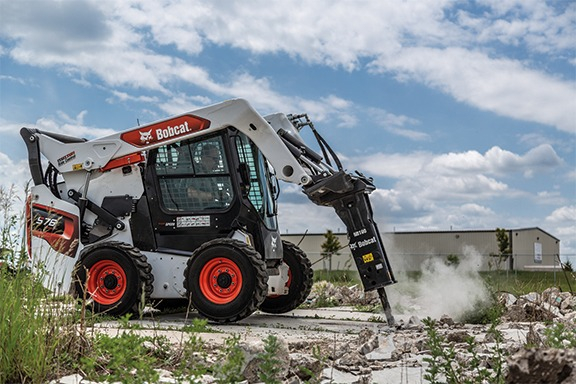
Skid steer loaders are compact, highly maneuverable machines capable of turning within their own footprint, making them ideal for tight, confined urban jobsites. Equipped with lift arms that can accommodate dozens of different attachments—such as trenchers, palleted forks, sweepers, and dozer blades—skid steers are the Swiss Army knives of earthmoving. They excel at grading, loading materials, clearing debris, and performing site maintenance. Their lightweight design ensures minimal ground disturbance while providing the punch needed to accelerate manual labor tasks exponentially.
4. Bulldozers
When it comes to raw, unadulterated power and earth-shifting capability, the bulldozer reigns supreme. Equipped with a massive, heavy front blade, these tracked giants are built to push enormous volumes of soil, rock, sand, and debris across vast expanses. Bulldozers are fundamental during the initial phases of a project for clearing land, rough grading, and stripping topsoil. Their wide tracks distribute the machine's immense weight evenly, preventing it from sinking into soft or muddy terrain, ensuring continuous operation in the harshest environments.
5. Motor Graders
While bulldozers handle the rough earthmoving, motor graders provide the precise finish required for structural stability. Featuring a long, adjustable blade positioned between the front and rear axles, motor graders are used to create flat, uniform surfaces. They are an absolute necessity for road construction, leveling building foundations, and preparing subgrades for asphalt or concrete paving. A skilled operator can use a grader to establish accurate drainage slopes and cross-sections, ensuring the longevity and compliance of infrastructure projects.
6. Wheel Loaders
Wheel loaders, also known as front-end loaders, are designed for high-capacity material handling and loading. Unlike track loaders, wheel loaders run on large rubber tires, allowing them to move rapidly across expansive job sites with minimal surface damage. Featuring massive front buckets, these machines scoop up loose materials like gravel, dirt, asphalt, and demolished concrete, transferring them efficiently into dump trucks or stock piles. Their speed and payload capacity are vital for keeping supply lines and clearing operations moving fluidly.
7. Trenchers
For utilities, electrical, and plumbing contractors, a trencher is a foundational asset. Designed specifically to dig narrow, continuous ditches, trenchers far outperform standard excavators when laying underground pipes, cables, or drainage systems. They come in various configurations, including walk-behind models for residential work and heavy-duty, ride-on tracked units for cross-country pipeline projects. By cutting cleanly through tough soil or rocky terrain, trenchers optimize speed and ensure uniform trench dimensions, saving significant time on backfilling and installation.
8. Cranes (Mobile and Tower Cranes)
Construction is as much about vertical assembly as it is about horizontal ground prep, and cranes are the undisputed masters of vertical lift. Mobile cranes offer versatility and quick setup for lifting structural steel, concrete panels, and heavy mechanical equipment on low-to-medium-rise projects. For high-rise commercial structures, tower cranes are anchored to the site, offering unparalleled height and lifting capacities. Without cranes, the assembly of modern urban architecture, bridge spans, and heavy industrial facilities would be structurally impossible.
9. Dump Trucks
No construction site can operate efficiently in a vacuum; materials must constantly arrive, and waste must constantly leave. Dump trucks are the logistical backbone of site management. Heavy-duty vocational dump trucks carry gravel, sand, and asphalt to the site, while off-road articulated dump trucks navigate treacherous, unpaved terrain to move bulk earth within massive jobsites. A well-managed fleet of dump trucks ensures that excavation teams are never stalled by accumulated debris and paving crews always have material on hand.
10. Compactors (Rollers)
The integrity of any building, road, or runway rests entirely upon its foundation, and compactors are the machines responsible for that structural reliability. Smooth drum rollers, padfoot rollers, and pneumatic tired compactors use weight, pressure, and vibration to expel air pockets from soil, gravel, and asphalt, creating a dense, highly stable base. Proper compaction prevents future ground settling, cracking, and structural failure, making the compactor the essential final step in earthwork and paving operations.
Conclusion: Strategic Fleet Management
Investing in these top 10 essential construction machines equips a contractor to tackle a diverse array of projects with confidence, precision, and efficiency. While purchasing an entire fleet outright requires substantial capital, strategic procurement through a mix of purchasing core machinery and renting specialized attachments can maximize profitability and operational flexibility. Ultimately, mastering the allocation and utilization of these core assets is what elevates a construction business from a local contractor to an industry leader.
 English
 Arabic
 French
 Spanish
 Portuguese
 Deutsch
 Turkish
 Dutch
Dutch
 Italiano
 Russian
 Romaian
 Portuguese (Brazil)
 Greek
Greek
