


 Pro Benefits
 Σχετικά
 Όρους
Όρους
 Ιδιωτικότητα
 Child Safety & Protection
 Ειδοποιήσεις
 Ayrush Global It Services Pvt Ltd
How 3D Real Estate Software Is Transforming Modern Home Buying
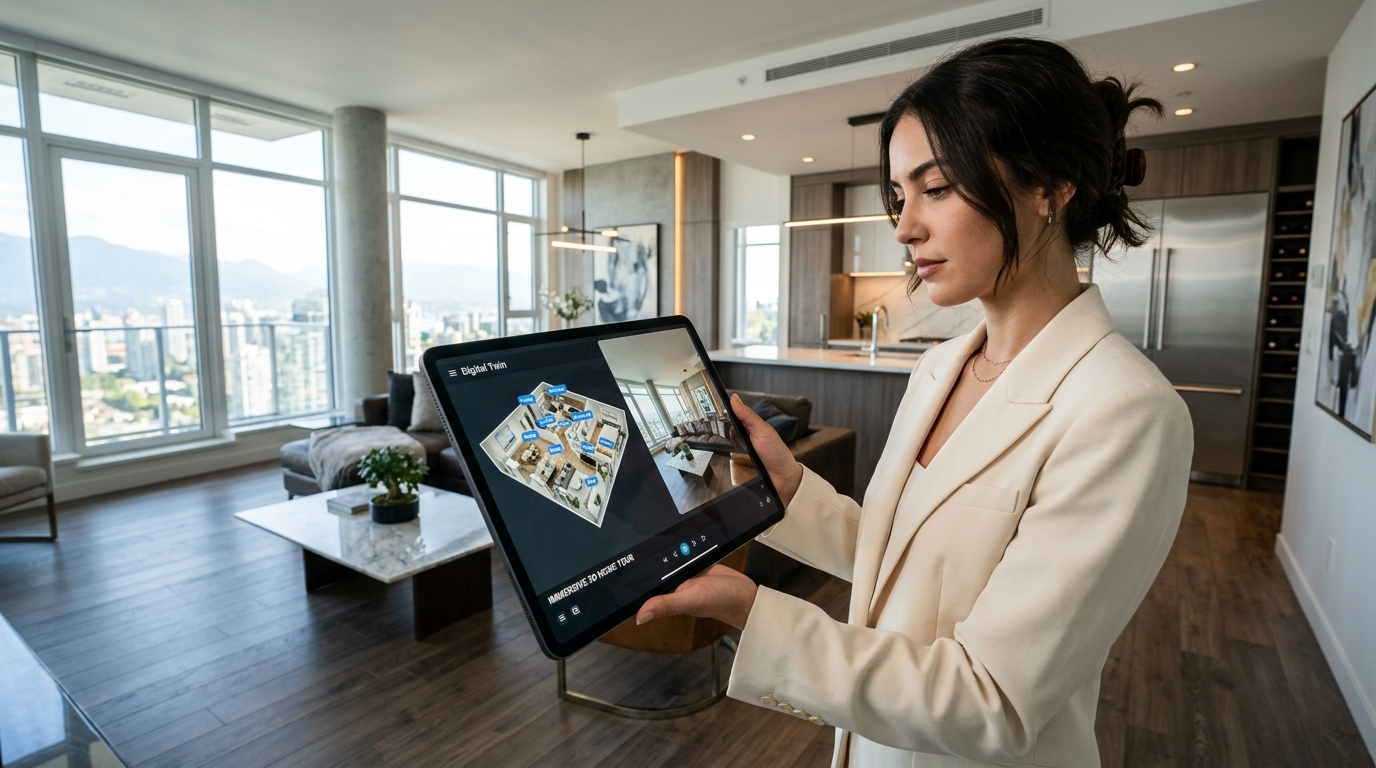
Perhaps more than any other single transaction a person may ever undertake, purchasing a home is one of the most impactful ones that they may ever be faced with. For the vast majority of human history, that transaction was tied to an experience of physical presence: the potential buyer had to view the property in person, traverse the spaces, and develop an emotional connection based on what he could literally observe. Printed pamphlets, architectural schematics drawn on paper and maybe even a few pictures taken in flattering lighting constituted the sum of the process.
That is all the past. Now, the development of 3-D real estate software is redefining the very way that potential buyers can explore, qualify and buy real estate, even before taking their first step through its front door. This transformation goes far beyond mere convenience, affecting every element of the home-buying process to the benefit of buyers, sellers, and real estate.
Why Traditional Property Marketing didn't work
If we understand the limitations that 3D real estate software has addressed, we should appreciate why it has become so popular.
Photographs are, by their very nature, misleading. A talented professional can transform a tiny bedroom into a palatial space, a gloomy kitchen into a welcoming haven and a tired bathroom into a luxurious sanctuary. Buyers quickly learn to decipher the photographic 'spin' that has been employed and 'allow' for the wide-angle lenses and deliberately controlled lighting. The outcome is a guessing game, which is tiresome for all parties concerned: buyers trudge through property viewings that do not match their initial expectations, while sellers entertain viewings that stand no chance of resulting in a sale.
Floor plans convey information which photos cannot, but you need a certain amount of visual awareness to accurately interpret a floor plan and an image on a flat page does not convey anything about its proportions, the light or indeed what it feels like to move around a house.
The difference between what a property marketing report purported the property to be and what the property was actually like was an ever-present obstacle to the property buying process, and it's a void that 3D real estate software is attempting to fill.
What Buyers Can Now Do That They Couldn't Before
Walk Through a Property From Anywhere
One of the most frequently utilised products of 3D real estate software, interactive virtual tours let prospective buyers explore properties as they would if they were there physically; buyers dictate where they go, stop to view the nuances, can look up to check the height of ceilings, and develop a true feel for how rooms fit together.
It completely revolutionises the short-listing process. A buyer can realistically assess twenty properties over the course of one afternoon, from his or her home, and trim the list down to the three or four worthy of seeing in person. The time saved - for buyers and for sellers, who wouldn't have to provide time-consuming, pointless tours to unlikely candidates - is substantial. Virtual tours make serious property searches accessible for busy individuals, disabled people, or people with families who can't make frequent trips to houses.
Experience Properties That Don't Exist Yet
Probably the greatest use of 3D real estate software to buy a house is to visualize off-plan homes - that is, a home that does not yet exist.
In the past you were taking a huge risk when you bought off-plan. A huge amount of cash was being tied up on the strength of what you hoped it would be. Showhomes and glossy brochures gave a certain impression but were no substitute for the feeling you could get from viewing a completed home.
With new 3D real estate software developers can provide buyers with extremely realistic and interactive tours of off-plan properties that represent every room, finish and every feature to the exact dimension. You can walk around the kitchen, determine the dimensions of the bedroom, visualize the view from the window of the lounge and essentially 'feel' what the space will be like - long before the first foundation has been laid.
This opens up off-plan properties to people who previously would have found it far too much of a risk to even consider and means international investors no longer need to physically visit these countries.
Visualise a Property's Potential
It is not always a home ready to move into that people are buying. A good number of people are buying to renovate opening walls, modernising kitchens, altering layouts and converting spaces. This process is now also becoming part of the three-dimensional real estate software support.
Certain features of the three-dimensional real estate software enable the buyer or their agent to load an existing property floor plan and play around with layout configurations in three dimensions. What will the light be like if the wall is opened up? How does an open space feel compared to separate rooms? What would a loft conversion really look like?
These were questions that would previously need an architect or designer to answer before an offer was even made, but the possibility for buyers to do so alone is growing and facilitating rapid and assured decision-making.
Understand Space More Accurately
The most common complaint from buyers who then visit a property in person, after viewing the online photos, is that "it was much smaller than we thought." Buyers are conditioned by wide-angle lenses, so before viewing a property, buyers mentally reduce the stated square footage, making the viewing the beginning of an expectation-correction process instead of a decision-making process.
3-D real estate software offers a spatially correct representation that is tied to real measurements. A 3D floor plan produced from the right scan data correctly renders the proportions between different rooms. The virtual tour derived from a correct scan has the true ceiling height and the true room dimensions. When buyers walk in for the physical viewing, their expectation is already in calibration instead of being either higher or lower than reality.
There is also a benefit for the sellers. Buyers who have already experienced the actual space correctly through the 3-D media are more likely to make purchase decisions because the actual property lives up to the expectations of the potential buyers rather than disappoint them.
How the Buying Journey Is Changing
The Shortlist Forms Earlier and More Accurately
In the old days of buying a home, your shortlist was only ever tentative-an arrangement of houses that sounded like they were worth checking out after a cursory initial assessment (before the real weeding out took place at viewing). A lot of the viewing time was, in fact, being paid for by seller and buyer in the form of lost afternoons and hopes raised then dashed.
3D real estate software allows more rigorous, accurate shortlists of houses to be created by potential buyers before viewing appointments need to be scheduled. The houses that make it to viewings will have already cleared a substantive test of suitability. Viewings are more efficient and likely to yield offers.
Buyers Are Better Informed at Every Stage
Buying a home is a process that occurs in a sequence of decision-making-under-uncertainty events: do I tour this house, do I make an offer, how much do I offer, do I go forward after the survey? Better information at each step results in better decisions, and 3D real estate software delivers more information than any other medium has before.
The buyer who has spent 20 minutes on an exhaustive tour of a house is not showing up for the viewing with broad-brush ideas, but with specific questions; he already knows what he does and doesn't like about the floorplan, and the in-person tour is used to answer those questions that 3D could not address: what does the neighborhood smell like, how loud is the street, what does the street feel like. The result is a decisive buyer. When the physical showing confirms what the 3D tour suggested, the buyer is ready to act.
Remote and International Buying Becomes Viable
The rise of teleworking, enhanced international mobility, and buyers actually moving from one town or country to the next have brought about more pressure on a property buying process that cannot rely solely on physically being on site.
3D real estate software can really offer the possibility of shortlisting and meaningfully considering properties where visits are not always feasible. International relocating professionals can investigate and filter properties from their current town, international investors can thoroughly research properties without the need to fly over for due diligence and even expatriates buying in their native country can take an active role in buying without flying in for each visit.
While on-site viewing will likely still be essential in order to finally make a real purchase decision in most markets, 3D content has enriched the pre-viewing phase of a distance sale, now a fully developed stage of the remote purchasing process.
Emotional Connection Happens Sooner
Buying a house isn't all about calculating square footage or analyzing the local school district -- it involves thinking about whether you can see yourself living in a particular place. That feeling, the emotional part, is what's so important.
Excellent 3D real estate software – especially outstanding virtual tours and photorealistic renderings – is a great way to tap into this emotional appeal before you even set foot inside a property. When a buyer remarks that they fell in love with the house on the web even before they'd visited it, they are testifying to the emotional impact of this 3D media. This kind of earlier emotional connection is an advantage for the seller: buyers who show up to the open house already invested emotionally are far more likely to make an offer.
The Effect on Different Types of Buyers
First-Time Buyers
Perhaps the largest challenge to overcome when looking at property is learning exactly what you want. First-time buyers rarely know what their needs really are. A floor plan can be difficult to translate; they’re likely new to viewing multiple properties, and will be overwhelmed by information.
3D real estate software can make properties easier to understand in a more visual sense. A 3D floor plan explains a home’s structure more readily than a 2D format. A virtual viewing allows them to virtually walk around the home, which feels less awkward or high-pressure than a physical viewing. First-time buyers can come back to viewings many times and can easily share the viewing experience with family members.
The outcome is first-time buyers who feel more in control and are better informed, which saves them valuable time visiting properties that aren’t right and ensures they have the knowledge to give viewers information that they may not have.
Downsizers and Lifestyle Movers
Those who are downsizing or are "lifestyle movers", which covers relocation, a holiday home or a retirement community often have problems evaluating property in areas they are not acquainted with. They may not know where on the spectrum their viewings are located and may not want or be in a position to travel long distances several times.
The use of virtual tours and detailed 3D content allows this group of buyers to carry out thorough pre-visit research in a remote manner, enabling them to get to know the property's layout, the "feel" of the property and whether it really could have potential before investing their time and money in a site visit.
Investors
It has always been an issue for property investors trying to view more than one investment property at once, due to time restrictions. Seeing 10 properties that you might consider as investments across several cities in a week is incredibly difficult to schedule.
Now it is possible to actually make real assessments of more than one property at a time without scheduling difficulties. Investors can determine layout and quality and compare the potential of the property much more thoroughly than with static photographs, saving physical trips to less impressive properties.
What Remains Important About Physical Viewings
Though 3D real estate software has revolutionised property purchasing, it will not replace physical viewings, at least for the foreseeable future. There are elements that a 3D experience cannot transmit.
The natural light in a space throughout the day. The street noise. The mustiness in a basement. The vibe of an area at street level. That "gut feeling" that washes over you as you step into a space. These are intangible elements that can only be revealed by being in a place in person.
3D real estate software simply makes physical viewings more efficient, more targeted. Buyers show up already knowing the layout and the basics, and therefore are equipped to take a physical viewing more as a confirmation and as an investigation, rather than a first introduction.
The most productive way of purchasing is in stages: 3D research, followed by physical confirmation.
Challenges Worth Acknowledging
Accuracy Standards Vary
Again, not all 3D real estate software creates accurately. When these 3D worlds are created from bad scans, from renders of images that don't actually look like the property itself or don't correspond to the real dimensions and measurements, from floor plans that are incorrectly scaled. It is no different than deceptive pictures. This sector of the industry is advancing better standards for accuracy and a lot of the software uses the more modern technology, like LiDAR scanning or photogrammetry, which gives dimensions accurately. Buyers should take 3D as essentially another tool with information that they should also check themselves.
Access Is Uneven
High-priced homes, new constructions, and properties being sold by larger agencies are where most of the 3D property content is. Potential buyers who look at homes in smaller price ranges or who search in markets where many agencies are less likely to use this software may realize that 3D options simply aren't available for the majority of the listings in which they have an interest.
This will be an evolving problem, as market adoption is sure to rise, but it does create a market where there is unevenness in real estate software adoption.
Learning to Read 3D Content
The 3D tours should be fairly easy for most people to get to grips with, although for some, more so elderly people who have grown up with much less interaction with the digital world than young people today, they may be slightly less easy to get around than a selection of photos. User experience of these tours is improving drastically.
Where This Is Heading
Considering the way 3D real estate software has been evolving, we may have witnessed only the beginning of the change. Here are a few expected developments that will intensify the change in home buying over the next few years to come.
Real-time customisation The capability to do this is increasing as rendering becomes better and better. Instead of looking at the property as it is, or as it's staged to be, a potential buyer could change finishes, layout and furnishings as they are taking the tour in real-time, and see not the property, but the potential property.
AI-driven personalisation This is now starting to emerge on some platforms, with agents able to draw up properties based on how a buyer has told them their desires are, by monitoring their behavior in the virtual tours- what rooms the person stays in longest and what features they examine more thoroughly.
Integration with other buying process tools, such as mortgage calculators, conveyancing trackers, and survey reports will allow users to bring up all relevant information about a property within the 3D experience without having to change between different, disjointed applications.
Augmented reality enables users to be on site in an empty building and visualize virtual furniture, intended renovations or developed floor plans-a complete blending of real space with virtual.
Final Thoughts
Historically, information asymmetry has characterized home buying: sellers and agents have possessed all information about a property, while buyers have made one of life's largest purchase decisions with limited exposure. 3D real estate software is increasingly and methodically evening that playing field, providing buyers with more accurate, accessible and richer information than any real estate vehicle before.
The market benefits: buyers become more confident, more informed, less subject to disappointment that a home does not live up to its rendering. Sellers gain more engaged buyers and feel more comfortable accepting offers from informed parties. And the process, from initial browsing through to offer, gains more certainty for all involved.
3D real estate software hasn't completely rewritten the process of buying a home; however, it has made one of life's most important purchase decisions a little clearer, a little more approachable, and a lot more based on fact than luck.
 Greek
Greek
 English
 Arabic
 French
 Spanish
 Portuguese
 Deutsch
 Turkish
 Dutch
Dutch
 Italiano
 Russian
 Romaian
 Portuguese (Brazil)
