


 Pro Benefits
 Σχετικά
 Όρους
Όρους
 Ιδιωτικότητα
 Child Safety & Protection
 Ειδοποιήσεις
 Ayrush Global It Services Pvt Ltd
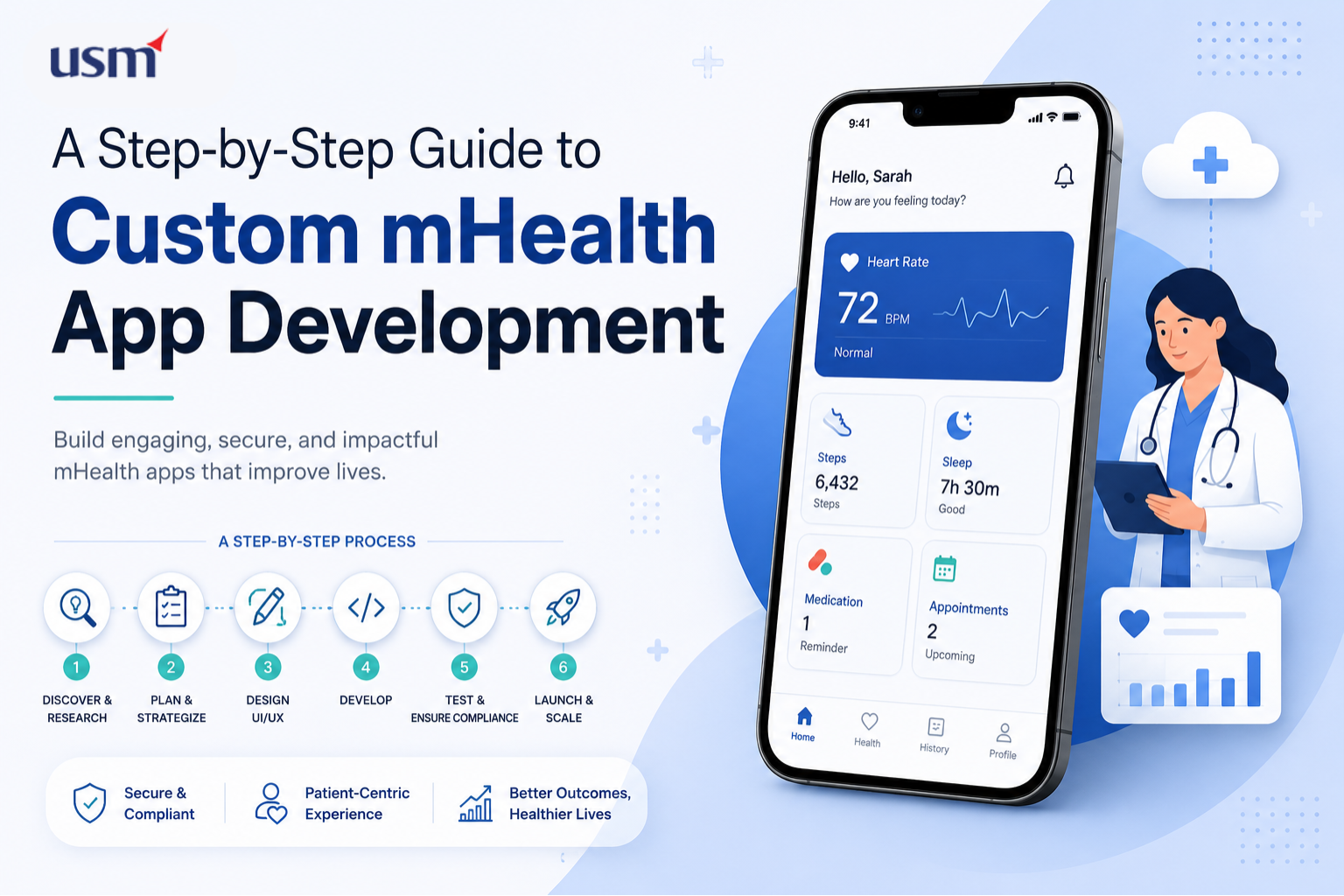
A Step-by-Step Guide to Custom mHealth App Development
Introduction
Healthcare is becoming increasingly digital, and mobile health applications are playing a major role in transforming how patients and healthcare providers interact. From scheduling appointments and accessing prescriptions to monitoring health conditions remotely, mHealth applications improve accessibility, convenience, and patient outcomes.
Custom mHealth app development enables healthcare organizations to build tailored solutions that meet specific clinical and operational requirements. With the growing adoption of smartphones and connected healthcare technologies, investing in mobile healthcare solutions has become a strategic priority for healthcare providers worldwide. Additionally, advancements in AI in healthcare are creating new opportunities for smarter patient engagement and care delivery.
What is mHealth?
Mobile health (mHealth) is the intersection of mobile technology and healthcare. mHealth applications facilitate the management of health information by both patients and healthcare professionals. They assist in the monitoring of health status, the collection of health data, and the improvement of health communication.
The main concern when developing mHealth solutions is the accessibility of healthcare. mHealth applications are designed to meet healthcare regulations and data privacy standards.
Types of mHealth Applications
The custom development of mHealth applications primarily focuses on two user groups: patients and healthcare providers.
Patient-Oriented Applications
The main goal of these applications is to provide patients with the tools to better manage their health.
Common Features of mHealth Applications Include the Following:
-
Tracking health and fitness
-
Recording and reminding
-
Monitoring and reporting health status
-
Maintaining a personal health record
-
Mental wellness
-
Chronic disease management
Healthcare Provider Applications
These applications are designed to improve healthcare providers' workflows and enhance the quality of care they provide to their patients.
Common capabilities include:
-
Electronic Health Record (EHR) access
-
Clinical decision support systems
-
Telemedicine functionality
-
Patient management tools
-
Medical education resources
-
Medical imaging access
Key Features of Custom mHealth Applications
Building a mHealth solution that balances the user and health system needs requires different capabilities.
Telemedicine Capabilities
Telehealth solutions provide patients an opportunity to connect to care via video/audio conferencing and other forms of virtual engagements.
E-Prescribing Functionality
E-prescribing eliminates the steps taken to write and hand-deliver a prescription to a pharmacy.
Health and Wellness Tracking
Health and wellness tracking can take a number of forms. Common features integrate tracking of activity, heart rate, sleep, stress and nutrition.
Features that Support Medication Adherence
Medication adherence solutions provide patients reminders to take their medications.
Health Information Exchange
Healthcare Information Exchange provides secure and real-time access to patient information and promotes data protection.
Medical Billing and Payment Integration
Features that support the billing of a medical practice and prompt payment of services rendered.
Benefits of Custom mHealth App Development
Improved Access to Healthcare
Health care services can be accessed almost anywhere.
Better Patient Engagement
Care is provided via the continual monitoring and engagement of the care team.
Enhanced Care Management
Healthcare providers can monitor patient progress, identify issues early, and provide timely interventions.
Operational Efficiency
Automation of administrative processes reduces workload and improves healthcare delivery.
Personalized Healthcare Experiences
By utilizing Generative AI Personalized Medicine in conjunction with new mHealth technologies, modern mHealth systems can provide more sophisticated and tailored options as part of individualized treatment plans.
mHealth App Development Process
Creating an mHealth App
To develop a custom mHealth app, a reliable methodology needs to be in place.
Step 1. Establish the Business Goals
The problems the app is intending to solve in healthcare should be identified, and targets should be set that can be evaluated.
Step 2. Identify the Users
Developing a healthcare app requires an understanding of users in the form of patients and/or providers.
Step 3. Market Analysis
Development should only begin after an appraisal of the market and its legal frameworks, competitors, and available technologies.
Step 4. Core Functions
The functions of the app should be aligned to user expectations and the goals of the healthcare business.
Step 5. User Experience
Interfacing with the system should be designed to improve the accessibility and diminutive focus of the system.
Step 6: Develop and Integrate
Build the application architecture, integrate healthcare systems, and implement security measures.
Step 7: Ensure Regulatory Compliance
Healthcare applications must comply with applicable regulations and data protection requirements.
Step 8: Testing and Quality Assurance
Perform comprehensive testing to ensure reliability, security, and performance.
Step 9: Deployment and Maintenance
Launch the application and provide ongoing updates, support, and feature enhancements.
Challenges in Developing mHealth Applications
Regulatory Compliance
To meet healthcare regulations and privacy standards is one of the greatest challenges in development.
Data Security
The frameworks ensuring the protection of patient data incur an operational burden.
System Integration
Connecting to Record Systems (Electronic), Insurance Systems, and Healthcare data Systems presents challenges.
User Adoption
Health applications need to be simple to use if they are to be adopted and engaged with by patients and health providers.
Future Trends in mHealth
Artificial Intelligence Integration
Advanced analytics and intelligent automation are helping healthcare organizations improve decision-making and patient outcomes.
Remote Patient Monitoring
Wearable devices and connected sensors are enabling continuous health monitoring outside traditional healthcare settings.
Personalized Healthcare
Data-driven healthcare solutions are making treatment plans more individualized and effective.
Machine Learning-Powered Applications
Organizations exploring the cost to develop ML based healthcare app are increasingly investing in predictive analytics, patient monitoring, and intelligent diagnostic solutions.
What Does Custom mHealth App Development Cost?
The cost of custom mHealth app development is determined by the degree of
-
Complexity
-
Required features
-
Selections of app platforms
-
Security and compliance
-
Third-party app integration
-
AI and analytics capabilities
Before costs can be accurately predicted, organizations need to establish their project requirements. Engaging with an experienced AI app development company will assist in further defining project requirements and will address the liabilities of app development within the healthcare market.
Why Choose USM Systems for Custom mHealth App Development?
USM Systems specializes in building secure, scalable, and feature-rich healthcare applications tailored to the needs of healthcare providers, hospitals, clinics, and health-tech startups.
Our team develops custom mHealth solutions that support:
-
Telemedicine platforms
-
Remote patient monitoring
-
EHR and EMR integrations
-
Health tracking applications
-
Healthcare analytics solutions
-
AI-powered healthcare innovations
We focus on delivering secure, compliant, and user-friendly applications that improve patient engagement and streamline healthcare operations.
Conclusion
Custom mHealth applications are transforming healthcare delivery by improving accessibility, enhancing patient engagement, and supporting better clinical outcomes. Whether you are developing a telemedicine platform, a health monitoring application, or a patient management solution, a well-planned development strategy is essential for long-term success.
Schedule Your Free Consultation
Looking to build a custom mHealth application for your healthcare organization?
USM Systems can help you design, develop, and deploy secure healthcare solutions tailored to your business goals.
Book your free strategy session today:
 Greek
Greek
 English
 Arabic
 French
 Spanish
 Portuguese
 Deutsch
 Turkish
 Dutch
Dutch
 Italiano
 Russian
 Romaian
 Portuguese (Brazil)
