


 Pro Benefits
 About
About
 Voorwaarden
 Privacy
 Child Safety & Protection
 Meldingen
 Ayrush Global It Services Pvt Ltd
How to Weatherproof Your Hangar Door Opening
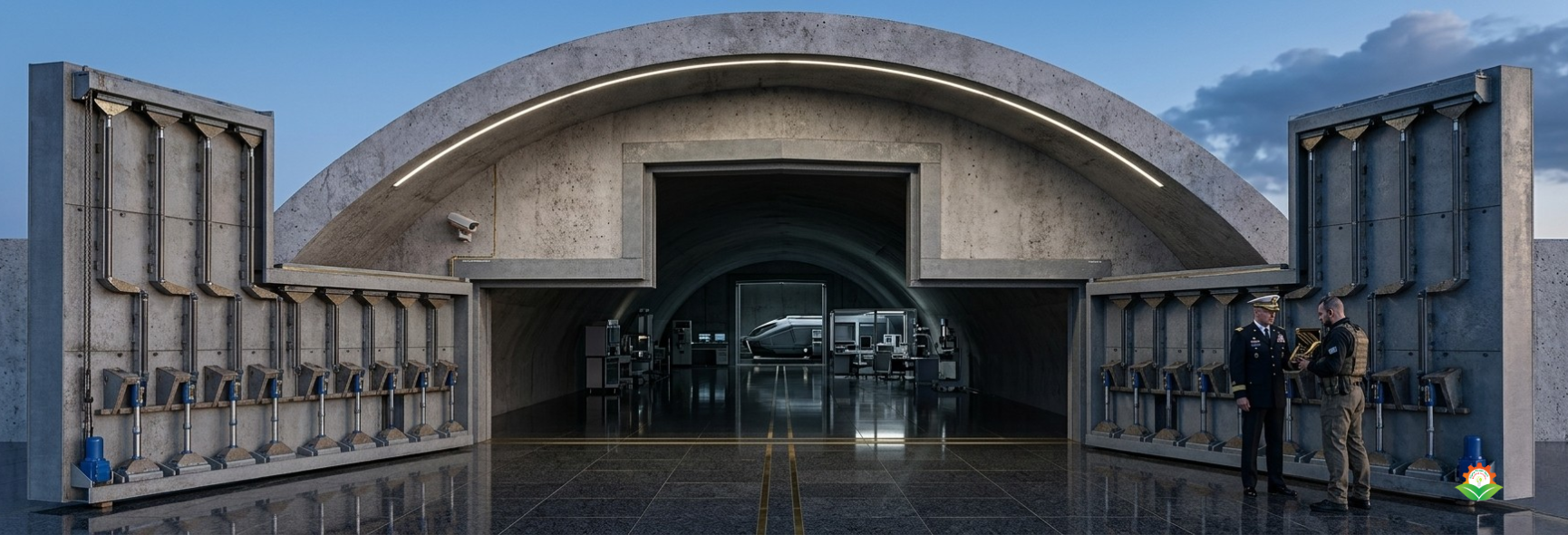
An MRO facility on India's western coastline spent two monsoon seasons dealing with the same problem: water ingress along the base of their primary aircraft hangar door, corrosion tracking up the structural frame, and humidity levels inside the hangar that were triggering avionics protection protocols on parked aircraft. The door itself was structurally sound. The weatherproofing was not.
This is a more common failure mode than the industry acknowledges. The hangar door gets specified carefully — span, structural rating, automation system — and the weatherproofing detail gets treated as a finishing item. By the time the facility is operational, the gap between engineering intent and actual weather performance is already built in.
Why Hangar Door Weatherproofing Deserves Serious Engineering Attention
A commercial or industrial building can tolerate some weather infiltration without immediate operational consequence. An aircraft hangar cannot. Moisture intrusion affects composite airframe components, sensitive avionics, hydraulic systems, and the corrosion protection applied to airframe structure. In precision aerospace manufacturing environments, even modest humidity variation outside controlled parameters can affect dimensional tolerances on critical parts.
The weatherproofing system on an aircraft hangar door is not a sealing detail — it is an aircraft protection system.
The Four Primary Infiltration Points
Understanding Where Weather Gets In
Every hangar door opening has four vulnerability zones that require distinct engineering solutions:
The threshold is the highest-risk point for water ingress. Large clear-span openings sit close to finished floor level by operational necessity — aircraft need to taxi in without gradient change. This means the threshold seal must handle both driving rain and, in many locations, standing water during high-rainfall events. Bottom-seal design, threshold drainage channels, and door leaf geometry at the base all contribute to threshold performance.
Head seals at the top of the opening are most exposed to wind-driven rain and airborne debris. Bi-fold and sliding door configurations create different head seal challenges; the engineering approach varies accordingly.
Jamb seals along the vertical edges of the opening need to accommodate door movement and thermal expansion without creating gaps. Rigid seals fail at jambs; compression-type or brush seal systems perform better under the operational cycling that large aviation doors experience.
Across door leaf joints — particularly on multi-panel sliding systems — the interface between adjacent panels is a persistent infiltration pathway if not addressed in the hangar door design specification.
Weatherproofing Systems That Work in Aviation Environments
The seal systems used on industrial warehouse doors are often inadequate for aircraft hangar applications. Aviation environments impose higher humidity cycling, salt spray exposure at coastal sites, and the operational frequency of facilities that open and close door systems multiple times daily.
Compression bulb seals along jambs and heads provide reliable performance over high operational cycles. They accommodate minor structural movement without losing contact and can be replaced without structural intervention.
Brush seals are effective at threshold and jamb positions where rigid compression seals would conflict with door movement mechanics. They handle surface irregularity well — important for older facilities where floor and frame geometry has shifted over time.
Inflatable seals represent the most engineered approach for facilities with precise environmental control requirements. Activated when the door is closed, they provide near-zero infiltration performance. They are used in aerospace manufacturing hangars and defence facilities where internal environment management is a design requirement, not a preference.
Drainage integration at the threshold is as important as the seal itself. Where water reaches the threshold — and on exposed sites it will — a drainage channel prevents accumulation against the door base. This detail is frequently omitted from standard hangar door specifications and accounts for a significant proportion of water ingress complaints.
Facilities evaluating integrated weatherproofing as part of a complete door system specification will find that defence-grade and blast-rated systems, such as those documented for Hangar door applications, typically incorporate the most rigorous sealing arrangements because the consequences of infiltration in those environments are most acute.
Environmental Factors That Should Drive the Specification
India's aviation infrastructure spans a climate range that is unusually demanding — from high-humidity coastal sites in Kerala and Gujarat, to the dust exposure of Rajasthan, to freeze-thaw conditions at high-altitude facilities. A weatherproofing specification that performs at a temperate inland site may fail quickly on the Konkan coast.
Hangar door manufacturers in India who operate across these environments understand that material selection and seal system design must be site-specific. Neoprene seals that perform well in temperate conditions degrade faster under continuous UV exposure and salt spray. EPDM alternatives offer better UV and ozone resistance for coastal and high-altitude applications.
The wind-load rating of the door structure and the seal system need to be considered together. A door rated to withstand cyclonic wind loads while the seals leak under moderate driving rain has solved half the problem. Sigma Power Tech hangar door systems designed for exposed coastal and defence environments address both structural wind performance and weather sealing as integrated specifications.
Maintenance: The Part Most Facilities Get Wrong
Even the best-specified seal system degrades with time and operational cycling. The error most facilities make is treating seal maintenance as reactive — replacing seals after infiltration is noticed rather than inspecting and replacing on a defined schedule.
Compression seals should be inspected annually as a minimum, with replacement cycles based on material condition rather than calendar intervals. In high-frequency operations, inspection intervals should be shorter.
Door leaf alignment directly affects seal performance. As structures settle and thermal cycling accumulates, door leaf geometry shifts relative to the frame. Regular alignment checks — part of any credible aircraft hangar door maintenance programme — prevent the gradual seal degradation that develops when gaps appear at compression points.
Conclusion
Weatherproofing a hangar door opening is not a detail to be resolved during construction snagging. It is an engineering specification that protects aircraft, preserves facility infrastructure, and determines whether internal environment control is actually achievable in practice.
The threshold, head, jamb, and panel joint interfaces each require deliberate engineering attention. Material selection must reflect the site's specific climate exposure. Maintenance must be scheduled, not reactive.
 Dutch
Dutch
 English
 Arabic
 French
 Spanish
 Portuguese
 Deutsch
 Turkish
 Italiano
 Russian
 Romaian
 Portuguese (Brazil)
 Greek
Greek
