


 Pro Benefits
 Sobre
Sobre
 Termos
 Privacidade
 Child Safety & Protection
 Notificações
 Ayrush Global It Services Pvt Ltd
How Intelligent Routing Enhances Logistics Performance?
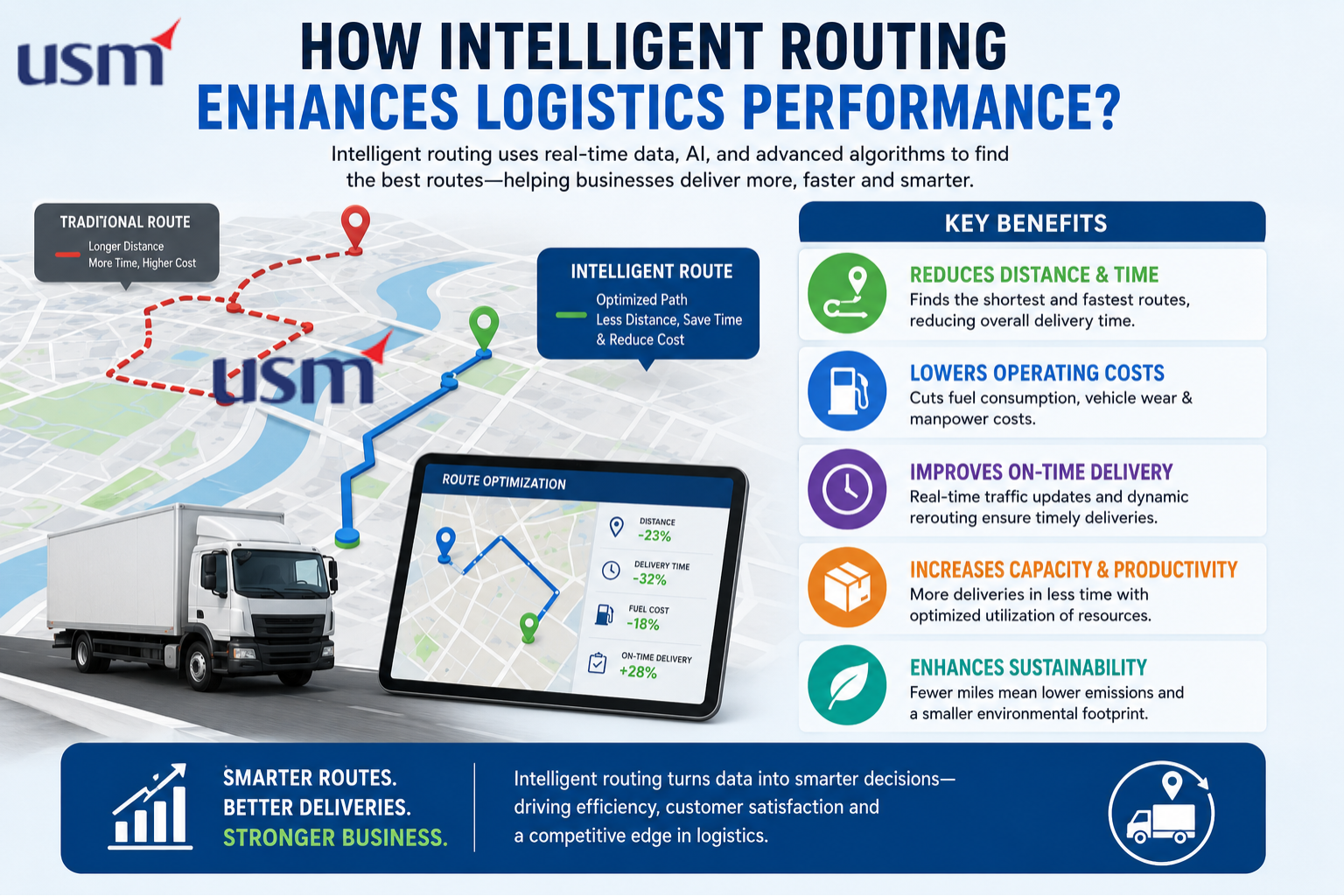
Rising costs and delays in transit network systems challenge modern logistics. Coupling that with the variability of fuel prices and the growing expectations of customers creates a fundamentally untenable situation. The need for innovative supply chain management has made routing intelligence essential.
The combination of AI, real-time data, and analytics has created the ability for logistics to optimize their delivery paths and improve the use of their delivery fleets. As the digital age continues to be embraced, the added intelligence for routing has empowered logistics systems for businesses and aided customer satisfaction.
The Nature of Routing Intelligence
Routing intelligence refers to the automated selection of delivery pathways using algorithms for the most favorable delivery schedule and the least restrictive delivery network.
Unlike traditional route planning, which relies on manually inputted data onto a digital map and static paths, intelligent routing examines the ever-changing environment to optimize logistics routing. Intelligent systems use transport management software to create more visibility in the logistics routing process.
The Necessity of Advanced Logistics Systems
Logistics used to be very simple, but with the increase of customer satisfaction drivers, it has become more complex and difficult to manage.
Automating decision-making for routes and providing logistics teams with insights is how intelligent routing systems mitigate these concerns. With this, organizations can operate with fewer resources and more service when demand is high, while also reducing internal friction.
How Intelligent Routing Works
In smart routing, several systems feed information for decision-making. This can include:
-
GPS systems
-
Traffic systems
-
Weather systems
-
Delivery systems
-
Vehicle systems
-
Customer systems
From all this information, smart systems can decide the best route for a vehicle and will continually check for any changes.
To take routing a step further, smart systems can employ AI and machine learning to do all of this, but also be able to create informed predictions for disruptions before they even occur.
How AI Optimizing Logistics makes a Difference
Lower Costs
When routes become optimized, a smart routing system should make transportation cheaper. Because unnecessary mileage and time is decreased and fuel becomes optimized, businesses should become more profitable the cheaper transportation costs become.
AI logistics optimization enables organizations to identify cost-saving opportunities that traditional planning methods often overlook. Studies show that optimized routing can substantially reduce fuel consumption and overall operating costs.
Quicker Deliveries
Timely and reliable deliveries should be the standard expectation of any delivery system. Because smart routing systems find the best delivery routes, meeting this expectation becomes possible.
One of the major driving goals of smart routing systems is to ensure that deliveries arrive on time. In order to accomplish that, a routing system should be able to identify delays and route around them in real time.
Improved Fleet Optimization
Companies can pack their vehicles more fully and drive them with fewer empty miles by planning their routes better. Further, often, the same number of vehicles can handle more pick-ups if you route more optimally.
Utilizing your fleet more fully is a better fleet optimization and can mean more productivity and better returns on your transportation spend.
Improved Customer Experience
Timeliness of delivery is one of the biggest determining factors of how satisfied a customer is. Better routes mean better delivery timeliness and more accurate delivery notifications that keep the customer engaged.
Deliveries with better timeliness and advanced notifications lead to stronger customer loyalty and a more trustworthy customer relationship.
Better Visibility for Operations
Fairly complete and accurate operational visibility is required for any large scale transportation planning. Modern intelligent routing systems give planning and management teams this visibility.
More operational visibility helps effectively manage problems and better plan and set goals for the future.
Artificial Intelligence for Route Optimization
Artificial intelligence is one of the tools improving the proactive rather than reactive nature of route optimization. Traditional routing systems assign you a route and wait for you to tell them that a problem has occurred. Modern routing systems, by contrast, can discover a problem on their own and adjust accordingly.
This reduces operational risk and helps maintain consistent logistics.
The Real-Time Decision Making Advantage for Dynamic Logistics
There are a lot of factors in constant flux that can disrupt already planned logistics. Road work that causes a detour, a delivery request that changes the routing, a delivery that is behind schedule, or heavy traffic. Even the weather can be a factor.
Intelligent routing systems make constant adjustments based on continually monitored information. This ability to adapt helps stay deliveries on time and schedules as undisturbed as possible.
Taking advantage of real-time routing technologies offers a strong competitor edge from increased responsiveness and reliability.
Mobile Applications and Intelligent Routing
Today's logistics tasks depend more than ever on the mobile devices of the workforce. Drivers are now able to receive real-time routing and delivery updates. They also have the ability to contact dispatch and provide delivery confirmations via mobile apps.
Fleet and logistics managers can partner with the Best Mobile App Development Companies to create tailored logistics apps on their behalf.
Mobile technologies create a connected logistics system and optimize the delivery ecosystem.
Predicted Developments in Logistics
The more easily developed and integrated disruption technologies of AI and Leapfrog technologies of machine learning, real time data processing and routing, IoT (Internet of Things), autonomous vehicles, and predictive analytics will push the ease and cost of automation and routing even more.
Those businesses that invest today in the optimization of the AI and other logistic disruption technologies will be best positioned to the rapidly evolving requirements of the markets to retain a competitive advantage.
Benefits of Intelligent Routing
Increased productivity and efficiency and decreased costs and increased satisfaction from customers and improved delivery are all readily measurable benefits to intelligent routing.
By using automation and real-time routing, businesses are able to optimize their delivery operations. Intelligent routing systems have become a necessity for keeping logistics systems competitive.
About USM Systems
USM Systems is a leading AI app development company delivering innovative digital transformation solutions for businesses worldwide. We specialize in AI-powered applications, logistics software, enterprise mobility solutions, automation platforms, and intelligent transportation systems that help organizations optimize operations and accelerate growth.
We utilize our extensive expertise to align the latest technology to our customers’ needs and deliver tailor made, scalable solutions.
Conclusion
The Logistics Sector stands to gain a lot from the advantages of intelligent routing. These include reduced operating costs, optimized fleet utilization and improved delivery and customer service. With the inevitable growth of the Logistics Sector AI based Logistics Optimization is needed by businesses in order to gain a competitive advantage.
Would you like to use intelligent routing or custom design your logistics system? Contact USM Systems, we can help.
 Portuguese (Brazil)
 English
 Arabic
 French
 Spanish
 Portuguese
 Deutsch
 Turkish
 Dutch
Dutch
 Italiano
 Russian
 Romaian
 Greek
Greek
