


 Pro Benefits
 About
About
 Termini e Condizioni
 Privacy
 Child Safety & Protection
 Notifiche
 Ayrush Global It Services Pvt Ltd
Revenue Cycle Management Services & Medical Billing Services: The Complete Guide to Maximizing Healthcare Revenue
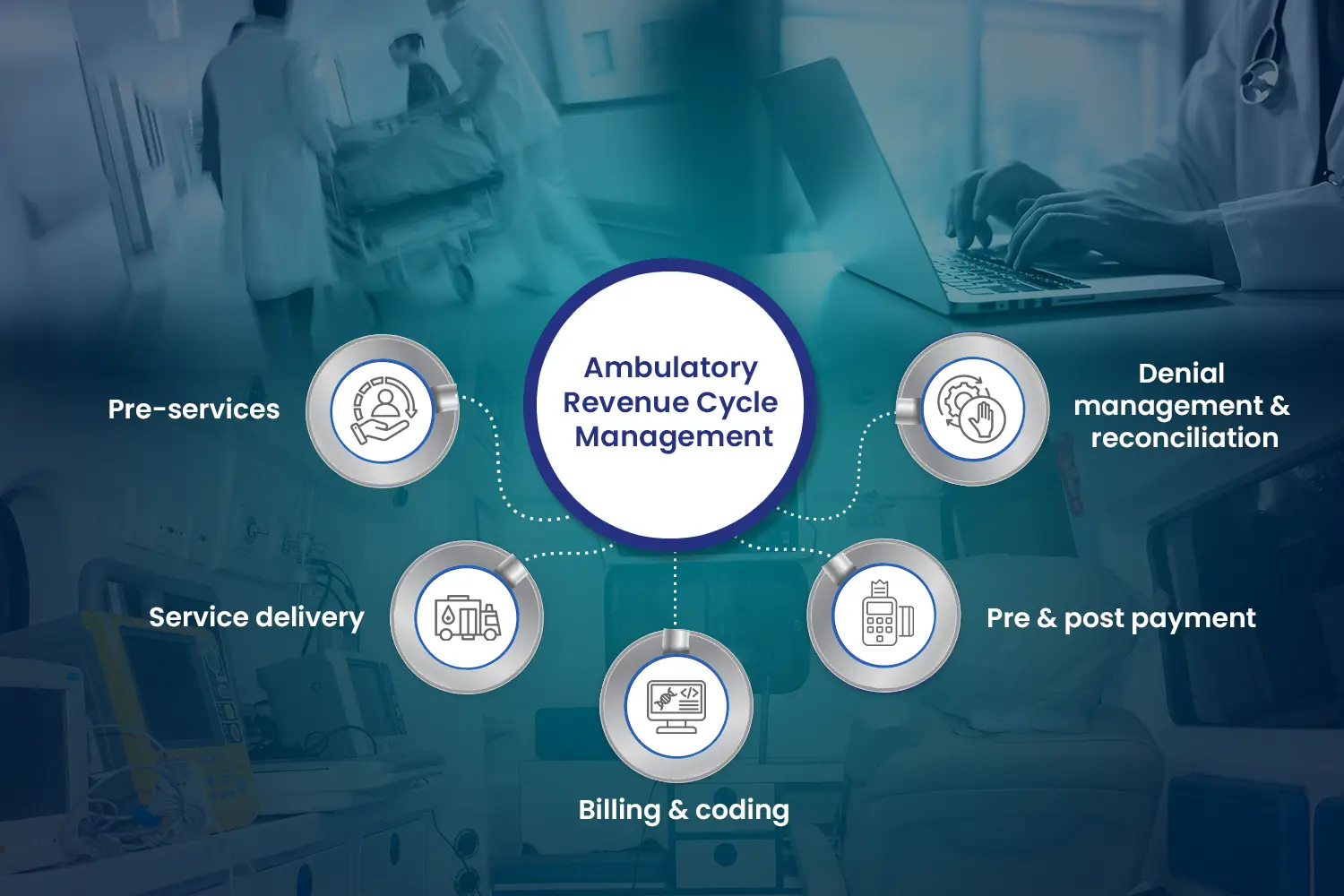
Running a successful healthcare practice demands excellence on two fronts — clinical and financial. While providers focus on delivering outstanding patient care, the business side of medicine quietly determines whether a practice thrives or struggles. Claim denials pile up, payments are delayed, coding errors go unnoticed, and revenue that was rightfully earned simply disappears into administrative inefficiency. This is precisely why revenue cycle management services and medical billing services have become essential partners for healthcare organizations of every size — from solo practitioners to large multi-specialty groups. These services ensure that every dollar earned through patient care is accurately captured, correctly billed, and fully collected. This guide breaks down what these services involve, how they work together, and how to choose the right partner for your practice.
What Are Revenue Cycle Management Services?
Revenue cycle management (RCM) services refer to the comprehensive management of a healthcare organization's financial processes — from the moment a patient schedules an appointment to the final resolution of their account. It is an end-to-end system that connects clinical documentation, administrative processes, and financial operations into a single, coordinated workflow.
The core components of RCM services include:
- Patient scheduling and pre-registration — collecting demographic and insurance information accurately before the visit
- Insurance eligibility and benefits verification — confirming active coverage, co-pays, deductibles, and prior authorization requirements before services are rendered
- Charge capture — ensuring every billable service, procedure, and supply is documented and entered for billing
- Medical coding — translating clinical documentation into ICD-10, CPT, and HCPCS codes that payers use to process claims
- Claims submission — sending accurate, complete claims to insurance payers electronically within required filing deadlines
- Payment posting — recording and reconciling payments received from payers and patients against expected reimbursements
- Denial management — identifying denied claims, determining root causes, correcting errors, and submitting appeals to recover revenue
- Accounts receivable (AR) follow-up — pursuing outstanding balances with payers and patients to reduce AR days
- Patient billing and collections — generating clear patient statements, offering payment plans, and facilitating balance collection
- Reporting and analytics — providing performance dashboards that give providers visibility into financial KPIs
When RCM services are executed effectively, the result is a financially healthy practice with consistent cash flow, minimal denials, and maximum collections.
What Are Medical Billing Services?
Medical billing services are a critical component within the broader revenue cycle, focused specifically on the process of submitting and following up on claims with insurance payers to receive payment for healthcare services rendered. While RCM covers the entire financial lifecycle, medical billing zeroes in on the claims process itself.
Professional medical billing services include:
- Charge entry — entering procedure and diagnosis codes into the billing system based on provider documentation
- Claim preparation and scrubbing — reviewing claims for errors, missing information, or coding inconsistencies before submission to reduce denial risk
- Electronic claim submission — transmitting clean claims to insurance payers via clearinghouses within required timeframes
- Explanation of Benefits (EOB) review — analyzing payer responses to verify correct reimbursement and identify underpayments
- Secondary billing — submitting claims to secondary or supplemental insurance payers after primary payer adjudication
- Denial resolution — correcting and resubmitting denied claims with appropriate documentation and appeals
- Patient statement generation — producing clear, accurate bills for patient balances after insurance adjudication
- Payment reconciliation — ensuring all payments received match expected reimbursements and identifying discrepancies
Outsourcing medical billing to a specialized service removes one of the most complex and time-consuming administrative burdens from healthcare providers, allowing clinical teams to focus entirely on patient care.
How RCM Services and Medical Billing Work Together
Medical billing and revenue cycle management are deeply interconnected. Medical billing is the engine that drives reimbursement — but without the broader RCM infrastructure surrounding it, even the best billing process will underperform.
Consider this sequence: A patient arrives for a visit. If their insurance eligibility was not verified beforehand (an RCM function), the claim may be denied for coverage issues. If the provider's documentation was not complete (a charge capture issue), the coder may assign an inaccurate code, leading to an underpayment or denial. If the claim is denied and no one follows up (a denial management failure), that revenue is written off entirely.
Every stage of the revenue cycle feeds into the next. RCM services provide the strategic framework and operational infrastructure that ensures medical billing operates with maximum efficiency and accuracy. Together, they form a financial management system that protects every dollar a practice earns.
The Real Cost of Poor Revenue Cycle Management
Many healthcare providers do not realize how much revenue they are losing until they conduct a thorough audit of their billing and collections processes. The numbers are significant:
- The average claim denial rate in healthcare is between 5% and 10%, and many denied claims are never successfully reworked
- Up to $125 billion in healthcare revenue is lost annually in the United States due to billing inefficiencies and uncollected claims
- The average cost to rework a single denied claim is estimated at $25 to $30 — and high denial volumes make this a substantial hidden cost
- Practices with poor AR management routinely carry 60 to 90+ day AR balances, tying up cash that should already be in the bank
- Coding errors — both undercoding and upcoding — result in either lost revenue or serious compliance exposure
Professional revenue cycle management services and medical billing services directly address every one of these issues, recovering lost revenue and preventing future leakage through proactive, expert management.
Key Benefits of Outsourcing RCM and Medical Billing Services
The decision to outsource revenue cycle management and medical billing is one of the most impactful operational choices a healthcare practice can make. The benefits include:
- Faster reimbursements — Clean claim submission and proactive follow-up shorten the payment cycle and improve cash flow
- Higher clean claim rates — Expert billing teams achieve first-pass acceptance rates above 95%, reducing rework and delays
- Reduced denial rates — Proactive eligibility verification, accurate coding, and pre-submission claim scrubbing prevent the majority of avoidable denials
- Improved compliance — Specialized billing teams stay current with CMS guidelines, payer-specific rules, and annual coding updates, protecting the practice from audits and penalties
- Lower operational costs — Outsourcing eliminates the overhead of hiring, training, and retaining in-house billing staff and investing in billing technology
- Scalability — RCM and billing services scale seamlessly with practice growth, handling increased volume without proportional cost increases
- Transparent performance reporting — Regular financial dashboards give providers clear visibility into collections, denial trends, and revenue performance
- Improved patient financial experience — Professional billing services communicate patient balances clearly and compassionately, improving collection rates while maintaining patient satisfaction
What to Look for in an RCM and Medical Billing Partner
Choosing the right service provider requires careful evaluation. The wrong partner can cost a practice more in lost revenue than it saves in operational costs. Key criteria include:
- Specialty-specific expertise — Billing rules, coding requirements, and payer behaviors vary significantly across specialties. Choose a provider with demonstrable experience in your specific field — whether primary care, cardiology, orthopedics, behavioral health, or any other discipline.
- Certified medical coders — Confirm that the team includes coders with recognized credentials such as CPC, CCS, or specialty-specific certifications from AAPC or AHIMA.
- Technology and EHR integration — Your billing partner should work seamlessly within your existing electronic health record and practice management system or facilitate a smooth transition to a more effective platform.
- Denial management capabilities — Ask specifically about their denial rate benchmarks, appeal processes, and success rates in recovering denied revenue.
- Transparent reporting — You should receive regular, easy-to-understand reports covering collections, denial rates, AR aging, and net revenue — not just quarterly summaries but real-time dashboard access.
- HIPAA compliance and data security — Verify that the provider operates under a signed Business Associate Agreement and employs robust data security protocols to protect patient health information.
- Pricing model clarity — Understand whether pricing is based on a percentage of collections, a flat monthly fee, or a per-claim rate. All terms should be clearly defined with no hidden costs.
- Client references — Request references from practices of similar size, specialty, and complexity to validate the provider's performance and reliability.
Final Thoughts
A healthcare practice's ability to deliver excellent patient care depends on its financial health — and financial health depends on the effectiveness of its revenue cycle. Denials, delays, coding errors, and uncollected balances are not inevitable facts of life in healthcare; they are problems that expert revenue cycle management services and medical billing services are specifically designed to solve. By partnering with the right provider, healthcare organizations can recover lost revenue, reduce administrative burden, maintain compliance, and build the financial foundation needed to grow and serve their patients for years to come.
The best medical billing and RCM partners do not just process claims — they become strategic allies in the financial success of your practice. Choose wisely, demand transparency, and invest in a partnership that pays for itself many times over.
 Italiano
 English
 Arabic
 French
 Spanish
 Portuguese
 Deutsch
 Turkish
 Dutch
Dutch
 Russian
 Romaian
 Portuguese (Brazil)
 Greek
Greek
