


 Pro Benefits
 О нас
О нас
 Условия использования
 Конфиденциальность
 Child Safety & Protection
 Оповещения
 Ayrush Global It Services Pvt Ltd
How to Start Import Export Business in India?
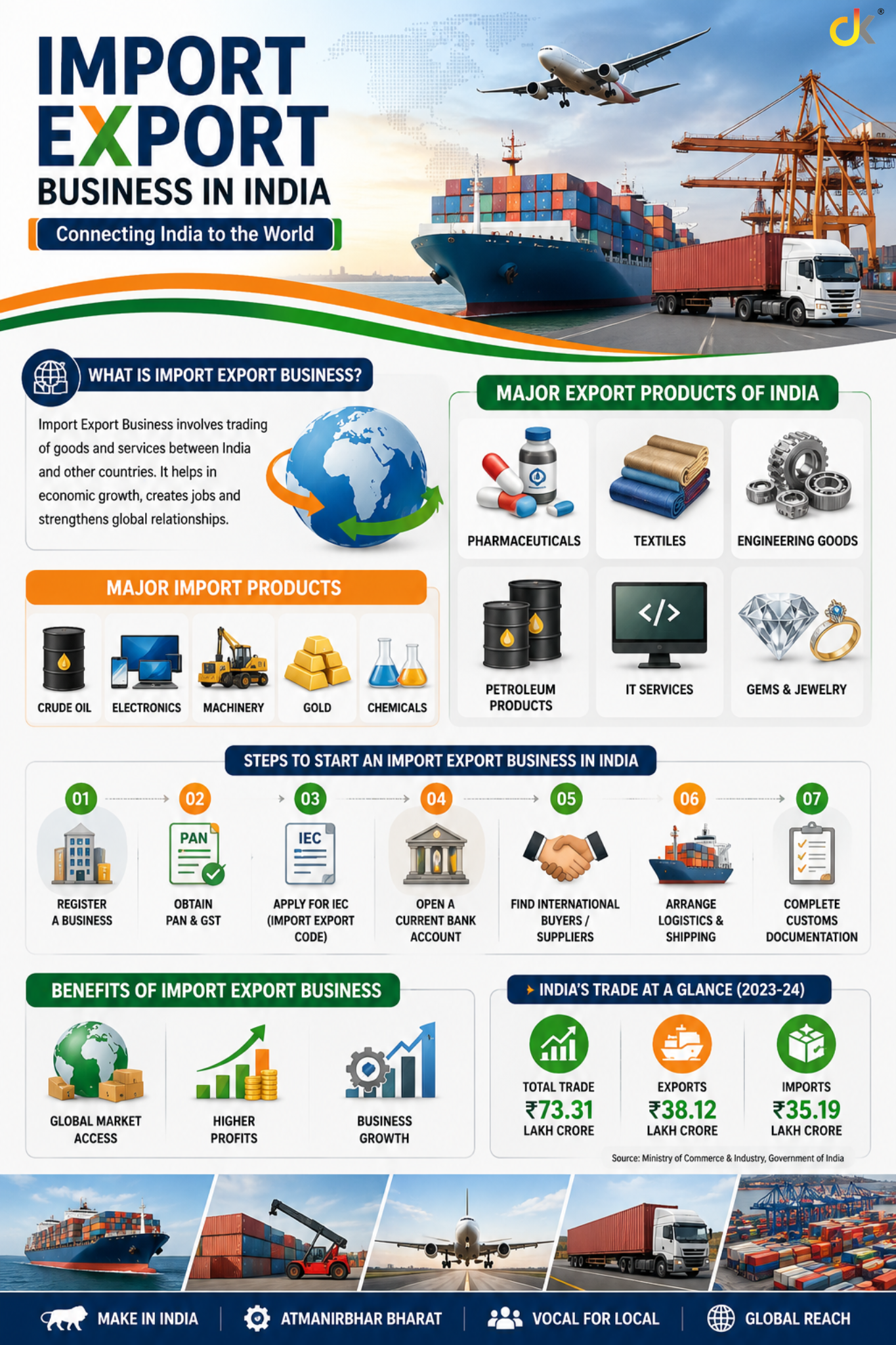
Starting an import export business in India can be one of the most profitable opportunities for entrepreneurs looking to tap into global markets. With India's growing economy, strong manufacturing sector, and increasing demand for international products, businesses have numerous opportunities to expand through import export activities. Whether you want to export Indian products worldwide or import goods from international suppliers, understanding the process is essential for long-term success.
In this guide, we will walk you through the key steps involved in establishing an import export business in India, including registration requirements, licensing, compliance, and growth opportunities.
Understanding the Import Export Business in India
An import export business in India involves buying goods from foreign countries and selling them in India or exporting Indian products to overseas markets. The sector plays a vital role in promoting international trade and contributes significantly to the country's economic growth.
Some of the popular export categories from India include:
-
Textiles and garments
-
Agricultural products
-
Pharmaceuticals
-
Engineering goods
-
Handicrafts and home décor
-
Chemicals and petrochemical products
Similarly, businesses import machinery, electronics, raw materials, and consumer goods to meet domestic demand.
Step-by-Step Process to Start an Import Export Business in India
1. Establish a Business Entity
The first step is to legally register your business. You can choose from different business structures such as:
-
Sole Proprietorship
-
Partnership Firm
-
Limited Liability Partnership (LLP)
-
Private Limited Company
Selecting the appropriate structure depends on your investment plans, operational scale, and future growth objectives.
2. Obtain PAN and Open a Current Account
A Permanent Account Number (PAN) is mandatory for conducting business transactions. After obtaining PAN, open a current account in the name of your business to facilitate domestic and international transactions.
3. Complete Import Export Code Registration
One of the most important requirements for starting an import export business in India is obtaining an Import Export Code (IEC).
The import export code registration is issued by the Directorate General of Foreign Trade (DGFT) and serves as a unique identification number for businesses engaged in international trade.
Benefits of IEC registration include:
-
Mandatory for import and export activities
-
Enables international business transactions
-
Simplifies customs clearance procedures
-
Helps businesses access export incentives
Without an IEC, businesses cannot legally conduct import or export operations in most cases.
4. Identify Products and Target Markets
Market research is critical before launching your operations. Analyze:
-
Global demand trends
-
Competitor landscape
-
Product profitability
-
Import regulations of target countries
-
Export opportunities for Indian products
Choosing the right products and markets can significantly improve the success rate of your import export business in India.
5. Understand Trade Compliance Requirements
Every business involved in international trade must comply with customs regulations, taxation requirements, and documentation standards.
Important documents generally include:
-
Commercial Invoice
-
Packing List
-
Bill of Lading or Airway Bill
-
Certificate of Origin
-
Shipping Bill
-
Insurance Documents
Staying compliant with India's trade policy and destination-country regulations helps avoid delays and penalties.
Government Support for Export Businesses
The Indian government actively promotes exports through various schemes and incentives. Businesses looking to scale their operations should understand the benefits available under the Foreign Trade Policy.
What is a Status Holder Certificate?
A status holder certificate is a recognition granted to exporters based on their export performance. It acknowledges businesses that have made significant contributions to India's export sector.
Benefits of obtaining a status holder certificate include:
-
Faster customs clearance
-
Simplified export procedures
-
Enhanced credibility in international markets
-
Priority treatment in various export-related processes
For growing exporters, obtaining this recognition can strengthen market reputation and operational efficiency.
How to Apply for Star Export House Certificate
Many exporters frequently ask how to apply for star export house certificate recognition. The application process generally involves demonstrating a prescribed level of export performance over a specified period and submitting the required documentation through the DGFT portal.
Key requirements may include:
-
Valid IEC registration
-
Export performance records
-
Financial documentation
-
Compliance with applicable export regulations
Understanding how to apply for star export house certificate status can help businesses unlock additional benefits under government export promotion initiatives.
How to Get Star Export House Certificate
If you are wondering how to get star export house certificate recognition, the primary requirement is achieving the export performance threshold specified under the current Foreign Trade Policy.
To improve eligibility:
-
Maintain consistent export growth
-
Diversify international markets
-
Ensure regulatory compliance
-
Keep accurate export documentation
-
Build strong relationships with overseas buyers
Learning how to get star export house certificate status can become an important milestone for businesses aiming to expand globally.
Read More - How Export Advance Authorisation Scheme Helps Indian Exporters Save Duties
Key Challenges in Import Export Business
While the opportunities are significant, businesses should also prepare for common challenges:
Regulatory Compliance
Import and export regulations can vary across countries. Staying updated with changing laws is crucial.
Currency Fluctuations
Foreign exchange rate movements can affect profit margins and pricing strategies.
Logistics Management
Efficient transportation and supply chain management are essential for timely deliveries and customer satisfaction.
Market Competition
Global markets are highly competitive. Businesses must focus on product quality, pricing, and customer service to stand out.
Strategies for Growing Your Import Export Business
To successfully scale your import export business in India, consider the following strategies:
-
Participate in international trade fairs
-
Build a strong digital presence
-
Develop reliable supplier networks
-
Conduct regular market research
-
Explore emerging export destinations
-
Invest in quality certifications
-
Strengthen customer relationships
Businesses that continuously adapt to market trends and maintain compliance are better positioned for sustainable growth in global markets.
Conclusion
Starting an import export business in India offers immense potential for entrepreneurs looking to enter the world of global commerce. By completing import export code registration, understanding trade policy requirements, and leveraging opportunities in international trade, businesses can build a strong foundation for success.
As your export operations grow, obtaining a status holder certificate and exploring options related to how to apply for star export house certificate and how to get star export house certificate recognition can further enhance your credibility and competitiveness. For businesses seeking professional guidance on export recognition and compliance requirements, DCK Management Services Pvt. Ltd. provides expert support to help exporters navigate the process efficiently and achieve their growth objectives.
Frequently Asked Questions (FAQs)
1. What is required to start an import export business in India?
To start an import export business in India, you need a registered business entity, PAN, current bank account, and import export code registration issued by DGFT.
2. Is an Import Export Code mandatory?
Yes, an IEC is generally mandatory for businesses involved in import and export activities and is essential for international trade transactions.
3. What is a status holder certificate?
A status holder certificate is a government-recognized status granted to exporters who achieve specified export performance levels under the Foreign Trade Policy.
4. How to apply for star export house certificate?
Businesses can apply through the DGFT system by meeting eligibility criteria related to export performance and submitting the required supporting documents.
5. How to get star export house certificate recognition?
To understand how to get star export house certificate recognition, businesses must achieve the prescribed export turnover threshold and maintain compliance with applicable export regulations.
6. What are the best products to export from India?
Popular products include textiles, pharmaceuticals, agricultural goods, engineering products, handicrafts, and chemicals.
7. How can small businesses enter international trade?
Small businesses can begin with market research, obtain IEC registration, identify suitable export products, and gradually expand into international markets through digital platforms and trade networks.
 Russian
 English
 Arabic
 French
 Spanish
 Portuguese
 Deutsch
 Turkish
 Dutch
Dutch
 Italiano
 Romaian
 Portuguese (Brazil)
 Greek
Greek
