


 Pro Benefits
 Σχετικά
 Όρους
Όρους
 Ιδιωτικότητα
 Child Safety & Protection
 Ειδοποιήσεις
 Ayrush Global It Services Pvt Ltd
What Is a Links Golf Design? Understanding Natural Course Architecture
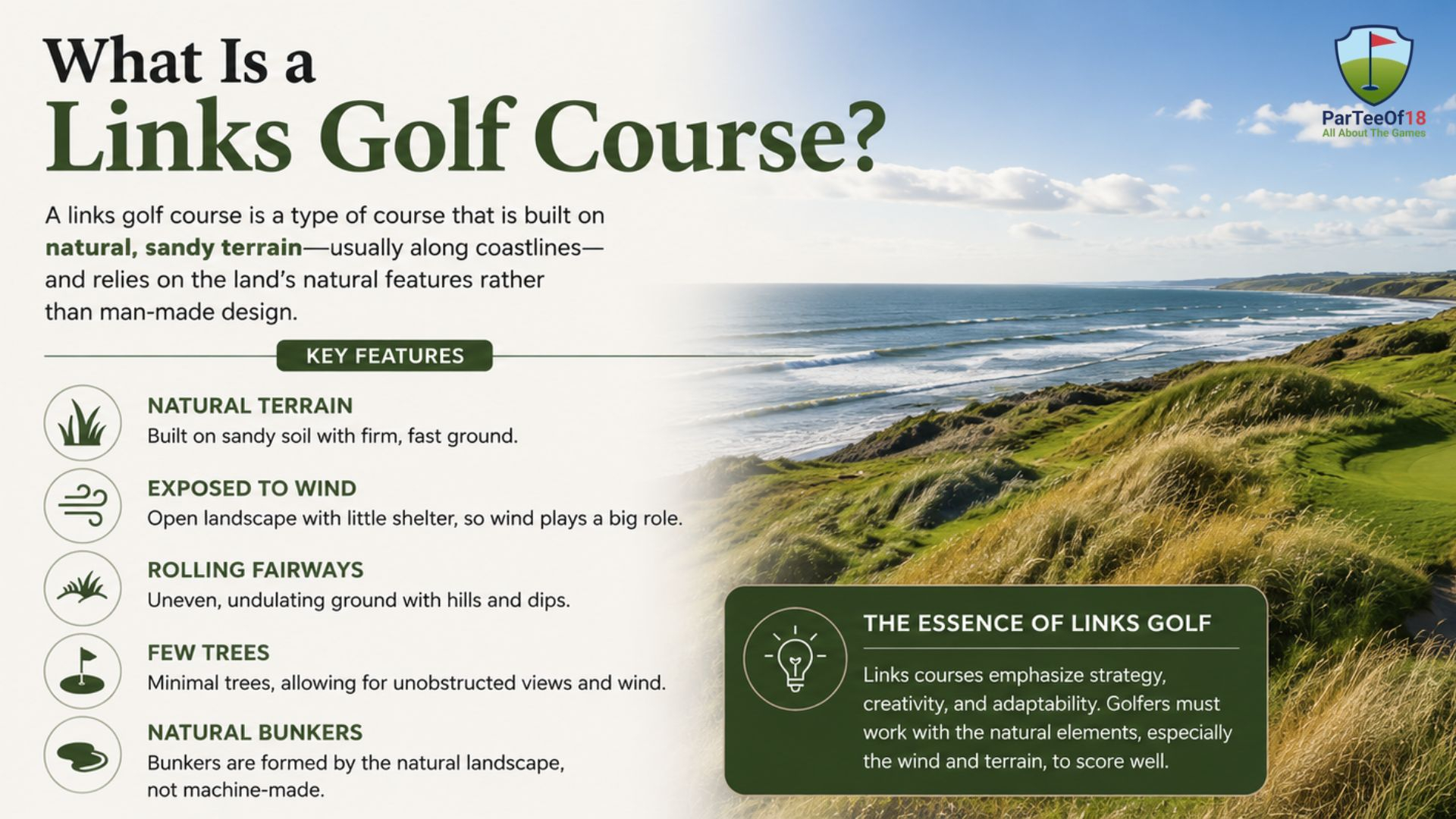
Golf course architecture has evolved dramatically over the centuries, with designers creating layouts that challenge players in different ways. Among all course styles, links golf stands apart because of its deep connection to nature. Rather than relying on artificial features, links courses embrace the natural landscape and use it as the foundation for the playing experience.
Many golfers who ask what is a links golf course are often surprised to learn that links golf is as much about design philosophy as it is about location. The architecture of a true links course reflects centuries of tradition, allowing natural terrain, coastal weather, and strategic shot-making to shape every round.
The Origins of Links Course Design
Links golf originated along the coastlines of Scotland, where the game itself was born. The sandy strips of land between the sea and inland farmland provided ideal conditions for early golfers.
Unlike modern courses that often require extensive construction, early links layouts were developed using the landscape as it existed naturally. Rolling dunes, uneven terrain, and natural vegetation became part of the course rather than obstacles to remove.
This approach established a design philosophy that continues to influence architects today.
Nature as the Primary Architect
One of the defining characteristics of links design is the belief that nature should dictate the course layout.
Instead of reshaping large areas of land, architects work with existing contours. Natural dunes become hazards, valleys create strategic landing areas, and ridges influence how the ball moves across the ground.
This creates a playing environment that feels organic and unpredictable.
Every hole reflects the surrounding landscape, making the course feel like a natural extension of the coastline rather than a manufactured sports venue.
The Importance of Sandy Terrain
Sandy soil plays a major role in links architecture.
Because sand drains water efficiently, the ground remains firm throughout much of the year. These conditions affect how the course is designed and played.
Fairways often encourage the ball to bounce and roll after landing. Approach shots may be played short of the green and allowed to run toward the target.
Architects understand these characteristics and design holes that reward thoughtful shot placement rather than simply maximizing distance.
The firm playing surfaces are one reason links golf feels so different from many inland courses.
Wide Fairways and Strategic Angles
Many golfers expect links courses to be extremely narrow and difficult. In reality, fairways are often wider than those found on parkland courses.
The challenge comes from positioning rather than width.
Architects create strategic angles that influence future shots. A drive placed on the correct side of the fairway may provide a clear path to the green, while a shot that finishes in the wrong area can create a much more difficult approach.
This design principle rewards smart decision-making and careful planning.
Natural Hazards Create Unique Challenges
Links architecture relies heavily on natural hazards.
Sand Dunes
Dunes serve as both visual features and strategic obstacles. They can block sightlines, influence shot selection, and create challenging recovery situations.
Pot Bunkers
One of the most recognizable elements of links golf is the pot bunker. These deep, steep-sided bunkers often require players to focus on escape rather than advancing the ball toward the target.
Native Grasses
Tall coastal grasses add another layer of difficulty. Missing the fairway by a small margin can lead to difficult lies and limited shot options.
Because these hazards are integrated into the landscape, they feel more natural than artificially placed obstacles.
The Role of Wind in Course Architecture
Wind is one of the most important design elements on a links course.
Architects understand that wind conditions can completely change how a hole plays from one day to the next. As a result, they design layouts that remain interesting regardless of wind direction.
A par four that plays straightforward during calm weather may become one of the most demanding holes on the course when strong coastal winds arrive.
This ever-changing challenge ensures that links golf never feels repetitive.
Greens Designed for Multiple Approaches
Modern golf courses often feature elevated greens designed to receive high shots.
Links greens are usually different.
Because firm conditions make it difficult to stop the ball quickly, architects create greens that can be approached in various ways. Golfers may choose to fly the ball directly to the target or play a running shot that uses the ground.
This flexibility encourages creativity and strategic thinking.
Players must evaluate conditions and select the approach that offers the best chance of success.
Why Links Design Rewards Strategy?
One reason links golf remains popular is that it rewards more than physical power.
Distance can certainly be an advantage, but success often depends on:
-
Course management
-
Shot selection
-
Wind control
-
Creativity
-
Patience
Golfers must think carefully before every shot. The safest option is not always the best, and aggressive decisions can quickly lead to trouble.
This strategic element gives links golf a timeless appeal.
Learning From Modern Technology
While links golf is rooted in tradition, modern tools can help players better understand their performance.
Many golfers use a golf scoring app to track rounds and analyze statistics. These platforms provide insights into driving accuracy, approach play, and scoring trends.
When playing a links course, a golf scoring app can reveal patterns that might otherwise go unnoticed. Golfers can identify how wind conditions affect scoring and determine which parts of their game need improvement.
Combining traditional golf with modern analytics allows players to learn from every round.
Links Design and Sustainability
Another reason links architecture remains respected is its natural approach to land use.
Because links courses rely heavily on existing terrain, they often require fewer modifications than heavily landscaped courses.
The sandy soil supports natural drainage, reducing the need for extensive water management systems. Native grasses are often more environmentally sustainable than highly maintained turf.
As golf continues to focus on environmental responsibility, many architects look to traditional links principles for inspiration.
Why Golfers Love Links Architecture?
Links golf provides an experience that feels authentic and unpredictable.
No two rounds are exactly alike because weather conditions constantly change. Wind, firmness, and natural terrain create new challenges every time golfers step onto the course.
Players are encouraged to think creatively, adapt their strategies, and embrace the unexpected.
For many golfers, this connection to nature is what makes links golf so memorable.
Conclusion
Understanding what is a links golf course requires looking beyond its coastal location and exploring the architectural principles that define it. Links design embraces natural terrain, sandy soil, strategic shot-making, and the influence of weather to create a unique golfing experience.
Unlike heavily engineered layouts, links courses allow nature to shape the challenge. Their wide fairways, firm conditions, natural hazards, and strategic options continue to attract golfers from around the world.
As modern course architecture evolves, the lessons of links design remain as relevant as ever, proving that some of golf's best ideas were established centuries ago.
FAQ
1. What is links golf design?
Links golf design is a style of course architecture that uses natural coastal terrain, sandy soil, and existing land features to create strategic golf holes.
2. Why are links courses usually built near the coast?
Coastal areas provide the sandy ground and natural dunes that are essential characteristics of traditional links golf.
3. What makes links architecture different from modern course design?
Links architecture emphasizes natural landscapes and strategic play, while many modern courses rely more heavily on landscaping and constructed features.
4. Why are fairways often wider on links courses?
The challenge comes from positioning and angles rather than narrow targets, encouraging strategic decision-making.
 Greek
Greek
 English
 Arabic
 French
 Spanish
 Portuguese
 Deutsch
 Turkish
 Dutch
Dutch
 Italiano
 Russian
 Romaian
 Portuguese (Brazil)
