


 Pro Benefits
 About
About
 Termeni
 Confidențialitate
 Child Safety & Protection
 Notificări
 Ayrush Global It Services Pvt Ltd
Lab Grown vs Natural Diamond Chain Necklaces: Which One Should You Buy?
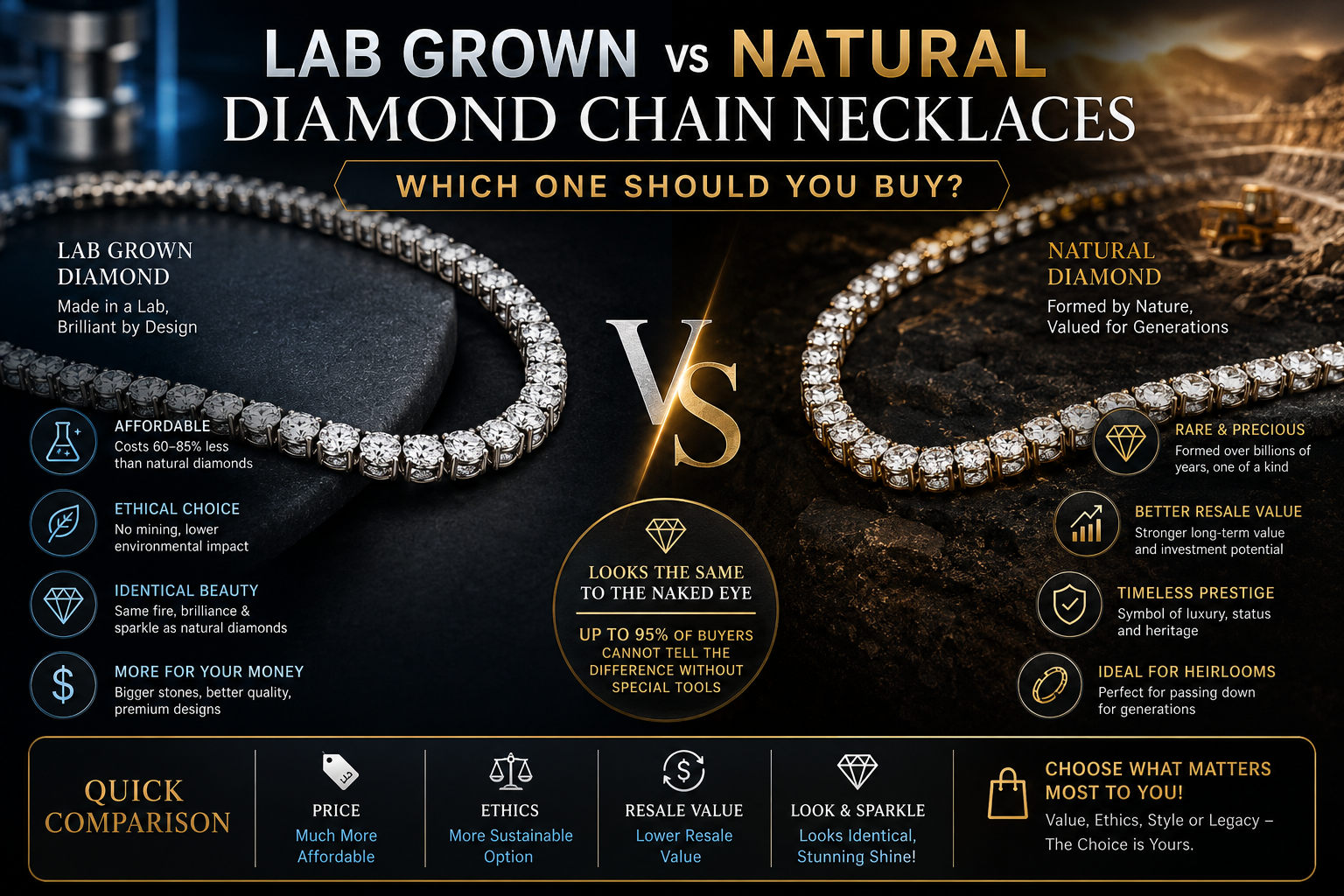
Diamond chains are no longer just luxury accessories for celebrities. In 2026, more buyers are investing in stylish diamond jewelry for everyday fashion, gifting, and long-term value. But one big question continues to dominate the jewelry market: should you buy natural diamonds or choose lab grown diamond chain necklaces instead?
At first glance, both look exactly the same. Both sparkle beautifully, both come in luxury designs, and both can elevate your style instantly. The real difference comes down to price, rarity, resale value, ethics, and personal preference.
If you are planning to buy a diamond chain necklace this year, this guide will help you understand everything before making the final decision.
Understanding the Science: What is the Real Difference?
Natural Diamonds: Earth’s Rare Gift
Natural diamonds are formed deep inside the Earth over billions of years under extreme heat and pressure. These diamonds are mined from the ground and then cut and polished into jewelry.
Their rarity is one of the biggest reasons why natural diamond jewelry is expensive. Many buyers also associate natural diamonds with tradition, luxury, and emotional prestige. Owning a natural diamond chain often feels like owning a piece of history created by nature itself.
Because mining is difficult and supply is limited, the market value of natural diamonds generally stays higher compared to lab-created stones.
For decades, natural diamond chains have been considered a symbol of status and timeless wealth.
Lab Grown Diamonds: Tech-Made Brilliance
Lab grown diamond jewelry is created inside advanced laboratories using modern technology. The two main production methods are:
- CVD (Chemical Vapor Deposition)
- HPHT (High Pressure High Temperature)
These processes recreate the same environment in which natural diamonds are formed. The result is a real diamond with the same chemical, physical, and optical properties as a mined diamond.
That means lab grown diamond chain necklaces are not fake or artificial stones like cubic zirconia or moissanite. They are genuine diamonds.
Even professional jewelers usually require special equipment to identify whether a diamond is natural or lab-created.
The Visual Test
When it comes to sparkle, fire, brilliance, and scintillation, there is almost no visible difference between natural and lab diamonds.
Most buyers cannot tell them apart with the naked eye. Studies in the jewelry market show that a large percentage of consumers fail to identify the difference without magnification tools or certification reports.
This is one reason why lab grown diamond chain necklaces have become extremely popular among modern buyers who want luxury without paying premium mining prices.
Cost Comparison and Budgeting for Your Chain
The Price Gap in 2026
The biggest reason many buyers choose lab grown diamond jewelry is affordability.
In 2026, lab-grown diamonds typically cost 60% to 85% less than natural diamonds of similar quality.
For example:
- A 5-carat natural diamond tennis chain can cost several lakhs or even crores depending on clarity and cut.
- A 5-carat lab grown diamond chain necklace may cost a fraction of that price while looking visually identical.
The price gap becomes even larger as carat size increases.
This means buyers can afford:
- Larger stones
- Better clarity
- Higher color grades
- More elaborate chain designs
without stretching their budget.
Value Retention and Resale
This is where natural diamonds still hold a major advantage.
Natural diamonds generally retain better resale value because they are rare and historically established in the luxury market.
Lab-grown diamonds, however, are mass-producible. As technology improves, production costs continue to decrease, which impacts resale prices significantly.
If your main goal is:
- long-term investment,
- heirloom jewelry,
- or resale value,
then natural diamond chains may be the better option.
If your focus is:
- fashion,
- luxury appearance,
- or maximizing design within budget,
then lab grown diamond chain necklaces offer much better value.
Getting More for Your Money
Many buyers today prefer trading “origin” for “quality.”
Instead of buying a smaller natural diamond chain with average clarity, they choose:
- larger lab-grown stones,
- premium cuts,
- or upgraded metals like platinum.
For example, the money saved on stones can help buyers:
- choose heavier chains,
- upgrade to 18K gold,
- or add custom settings.
This flexibility is one of the biggest strengths of the lab grown diamond market.
Ethics, Sourcing, and Environmental Impact
The Modern Mining Standard
The natural diamond industry has improved significantly over the years.
Most major jewelers now offer:
- conflict-free diamonds,
- ethical sourcing,
- and Kimberley Process certification.
The Kimberley Process helps prevent the trade of conflict diamonds in global markets.
However, mining still has environmental consequences such as:
- land disruption,
- water usage,
- and carbon emissions from large-scale excavation.
Some buyers remain concerned about the environmental impact of mining operations.
The Lab-Grown Footprint
Lab-grown diamonds avoid traditional mining, but they are not completely impact-free.
Diamond-growing laboratories require large amounts of electricity, especially for HPHT production.
Still, many experts believe lab grown diamond chain necklaces generally have a lower environmental footprint compared to mined diamonds when renewable energy sources are used.
This has made lab diamonds especially attractive to environmentally conscious buyers.
Buyer Sentiment Trends
Gen Z and Millennial shoppers are changing the jewelry industry rapidly.
Modern consumers often prioritize:
- sustainability,
- ethical sourcing,
- and smart spending.
Many younger buyers now view lab grown diamond jewelry as “conscious luxury” — premium products without the traditional mining concerns.
As social acceptance increases, lab-grown chains are becoming mainstream rather than alternative options.
Choosing the Right Chain Style for Your Stones
Classic Tennis Chains
Tennis chains remain one of the most popular diamond necklace styles in 2026.
For this style:
- stone consistency matters,
- secure settings are important,
- and comfort is essential.
Natural diamonds are often preferred for heirloom-quality tennis chains because of their prestige and resale value.
However, lab grown diamond chain necklaces are becoming increasingly popular in tennis styles because buyers can afford larger, cleaner stones throughout the entire chain.
Prong vs Bezel Settings
- Prong settings maximize sparkle.
- Bezel settings provide better protection and durability.
For daily wear, bezel settings are often considered safer.
Bold Statement and Cuban Links
Large Cuban link chains with diamonds are trending heavily in fashion and celebrity culture.
These chains require many stones, making natural diamonds extremely expensive.
This is why many buyers choose lab grown diamond chain necklaces for statement jewelry. Lab stones allow bigger designs without unrealistic budgets.
Heavy chains also require proper weight balance and durable craftsmanship, especially for everyday use.
Minimalist Pendant Chains
Minimalist diamond chains are perfect for buyers who prefer understated luxury.
Some people choose:
- one high-quality natural center diamond,
- combined with smaller lab-grown accent stones.
This hybrid approach offers both prestige and affordability.
Minimal pendant chains are also highly versatile and work well with both casual and formal outfits.
Buyer’s Checklist: How to Make the Final Call
Questions to Ask Your Jeweler
Before purchasing any diamond chain necklace, always ask for certification.
Trusted grading labs include:
- GIA
- IGI
Important questions include:
- Is the diamond mined or lab-grown?
- Is the certification included?
- What is the warranty policy?
- Are repair and resizing services available?
- What metal purity is used?
A trustworthy jeweler should clearly disclose every detail in writing.
Defining Your Goal
The right choice depends on your personal priorities.
Choose Natural Diamonds If:
- You want long-term resale value
- You prefer rarity and prestige
- You view jewelry as an investment
- You want heirloom-quality pieces
Choose Lab Grown Diamonds If:
- You want maximum size and sparkle
- Budget matters more than resale
- You prefer ethical alternatives
- You love modern luxury trends
Quick Comparison Chart
| Feature | Natural Diamond Chains | Lab Grown Diamond Chain Necklaces |
|---|---|---|
| Price | Very expensive | More affordable |
| Appearance | Identical sparkle | Identical sparkle |
| Rarity | Rare | Easily produced |
| Resale Value | Higher | Lower |
| Ethics | Improved sourcing | No mining required |
| Environmental Impact | Mining-related | Lower in many cases |
| Best For | Investment & prestige | Fashion & value |
Final Verdict: Which One Should You Buy?
The debate between natural and lab grown diamond chain necklaces ultimately comes down to one question:
Do you value prestige more, or value for money?
Natural diamonds continue to dominate the luxury investment market because of their rarity and long-term perception.
But lab grown diamond jewelry is rapidly becoming the smarter choice for buyers who want:
- larger stones,
- premium quality,
- ethical sourcing,
- and affordable luxury.
In terms of beauty, both options look stunning. Most people cannot visually distinguish one from the other.
If you want timeless status and resale potential, natural diamonds remain unmatched.
If you want maximum brilliance, modern styling, and better pricing, lab grown diamond chain necklaces are one of the best jewelry investments for fashion-conscious buyers in 2026.
Before making your purchase, visit a certified jeweler and compare both options in person. Seeing the sparkle side by side can make the decision much easier
Utilizatori verificați
 Romaian
 English
 Arabic
 French
 Spanish
 Portuguese
 Deutsch
 Turkish
 Dutch
Dutch
 Italiano
 Russian
 Portuguese (Brazil)
 Greek
Greek
