Real-world asset (RWA) tokenization is transforming the financial industry by bringing traditional assets onto blockchain networks. Banks and financial institutions are increasingly exploring tokenization to improve efficiency, reduce operational costs, enhance liquidity, and modernize outdated financial infrastructure. From bonds and real estate to treasury assets and private credit, blockchain-based tokenization is creating new opportunities for faster settlements, transparent transactions, and programmable financial systems.
What Is RWA Tokenization?
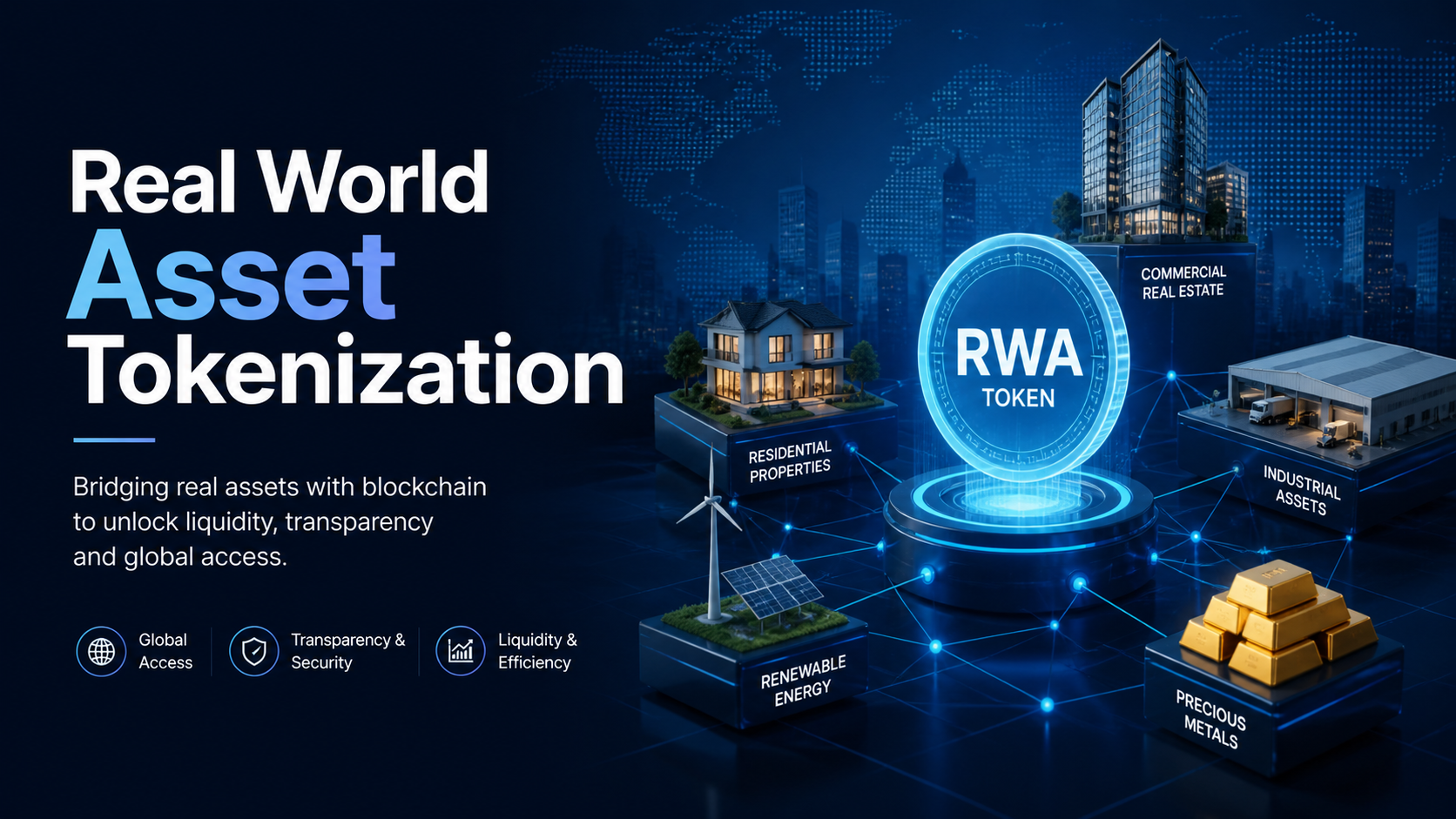
RWA tokenization refers to the process of converting ownership rights of physical or traditional financial assets into blockchain-based digital tokens. These digital tokens represent a share, ownership stake, or claim over an underlying real-world asset. The asset itself may include real estate, government bonds, commodities, private credit, equities, infrastructure assets, or treasury products.
Blockchain technology acts as the digital ledger that records ownership, transfers, and transaction history in a secure and transparent environment. Instead of relying entirely on traditional paper-heavy systems and multiple intermediaries, tokenization creates a more streamlined and programmable framework for managing financial assets.
For banks, tokenization represents more than just digitization. It introduces a new financial architecture capable of improving settlement speed, operational efficiency, and asset accessibility. Financial institutions are increasingly recognizing that blockchain can modernize legacy systems that have remained relatively unchanged for decades.
Why Traditional Banking Systems Need Modernization
The global banking system has historically depended on centralized processes, intermediary networks, and fragmented databases. While these systems have supported international finance for years, they also introduce significant inefficiencies.
Slow Settlement Cycles
Traditional financial transactions often require several intermediaries including custodians, brokers, correspondent banks, and clearing houses. Cross-border settlements may take days to complete because different institutions must reconcile records and verify transaction details. Blockchain-based tokenization reduces these delays by enabling real-time or near-instant settlement mechanisms. Transactions can be verified and recorded directly on distributed ledgers without extensive intermediary involvement.
High Operational Costs
Banks spend substantial resources managing administrative workflows, reconciliation systems, compliance operations, and transaction verification. These processes increase operational complexity and infrastructure costs. Tokenization automates many financial operations through smart contracts and shared ledger systems, reducing dependency on manual processing.
Limited Liquidity
Traditional assets such as commercial real estate, private equity, and infrastructure investments are often highly illiquid. Investors may need to wait months or years before exiting positions. Tokenization introduces fractional ownership, allowing assets to be divided into smaller tradable units. This increases liquidity and broadens market participation.
Lack of Transparency
Financial systems often operate through siloed databases maintained by separate institutions. This fragmentation limits real-time visibility into ownership records and transaction histories.
Blockchain networks create transparent and immutable records that improve tracking and auditing capabilities. These challenges are encouraging banks to adopt blockchain-based solutions that improve speed, transparency, and scalability.
How Blockchain Supports Tokenized Finance
Blockchain technology provides the infrastructure required for secure and programmable financial systems. Its decentralized architecture enables institutions to manage digital assets more efficiently while maintaining data integrity and transparency.
Distributed Ledger Technology
Blockchain operates as a distributed ledger where transaction records are synchronized across multiple nodes. This reduces reliance on centralized databases and minimizes reconciliation issues.
Immutable Records
Transactions recorded on blockchain networks cannot easily be altered or deleted. This creates tamper-resistant audit trails that improve trust and accountability.
Smart Contract Automation
Smart contracts are self-executing programs that automatically enforce predefined rules and conditions. Banks can use smart contracts for automated settlements, interest payments, collateral management, and compliance checks.
Enhanced Security
Blockchain systems use cryptographic verification methods that strengthen transaction security and reduce fraud risks.
Real-Time Asset Transfers
Traditional financial transfers often involve multiple approval stages and settlement windows. Blockchain enables faster peer-to-peer asset transfers with reduced delays. These features make blockchain a strong foundation for institutional finance and tokenized asset management.
Why Banks Are Adopting RWA Tokenization
Banks are moving toward blockchain-based tokenization because it addresses several long-standing inefficiencies in the financial industry while opening new growth opportunities.
Improved Liquidity Management
Liquidity plays a crucial role in banking and investment operations. Many traditional assets remain difficult to trade due to large investment requirements and limited market accessibility. Tokenization improves liquidity by enabling fractional ownership structures. Instead of purchasing an entire asset, investors can buy smaller tokenized portions. This increases market participation and capital flexibility. For banks, tokenized assets create more dynamic and accessible financial ecosystems.
Faster Cross-Border Transactions
International transactions are often slowed by intermediary banking networks and differing settlement systems. Blockchain enables faster cross-border transfers through direct settlement frameworks. Tokenized payment systems reduce delays associated with currency conversion, clearing procedures, and reconciliation processes. Banks exploring digital payment infrastructure are increasingly using blockchain to improve transaction efficiency.
Reduced Operational Expenses
Traditional banking operations involve significant administrative overhead related to settlements, recordkeeping, compliance, and reporting. Tokenization automates many of these tasks using smart contracts and digital ledger systems. Reduced manual processing lowers operational costs while improving accuracy. Financial institutions see blockchain as a practical tool for modernizing back-office infrastructure.
Enhanced Transparency and Auditability
Blockchain records transactions in a transparent and verifiable manner. Every transaction is timestamped and stored permanently on the ledger. This improves auditability and regulatory reporting while reducing the risk of data discrepancies. Banks benefit from improved compliance monitoring and more efficient reporting systems.
Access to New Revenue Opportunities
Tokenization enables banks to develop new digital financial products linked to real-world assets. Institutions can offer tokenized investment vehicles tied to:
- Treasury assets
- Real estate
- Corporate bonds
- Commodities
- Infrastructure financing
- Private lending
These products create additional revenue channels while expanding investment accessibility.
Major Assets Being Tokenized in Finance
Tokenized Bonds
Government and corporate bonds are among the leading assets being explored for tokenization. Blockchain-based bond issuance can improve settlement speed, reduce administrative costs, and simplify ownership tracking. Tokenized bonds also allow smaller investment denominations, increasing accessibility for a broader investor base.
Tokenized Real Estate
Real estate tokenization allows properties to be divided into fractional digital shares. Investors can gain exposure to commercial or residential real estate without purchasing entire properties. Banks and investment firms are exploring tokenized real estate to unlock liquidity from traditionally illiquid markets.
Tokenized Treasury Assets
Treasury products are becoming increasingly important in blockchain-based financial ecosystems. Tokenized treasury instruments combine stable returns with digital accessibility. Institutional investors view tokenized treasuries as a bridge between traditional finance and blockchain infrastructure.
Tokenized Commodities
Commodities such as gold, silver, oil, and agricultural products can be represented through blockchain-based tokens linked to physical reserves. This improves transparency and simplifies global trading processes.
Tokenized Private Credit
Private credit markets often involve complex documentation and limited liquidity. Tokenization creates programmable debt structures that improve transferability and operational efficiency.
The Role of Smart Contracts in Banking
Smart contracts are one of the most valuable components of blockchain-based finance. These programmable agreements automatically execute predefined instructions when specific conditions are met.
Banks can use smart contracts for:
- Loan servicing
- Interest distribution
- Bond coupon payments
- Trade settlements
- Collateral management
- Compliance verification
- Dividend payouts
Automation reduces delays, operational errors, and administrative workloads. For example, a tokenized bond can automatically distribute coupon payments to investors on scheduled dates without requiring manual intervention. This level of automation improves efficiency across financial operations.
Benefits of Tokenization for Investors
RWA tokenization not only benefits financial institutions but also creates new opportunities for investors.
Fractional Ownership
Tokenization lowers entry barriers by dividing high-value assets into smaller investment units. Investors can participate in markets that were previously inaccessible due to large capital requirements.
Increased Liquidity
Traditional assets often have limited resale opportunities. Tokenized assets can potentially be traded more efficiently on digital marketplaces.
Global Accessibility
Blockchain networks operate across borders, allowing investors from different regions to access tokenized financial products.
Improved Transparency
Investors can verify ownership records and transaction histories directly on blockchain networks.
Faster Transactions
Blockchain settlements occur more quickly compared to conventional financial systems, reducing waiting periods for asset transfers. These advantages are increasing investor interest in blockchain-based financial products.
Regulatory Developments Supporting Tokenization
Regulatory clarity is essential for institutional blockchain adoption. Banks require legal frameworks that support secure and compliant digital asset operations. Governments and financial regulators are increasingly developing policies for tokenized finance.
Key regulatory focus areas include:
- Investor protection
- Digital asset classification
- Custody regulations
- KYC and AML compliance
- Tax reporting standards
- Cross-border transaction oversight
Some jurisdictions are positioning themselves as blockchain-friendly financial hubs to attract institutional investment and innovation. As regulations become more defined, banks are expected to increase their participation in tokenized financial markets.
Challenges Facing RWA Tokenization
Despite its growing adoption, tokenized finance still faces several challenges.
Regulatory Uncertainty
Different countries maintain varying approaches to digital asset regulation, creating complexity for global institutions.
Legacy Infrastructure Integration
Many banks operate on older technology systems that may not integrate easily with blockchain platforms.
Cybersecurity Risks
Blockchain networks and smart contracts require strong security protections against cyberattacks and vulnerabilities.
Scalability Issues
Some blockchain networks face transaction throughput limitations during periods of high activity.
Market Education
Institutional and retail investors still require greater understanding of tokenized finance and blockchain operations. Financial institutions continue investing in research, infrastructure, and compliance systems to address these concerns.
Institutional Adoption of Blockchain Finance
Large financial institutions are increasingly participating in blockchain-based financial initiatives. Banks, asset managers, and investment firms are actively exploring tokenized financial infrastructure.
Areas of institutional adoption include:
- Digital bond issuance
- Tokenized deposits
- Blockchain settlement systems
- Digital custody solutions
- Cross-border payment networks
- Tokenized treasury products
This institutional involvement demonstrates growing confidence in blockchain technology as a long-term financial infrastructure solution. Many organizations now view tokenization as a strategic component of future banking operations rather than a temporary innovation trend.
The Future of Tokenized Banking
The future of finance is expected to involve deeper integration between traditional banking systems and blockchain technology.
Expansion of Tokenized Markets
More financial products are likely to become tokenized, including equities, insurance products, trade finance assets, and intellectual property rights.
Real-Time Financial Infrastructure
Blockchain may enable continuously operating financial markets with near-instant settlements.
Institutional DeFi Growth
Regulated decentralized finance platforms designed for institutions may emerge as major financial ecosystems.
AI and Blockchain Integration
Artificial intelligence may enhance blockchain-based risk analysis, fraud detection, and compliance automation.
Broader Retail Participation
Fractional ownership models may continue expanding access to traditionally exclusive investment opportunities. As these developments continue, tokenization could become a standard component of global financial infrastructure.
Conclusion
RWA tokenization is becoming a major part of the evolving financial ecosystem as banks seek faster, more transparent, and cost-efficient solutions. By combining blockchain technology with traditional financial assets, institutions can improve liquidity, automate operations, and expand investment accessibility. Although regulatory and technical challenges still exist, the growing adoption of tokenized finance signals a long-term shift toward more digital and interconnected banking systems.



 Pro Benefits
 About
About
 Términos
 Privacidad
 Child Safety & Protection
 Notificaciones
 Ayrush Global It Services Pvt Ltd
 Spanish

 English
 Arabic
 French
 Portuguese
 Deutsch
 Turkish
 Dutch
Dutch
 Italiano
 Russian
 Romaian
 Portuguese (Brazil)
 Greek
Greek