


 Pro Benefits

 الشروط
 الخصوصية
 Child Safety & Protection
 الإشعارات
 Ayrush Global It Services Pvt Ltd
Human Hair Wigs & Toppers Guide | How to Choose & Maintain
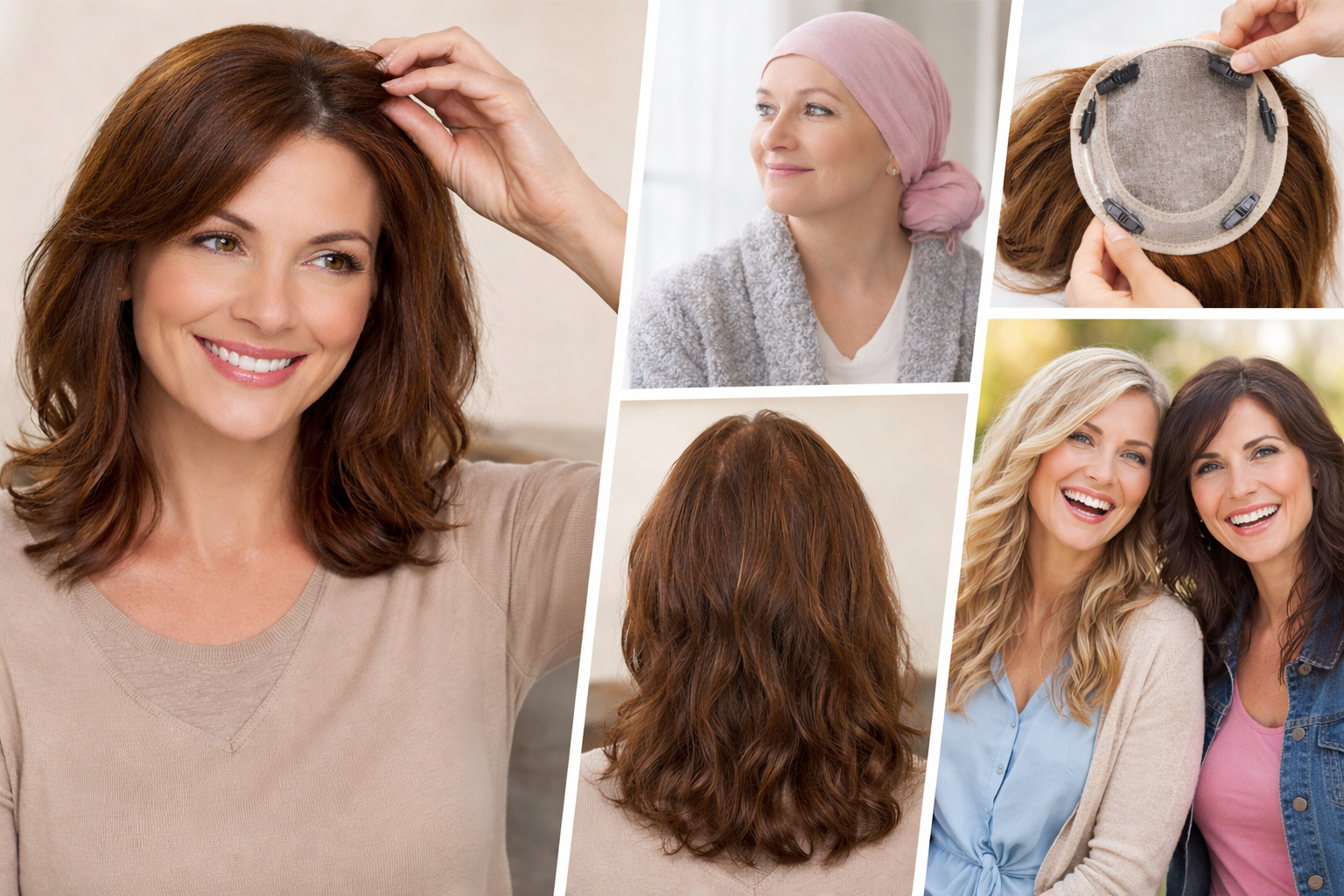
Premium Human Hair Wigs and Toppers: Everything You Need to Know
For many women, hair is more than just an aesthetic feature it is an expression of identity, personality, and confidence. However, whether due to genetics, medical conditions like alopecia, or the natural aging process, many find themselves searching for solutions to hair thinning or loss.
The modern world of hair restoration has evolved far beyond the "wigs" of the past. Today’s human hair wigs and hair toppers are engineered with such precision that they are virtually indistinguishable from natural growth. If you are beginning your journey into hair systems, this guide will provide everything you need to know to make an informed, confident decision.
Understanding the Difference: Wigs vs. Hair Toppers
One of the most frequent questions for those exploring hair solutions is: “Do I need a full wig or just a topper?” The answer depends entirely on your specific stage of hair loss and your lifestyle goals.
What is a Hair Topper?
A hair topper (often called a "wiglet") is designed to cover specific areas of thinning, usually at the crown or along the part line. They clip into your existing hair to add immediate volume and coverage.
-
Best for: Early to mid-stage thinning, localized hair loss, or simply adding "oomph" to a flat hairstyle.
-
Pros: Extremely breathable, lightweight, and blends seamlessly with your natural biological hair.
-
Cons: Requires enough healthy natural hair to support the clips without causing tension.
What is a Human Hair Wig?
A full wig provides total coverage for the entire scalp. While they are the go-to solution for total hair loss, many women with full heads of hair wear them as "protective styles" to change their look without chemical damage.
-
Best for: Advanced hair loss, medical hair loss (chemotherapy or alopecia), or total style transformations.
-
Pros: Complete consistency in color and density; no need to blend with natural hair.
-
Cons: Can be warmer than toppers and requires a proper "fitting" to ensure security.
Why "Human Hair" is the Gold Standard
While synthetic technology has improved, 100% human hair remains the premier choice for luxury hair systems.
-
Styling Versatility: Just like your own hair, human hair pieces can be curled, straightened, and even professionally colored.
-
Natural Movement: Human hair has a specific "swing" and weight that synthetic fibers cannot perfectly replicate.
-
Longevity: With proper care, a high-quality human hair wig can last a year or longer, whereas synthetic pieces typically need replacing every 3-4 months.
Demystifying Cap Constructions: Lace Front vs. Monofilament
The "cap" is the foundation of the wig. To achieve a natural look, you must understand the technology behind it.
Lace Front Wigs
A lace front features a sheer mesh along the forehead where individual hairs are hand-tied. This creates a natural-looking hairline, allowing you to style your hair away from your face or even in a ponytail without revealing the wig’s edge.
Monofilament Tops
In a monofilament construction, each hair is tied to a soft, mesh base that allows your natural scalp color to show through. This is crucial for anyone who wants a realistic part line. You can part the hair in the middle, on the side, or zig-zagged, and it will look like the hair is growing directly from your skin.
Hand-Tied Caps
For those with sensitive scalps (common in medical hair loss), a 100% hand-tied cap offers the ultimate comfort. These caps have a four-way stretch and are incredibly soft against the skin, making them the most "head-friendly" option for all-day wear.
Addressing Common Concerns: The Pros and Cons of Hair Toppers
While toppers are revolutionary, users often ask about the disadvantages of hair toppers. It is important to be realistic:
-
The Weight Factor: If a topper is too heavy for your thinning hair, it can cause "traction alopecia." It is vital to match the weight of the topper to the strength of your biological hair.
-
The Blend Challenge: You must match the color and texture of the topper to your own hair perfectly. This is why visiting a professional wig salon for a custom color-match is highly recommended.
-
Clipping Sensitivity: For some, the clips can feel tight initially. Proper placement, avoiding clipping into the same spot every day, is the key to comfort.
Professional Maintenance: How to "Refresh" Your Wig
Investing in a premium hair system requires a commitment to maintenance. One of the most searched terms by wig owners is "how to refresh a wig." Here is the professional protocol:
-
Detangle with Care: Use a wide-tooth comb or a specialized wig brush. Always start from the ends and work your way up to the roots to prevent shedding.
-
Wash Every 8-10 Wears: Do not over-wash. Use sulfate-free shampoos and hydrating conditioners. Unlike biological hair, wigs do not receive natural oils from the scalp, so you must manually add moisture back in.
-
Steam and Condition: A professional "refresh" often involves a light steaming treatment to remove frizz (especially at the nape) and a deep-conditioning mask to restore the hair’s silkiness.
-
Heat Protection: If you use a flat iron or curling wand, always apply a high-quality heat protectant. Treat the hair as if it were your own; excessive heat will cause split ends over time.
The Psychological Impact: More Than Just Hair
The journey of hair loss can be emotional. Many women describe the moment they put on a perfectly fitted, high-quality hairpiece as a "returning to self." Whether it's a medical ombre wig for a trendy look or a subtle hair topper for the crown, these systems offer a bridge back to confidence.
Finding a specialist like those at Dorin Wigs who understands the nuances of face shapes, skin tones, and cap comfort can make the difference between a "hairpiece" and a "hair transformation."
Trends to Watch in 2026
The industry is moving toward "Ultra-Realistic" aesthetics.
-
Invisible Lace: Thinner, more durable lace that disappears against any skin tone.
-
Smudged Roots: Toppers and wigs are now being designed with "root shadowing" to mimic the natural regrowth look, making the transition between the piece and your forehead even more undetectable.
-
Feather Wefts: Lightweight extensions that offer volume without the bulk of traditional tracks.
 Arabic
 English
 French
 Spanish
 Portuguese
 Deutsch
 Turkish
 Dutch
Dutch
 Italiano
 Russian
 Romaian
 Portuguese (Brazil)
 Greek
Greek
